TEL AVIV, Israel – Ahead of Israel’s annual Holocaust Remembrance Day, which starts Monday evening, Tel Aviv University published its widely cited annual report on global antisemitism Monday, delivering alarming findings: 2025 saw the highest death toll from antisemitic attacks in more than three decades, with 20 people killed across three continents. The uptick in deadly violence extends a sharp surge that began following the Oct. 7, 2023, Hamas attacks and the subsequent Israel-Gaza war, the study’s authors confirm.
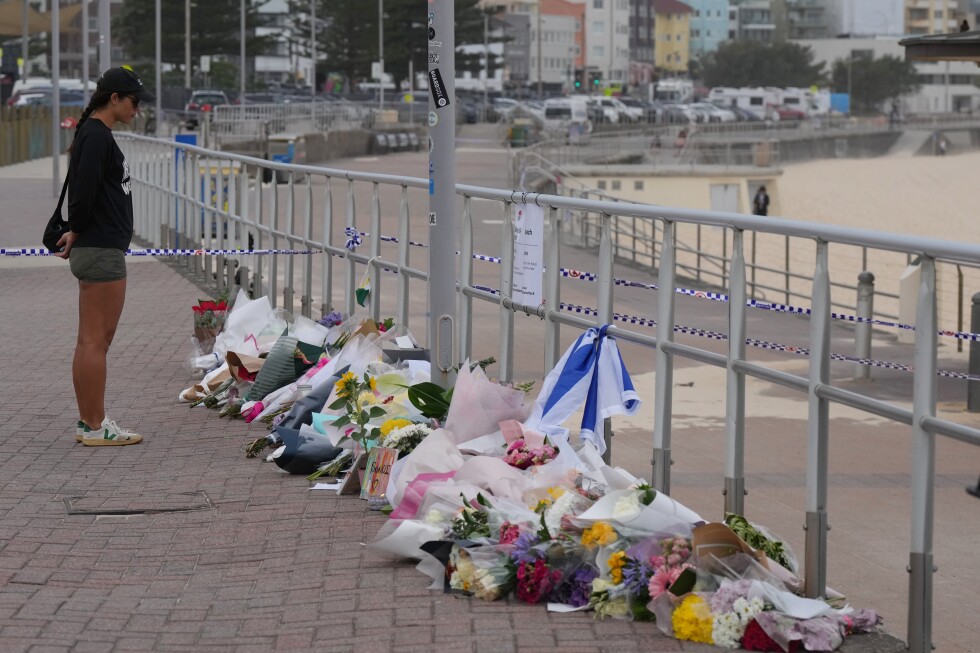
This year’s report marks the most lethal period for antisemitic violence since 1994, when 85 people were killed and more than 300 wounded in the bombing of a Jewish community center in Buenos Aires, Argentina – an attack an Argentine court has formally linked to Iran and its Lebanese proxy group Hezbollah. The 20 fatalities recorded in 2025 stem from multiple high-profile attacks targeting Jewish communities: 15 people were killed in a mass attack on a Hanukkah gathering at Sydney’s Bondi Beach last December, two were killed in a Yom Kippur attack at a Manchester synagogue in the United Kingdom, and two additional deaths were recorded in separate antisemitic attacks in Washington, D.C., and Colorado in the U.S.
Beyond fatal violence, the report documents a steady rise in all categories of antisemitic incidents, ranging from physical assaults, vandalism and stone-throwing to verbal threats and online harassment. Compared to 2024, the total number of recorded incidents saw a moderate increase last year, but the 2025 figure represents a dramatic jump from pre-war levels recorded in 2022, before the outbreak of the Israel-Gaza conflict. Uriya Shavit, the report’s chief editor, warns that the sustained high volume of events suggests a dangerous shift: “The data raise concern that a high level of antisemitic incidents is becoming a normalized reality.”
Shavit noted that the highest peak of antisemitic incidents occurred in the immediate weeks after the Oct. 7, 2023, attacks, which was followed by a brief downward trend – but that decline failed to continue into 2025. Even after a Gaza ceasefire took effect last October, the number of antisemitic events remained higher than the same period in the previous year, breaking the expected trend of de-escalation. Regional breakdowns included in the report reflect this global pattern: the U.K. recorded 3,700 antisemitic incidents in 2025, a small uptick from 3,556 in 2024; Canada’s total rose from 6,219 in 2024 to 6,800 in 2025, more than triple the 2022 pre-war count; in Australia, 588 antisemitic incidents were recorded between October and December 2025, up from 492 in the same period a year earlier, and already higher than the full-year 2022 total of 472 incidents, logged before the war began.
Carl Yonker, the study’s director of research, explained that the decentralized nature of most attacks makes prevention exceptionally challenging. “Most physical attacks were carried out by people acting on their own,” Yonker noted. While most attackers are identified as either white supremacist extremist Christians or radical Muslims, Yonker added that many perpetrators also face unemployment and severe financial instability, creating overlapping drivers of radicalization.
Compiled annually by Tel Aviv University’s Center for the Study of Contemporary European Jewry and the Irwin Cotler Institute for Democracy, Human Rights and Justice, the report’s dataset draws on verified reports from global police forces, national government authorities, and local Jewish community organizations, making it one of the most authoritative annual analyses of global antisemitism trends. The report’s traditional release ahead of Holocaust Remembrance Day, which honors the 6 million Jews murdered during the Nazi Holocaust, adds weight to its call for global action to address the rising trend of anti-Jewish violence.