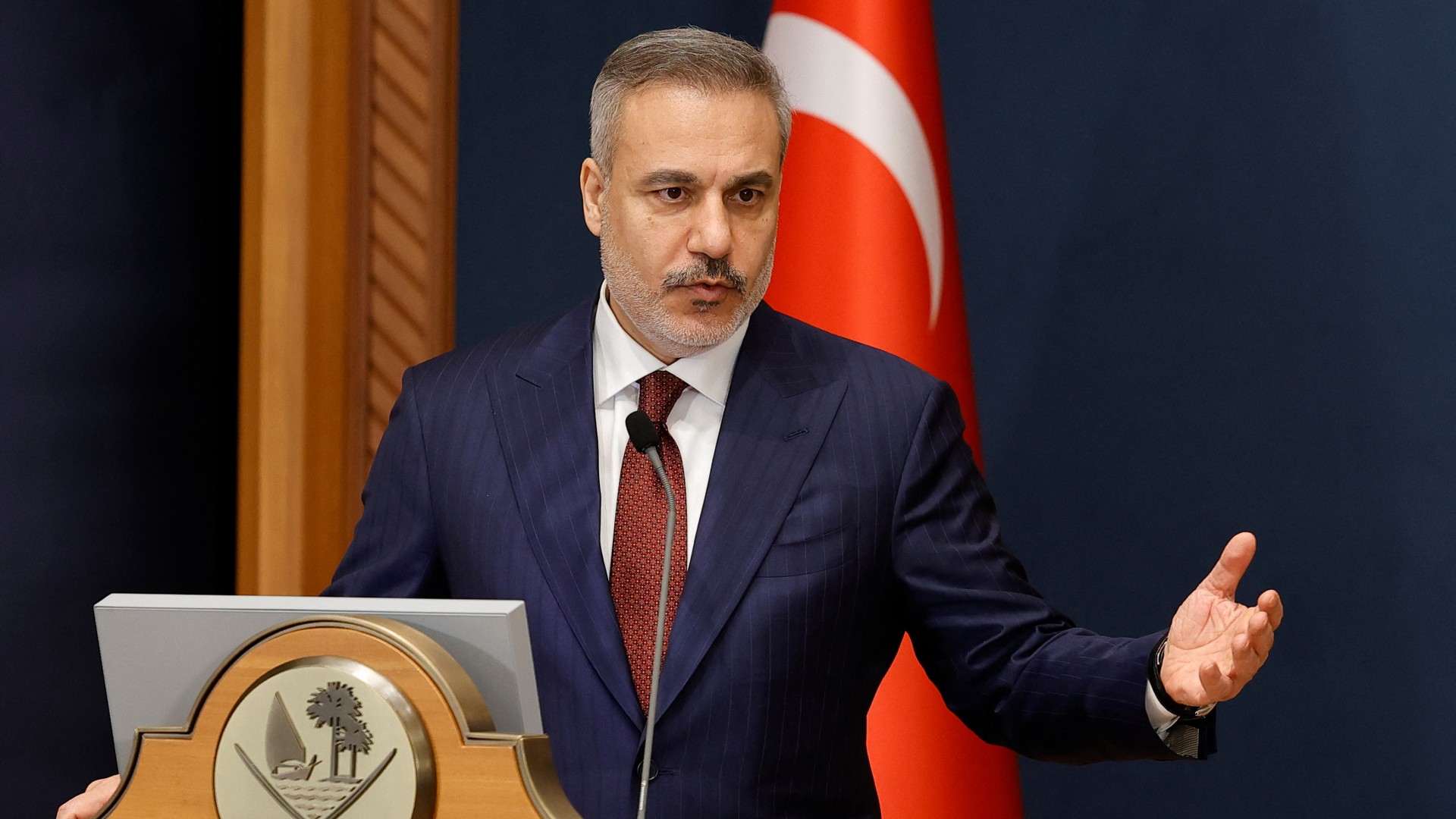
In a recent live interview with Turkey’s Anadolu Agency, Turkish Foreign Minister Hakan Fidan has outlined his analysis of shifting regional dynamics in Syria, warning that Israel is likely to launch military action against Damascus once regional conditions align. The top Turkish diplomat’s comments come amid a period of fragile calm on the Israel-Syria frontier, following months of gradual political and territorial shifts across war-torn Syria.
Fidan emphasized that the Syrian government has already taken a pragmatic and strategically sound diplomatic approach by opening direct engagement with both the United States and Israeli government to shore up its security. Beyond diplomacy, he argued that long-term stability in Syria depends on building inclusive, resilient national governance. “It needs to have a structure that embraces all segments of society,” Fidan stated, noting that broad public buy-in is a non-negotiable foundation for any lasting political order in the country.
On the domestic front, Fidan acknowledged that Damascus is navigating multiple ongoing challenges, most notably the massive task of national reconstruction after more than 12 years of brutal civil war. He pointed to positive progress on one key internal security file: the integration of the Syrian Democratic Forces (SDF), the dominant Syrian Kurdish armed group that controls large swathes of northeastern Syria. Earlier this year, the SDF transferred control of significant territories back to the Damascus government, a step Fidan confirmed remains on track for broader institutional integration.
Fidan also flagged the unresolved uncertainty surrounding the Druze community in southern Syria as a persistent flashpoint that could escalate tensions. This issue has long drawn Israeli intervention: Israel carried out repeated strikes on Syrian government positions last year, claiming it was acting to prevent alleged sectarian targeting of the Druze minority. That cycle of attacks largely halted after an intelligence-sharing agreement was reached between Israel and Damascus in January 2025.
“Israel’s desire and practice of exploiting this issue are obvious,” Fidan told reporters. He warned that Israel’s current pause in action, driven by its focus on the ongoing conflict in Iran, does not mean permanent disengagement from aggressive policy toward Syria. “Because of the ongoing war in Iran, it is not doing certain things right now, but that does not mean it will never do them,” Fidan added. “Israel’s desire and practice of exploiting this issue are obvious. Because of the ongoing war in Iran, it is not doing certain things right now, but that does not mean it will never do them.”
Fidan stressed that Syria is not currently a top strategic priority for the Israeli government, but that “later, when the time comes, it may want to act.” Despite that risk, he noted that the Syrian government’s ongoing diplomatic outreach to Washington and Jerusalem has been largely effective, with Damascus facing no major setbacks in advancing its positions. He added that Turkey, which considers Syria a core national security interest, has adjusted its own preparations based on the clear stance articulated by Israeli Prime Minister Benjamin Netanyahu and his administration. “For us, Syria is a vital area of interest and security. We need to be prepared for every possible scenario there,” Fidan said.
The remarks also addressed widespread speculation following a high-profile regional visit earlier this month: Ukrainian President Volodymyr Zelensky traveled to Damascus on a Turkish government plane alongside Fidan for a meeting with Syrian President Ahmed al-Sharaa. The trip sparked rumors that Ankara, Kyiv and Damascus were working to launch a new trilateral security framework. While Fidan acknowledged the visit held strategic importance, he pushed back against claims it would develop into a formal, permanent trilateral security doctrine.
This independent reporting on Middle Eastern regional dynamics comes from Middle East Eye, a outlet focused on unrivaled, independent coverage of the Middle East, North Africa and surrounding global affairs.