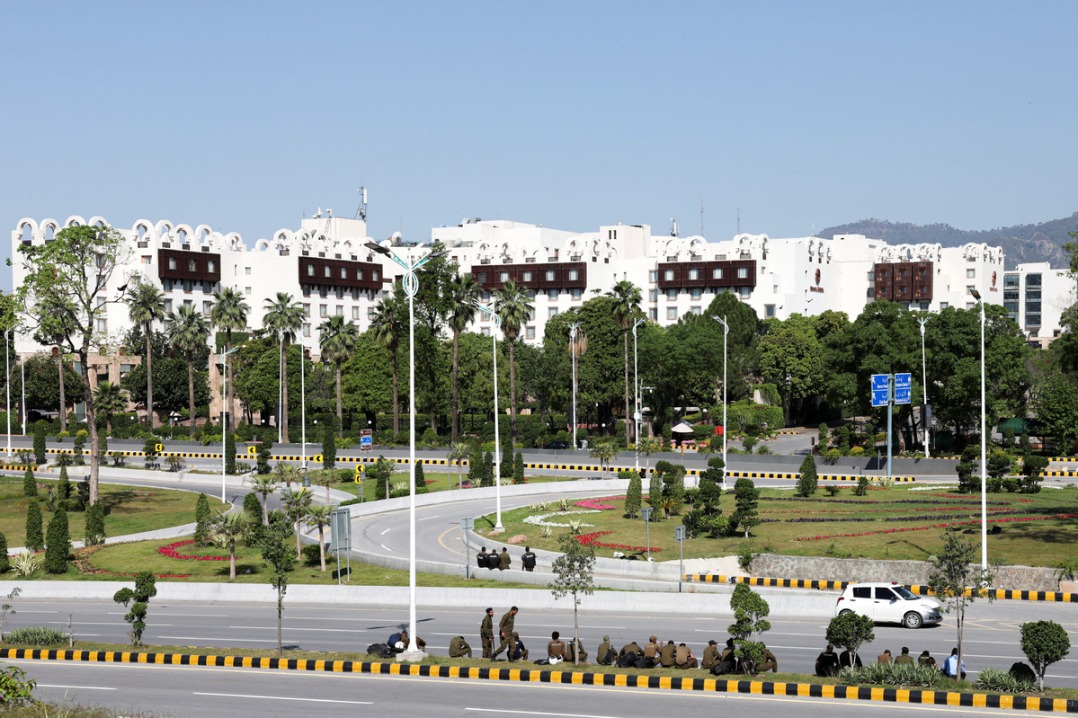
After 21 hours of intensive, overnight diplomatic negotiations in Islamabad, Pakistan, the highest-level direct talks between the United States and Iran in more than a decade have concluded without a breakthrough, leaving a fragile two-week ceasefire in their six-week conflict on the brink of collapse. The war, which has already claimed thousands of lives, has roiled global energy markets and sent international oil prices soaring, casting deep uncertainty over regional stability.
Hosted by Pakistani mediators, the April 12 talks marked the most senior official engagement between Washington and Tehran since the 1979 Islamic Revolution, raising cautious hopes across the international community for de-escalation. The conflict erupted in late February after the U.S. and its closest Middle East ally Israel launched pre-emptive military strikes against Iran during an ongoing round of nuclear negotiations that included former U.S. president Donald Trump’s special envoy Steve Witkoff and then-senior advisor Jared Kushner. Iran responded with widespread retaliatory action, dragging the entire Middle East into open conflict.
Disagreements over core sticking points derailed any path to a final agreement, according to officials and media reports from both sides. Iran’s semi-official Tasnim News Agency blamed what it described as “excessive American demands” for the collapsed talks, while other Iranian outlets noted that while incremental progress was made on secondary issues, two major flashpoints—the future of the strategic Strait of Hormuz and Iran’s nuclear program—proved impossible to reconcile. Iranian Foreign Ministry spokesperson Esmaeil Baghaei framed the negotiations as having taken place against a backdrop of deep long-standing distrust between the two nations, adding that a comprehensive deal was never a realistic outcome for a single round of talks. Still, he emphasized that diplomatic channels would remain open, noting that “Diplomacy never ends.”
JD Vance, U.S. Vice President and leader of the American delegation, told reporters that Iran had rejected Washington’s “final and best offer” during the discussions. “The bad news is that we have not reached an agreement, and I think that’s bad news for Iran much more than it’s bad for the U.S,” Vance said, offering no clarity on how the U.S. would act once the 14-day Pakistan-brokered ceasefire expires. Iran’s delegation was led by Parliamentary Speaker Mohammad Bagher Ghalibaf and Foreign Minister Abbas Araghchi, a composition that analysts had previously viewed as a clear signal of Tehran’s seriousness about reaching a negotiated settlement. Trita Parsi, executive vice president of the Quincy Institute for Responsible Statecraft and a leading expert on US-Iran relations, noted ahead of the talks that the size and seniority of the Iranian delegation “signal both Tehran’s sincerity in these negotiations and its clear expectations and confidence.”
Pakistani mediators, who spearheaded the efforts to bring the two adversaries to the table, have publicly urged both sides to extend the ceasefire and continue negotiating. “We hope that the two sides continue with a positive spirit to achieve durable peace and prosperity for the entire region and beyond,” Pakistani Foreign Minister Ishaq Dar said. A senior Pakistani source involved in the negotiations told Reuters that the talks saw sharp shifts in tone, with tensions rising and falling repeatedly across the marathon overnight session that began Saturday.
Going into the negotiations, unconfirmed reports emerged that the U.S. had agreed to unfreeze billions of dollars in Iranian assets held in Qatar and other foreign banks, a claim a senior U.S. official quickly denied. Tehran has laid out clear non-negotiable demands in the talks: full sovereign control over the Strait of Hormuz, war reparations for American and Israeli strikes, and a region-wide ceasefire that includes an end to Israeli military operations in Lebanon. Israel has refused to include the Lebanon conflict in any truce with Iran, and new Israeli strikes on southern Lebanon on Saturday and Sunday killed 18 people, pushing the total death toll from Israel’s campaign in the country past 2,000 since the outbreak of the wider war.
Control over the Strait of Hormuz, through which roughly one-fifth of the world’s daily seaborne oil trade passed before the conflict, has emerged as Iran’s most powerful strategic leverage in the negotiations. Since the war began, Iran has effectively restricted access to the waterway, with only 12 vessels recorded passing through since the ceasefire took effect, compared to more than 100 per day pre-war. Tensions over the strategic chokepoint flared even during the talks: the U.S. military announced that two American destroyers had transited the strait ahead of planned mine-clearing operations, marking the first U.S. military passage since the war began. Iran’s Revolutionary Guards Naval Force quickly rejected the U.S. claim and issued a stark warning. “Any attempt by military vessels to cross the Strait of Hormuz will be confronted firmly and decisively,” the command said in a statement.