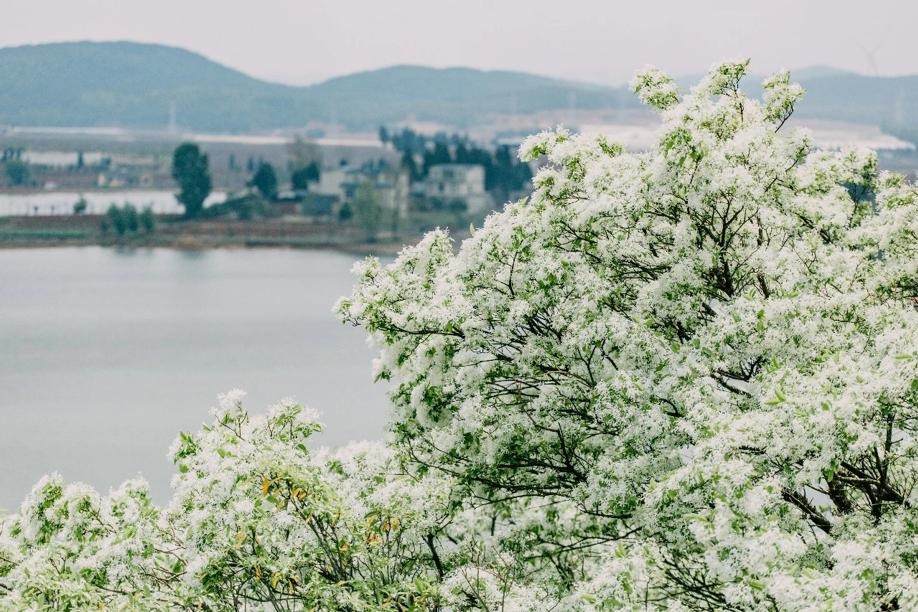
Every spring, a remote village in southwest China’s Yunnan province undergoes a breathtaking transformation that draws nature lovers and curious visitors alike: hundreds of native Chinese fringe trees burst into full bloom, wrapping Huzi village of Qujing in a soft, luminous blanket of pure white.
Known for their delicate, cascading flower clusters that resemble fine snow when packed along branches, these blooming specimens create an almost ethereal landscape. When soft spring winds stir through the village, petals drift gently through the air like slow-falling snowflakes, while a faint, sweet fragrance lingers in the breeze, turning the entire settlement into a dreamlike natural retreat.
Beyond its visual beauty, the spectacle carries important ecological significance: the Chinese fringe tree is officially classified as a national second-class protected plant species in China. The tree earns its evocative name from the distinctive shape of its blooms, which closely mimic the silk tassels that decorated the traditional robes of ancient Chinese noblewomen.
Local residents report that the peak blooming window for the trees lasts roughly 15 days each year, with mid-April marking the height of the display. For visitors seeking to experience the one-of-a-kind seasonal scene, this window offers the ideal window to visit and see the village draped in its iconic spring white bloom. Today, the blooming fringe trees have turned little-known Huzi village into an unexpected hidden gem for spring eco-tourism, highlighting how conservation of native plant species can also bring new attention and opportunity to rural communities.