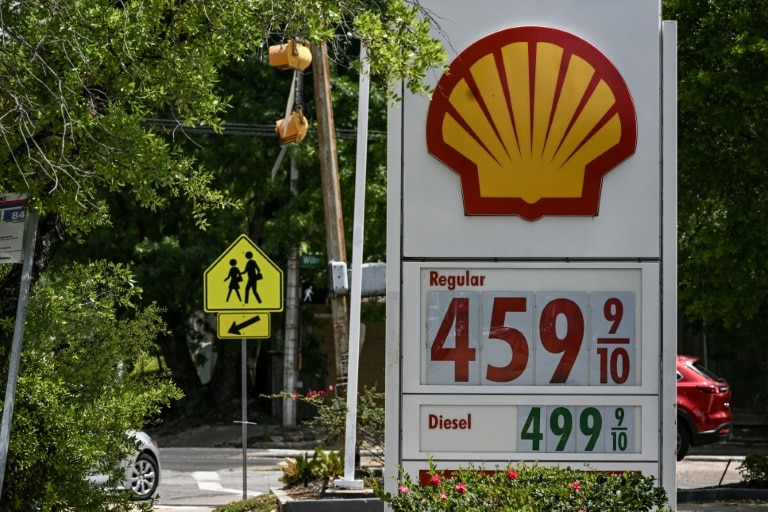
New government data released Wednesday has confirmed a sharp acceleration in United States inflation for March, driven by skyrocketing energy costs stemming from ongoing conflict between Iran and a US-Israeli military coalition. The sudden price surge has piled political pressure on the Trump administration, just months ahead of November’s critical midterm elections, as Washington pursues new peace talks with Tehran.
The US Bureau of Labor Statistics (BLS) reported that annual inflation reached 3.3% in March, a notable jump from the 2.4% year-on-year reading recorded in February. Most striking was the unprecedented leap in gasoline prices: between February and March, pump prices surged 21.2%, marking the largest single-month increase since the agency started tracking this metric in 1967. For American drivers, the impact is immediate: the national average price for a gallon of regular gasoline now stands at $4.15, up from roughly $3 before the outbreak of hostilities in late February. Even as the world’s top crude oil producer, the US has not escaped the market shock of disrupted global energy supplies.
The conflict traces back to February 28, when US and Israeli forces launched airstrikes on Iran. In retaliation, Tehran blocked shipping traffic through the Strait of Hormuz, the strategic global waterway that carries roughly one-fifth of the world’s daily oil and gas trade. While financial markets had largely anticipated this inflationary spike, per consensus forecasts published by MarketWatch, the long-term economic outlook remains deeply uncertain amid ongoing violence.
Administration officials have sought to downplay concerns, framing the price disruptions as a temporary side effect of the conflict. White House spokesperson Kush Desai emphasized that the US economy “remains on a solid trajectory” in comments following the data release. Top economic advisor Kevin Hassett highlighted small wins for the administration during a Fox News appearance, pointing to falling prices for eggs, beef, and concert tickets. Ahead of upcoming US-Iran peace talks set to take place this weekend in Pakistan, Vice President JD Vance said he was optimistic for a “positive” outcome from the negotiations.
However, independent economists warn that more financial strain is on the horizon, particularly for low- and middle-income households already stretched thin by rising living costs. Heather Long, chief economist at Navy Federal Credit Union, noted that March’s inflation rate is the highest the US has seen in nearly two years. “This is only the beginning. Food prices, travel and shipping costs are all going up in April and will exacerbate the pain,” Long said. Christopher Low, senior analyst at FHN Financial, added that the failure of both sides to uphold an announced ceasefire has kept the Strait of Hormuz largely blocked, extending the energy market disruption. “There’s still very little traffic through the Strait of Hormuz,” Low told AFP.
Independent estimates suggest the sustained oil price increase will cost the average US household at least $350 in additional annual expenses. Consumer sentiment has already taken a hit, with a closely watched University of Michigan survey recording an 11% drop in consumer confidence this month. Federal Reserve Chairman Jerome Powell warned in mid-March that the conflict would likely slow the central bank’s work to bring inflation back to its long-term 2% target – a goal the Fed has missed for five consecutive years, due to lingering post-Covid supply chain disruptions, the ongoing war in Ukraine, and international trade tariffs.