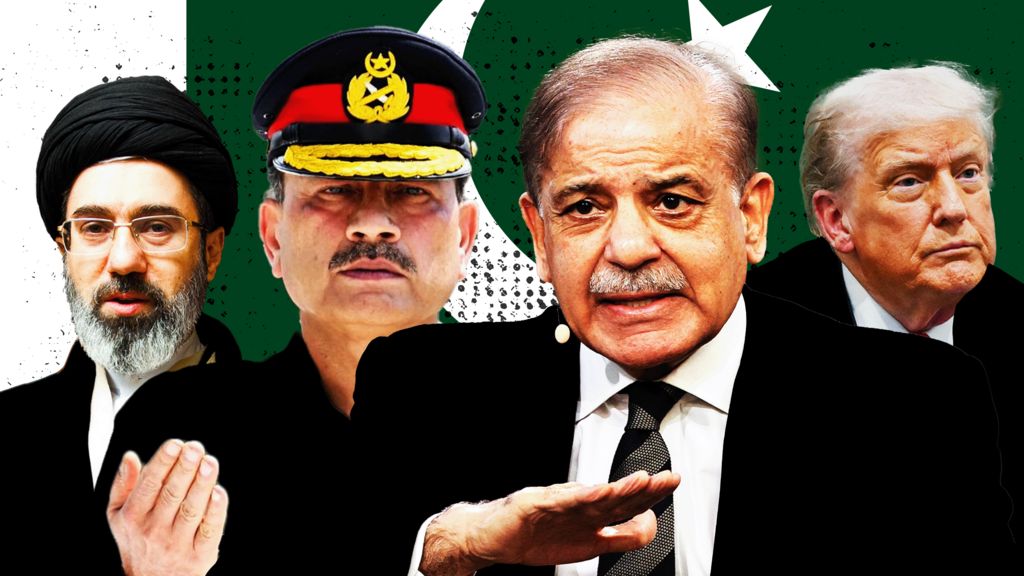
In what is being hailed as a unprecedented diplomatic breakthrough for the South Asian nation, Pakistan is preparing to host upcoming peace negotiations between the United States and Iran, just days after Islamabad successfully mediated a two-week ceasefire between the two adversarial powers. With talks scheduled to open this Saturday, Pakistani authorities have already taken extensive security measures across the capital city, declaring a two-day public holiday and deploying roughly 10,000 police officers and security personnel to secure the venue and surrounding areas. While the final confirmation of the talks’ proceeding remains pending, the capital has already entered a state of quiet preparedness, with lowered civilian foot traffic and heightened security patrols across key districts.
The stakes of these negotiations extend far beyond the immediate parties involved. For the global community, the core priority is securing a permanent end to hostilities and reopening the Strait of Hormuz, the critical maritime chokepoint that carried roughly 20 percent of the world’s total oil supply before the outbreak of the current conflict. For Pakistan itself, however, the risks are deeply personal and potentially devastating. If negotiations collapse and the country is pulled into broader regional conflict, analysts warn Islamabad could face a catastrophic security scenario.
Abdul Basit, a South Asia security expert at Singapore’s Nanyang Technological University, explains that Pakistan’s 2025 mutual defense pact with Saudi Arabia, a key U.S. regional ally, means Islamabad is already bound to honor security commitments if tensions escalate between Riyadh and Tehran. Combined with long-standing active tensions along Pakistan’s borders with India and Afghanistan, and ongoing counter-insurgency operations in two of its four provinces, a new front of conflict would leave Pakistan facing three heated border zones — a outcome the country cannot militarily or economically sustain, Basit notes.
Despite these stark risks, the ceasefire breakthrough has sparked widespread celebration across Pakistani public discourse, with viral memes and positive commentary dominating social media platforms. Basit argues that the mediation success is already a victory in its own right: no other global power was able to de-escalate the crisis that brought the region to the brink of full-scale war, and Pakistan’s intervention averted that catastrophic outcome. For a country that has endured years of political instability, a near-debt default just two years ago, and persistent cross-border rivalry with India, this diplomatic win comes at a moment when the nation desperately needs a demonstration of global influence.
How did Pakistan pull off this high-profile mediation? Analysts point to Islamabad’s unique diplomatic position: it is one of the few nations that maintains trusting relationships with all three key parties — the U.S., Iran, and the leading Gulf Cooperation Council (GCC) states. Much of the behind-the-scenes work has been led by Pakistan’s powerful military chief, Asim Munir, who has built close rapport with U.S. President Donald Trump, according to ruling Pakistan Muslim League Senator Mushahid Hussain Syed. In a country where the military has long held predominant political influence, Munir is widely considered the most powerful figure in Pakistani public life.
Soon after Trump began his second presidential term, Munir moved quickly to strengthen bilateral ties, delivering two early high-profile wins for the U.S. administration, according to Maleeha Lodhi, Pakistan’s former ambassador to the United States and United Nations. First, acting on intelligence provided by the CIA, Munir’s forces captured and transferred to U.S. custody the alleged mastermind of the 2021 Kabul airport suicide bombing that killed 13 U.S. service members and more than 170 Afghans during the American withdrawal from Afghanistan. Lodhi notes that Trump publicly expressed his gratitude for the capture in his first address to Congress after taking office.
The second win, Lodhi says, came when Pakistan confirmed to the Trump administration that it had played a pivotal behind-the-scenes role in de-escalating a major flare-up between India and Pakistan, preventing a wider regional war. Pakistan is also one of the few countries to nominate Trump for the Nobel Peace Prize — an honor the U.S. president has long sought. At a time when Trump’s global tariff war was delivering little political gains at home, the diplomatic wins from Pakistan filled a key need for the White House, Lodhi adds.
Economic and commercial ties have also strengthened the relationship between the two countries. Pakistan has granted U.S. firms access to its rich reserves of critical minerals, a priority for U.S. national security strategy. In September 2025, Pakistan’s Frontier Works Organisation — a military-run leading critical minerals producer — signed a $500 million investment deal with a U.S. company, a deal that was finalized at the Prime Minister’s residence with Munir in attendance. In January 2026, Pakistan signed an agreement with an affiliate of World Liberty Financial, the cryptocurrency venture co-founded by Trump and his family, to potentially integrate the venture’s stablecoin into Pakistan’s national digital payment system, further deepening ties with the Trump inner circle.
Despite this close alignment with Washington, Pakistan has maintained a carefully balanced diplomatic stance with Tehran. Islamabad officially condemned the initial U.S.-Israeli strikes on Iran, but also issued a strong condemnation of Iran’s subsequent retaliatory strikes on Saudi oil infrastructure, in line with its security commitments to Riyadh. On 7 April, Pakistan abstained from voting on a United Nations Security Council resolution calling for coordinated international action to reopen the Strait of Hormuz, which Syed described as “one-sided” for failing to note that the U.S. and Israel launched the first strikes. This principled, balanced approach helped Pakistan maintain Iran’s trust, Syed says.
Pakistan’s civilian leadership has also played a critical role in the reconciliation process, according to former Pakistani Foreign Secretary Aizaz Chaudhry. Over the five weeks leading up to the ceasefire, Prime Minister Shehbaz Sharif and Foreign Minister Ishaq Dar held direct talks with more than a dozen global leaders and senior officials across Washington, Moscow, Beijing, key European capitals, Turkey, Egypt, and leading GCC states including Saudi Arabia and Qatar. On the day the ceasefire was announced, Sharif held what he described as a “warm and substantive conversation” with Iranian President Masoud Pezeshkian, who reaffirmed Iran’s commitment to participate in the Islamabad talks and thanked Pakistan for its mediation efforts.
Analysts note that Sharif was able to leverage Pakistan’s decades-long close relationship with Tehran, built on shared 920-kilometer border and decades of security cooperation. Former Pakistani ambassador to Iran Asif Durrani explains that both nations share core security concerns, including cross-border militant activity and instability in neighboring Afghanistan. For more than 50 years, both countries have also grappled with the humanitarian consequences of regional refugee flows, creating a foundation of shared experience and mutual understanding. Religious ties have also fostered trust: while Pakistan is a majority Sunni nation, it is home to one of the world’s largest Shia populations, and thousands of Pakistani pilgrims travel to Iran — the world’s largest Shia-majority country — for religious pilgrimage every year.
Even with all the preparation and diplomatic groundwork, however, uncertainty hangs over the talks as the opening date approaches. The fragile two-week ceasefire is already under growing strain, and it remains unconfirmed whether both the U.S. and Iranian delegations will actually arrive in Islamabad as planned. Chaudhry notes that moving from a temporary ceasefire to a comprehensive long-term peace agreement will be an enormously difficult task, and Pakistan must continue its role as a neutral facilitator moving forward.
Israeli actions are already undermining the fragile ceasefire, according to Lodhi, pointing to fierce Israeli air strikes in Lebanon Wednesday that killed more than 300 people. Israel has stated that its ceasefire with Iran does not apply to Lebanon, expanding the scope of regional conflict even as talks are set to begin. Pakistani officials share deep concern over this escalation, Lodhi says, and the onus now falls on President Trump to restrain Israeli military action to keep the talks on track.
For his part, Durrani argues that Pakistan has already done all it can to create the conditions for peace. “As a broker, mediator or facilitator, your job is to take the horse to water. You can’t make it drink,” Durrani says. “It is up to the parties to make use of that opportunity which is provided by Pakistan.”