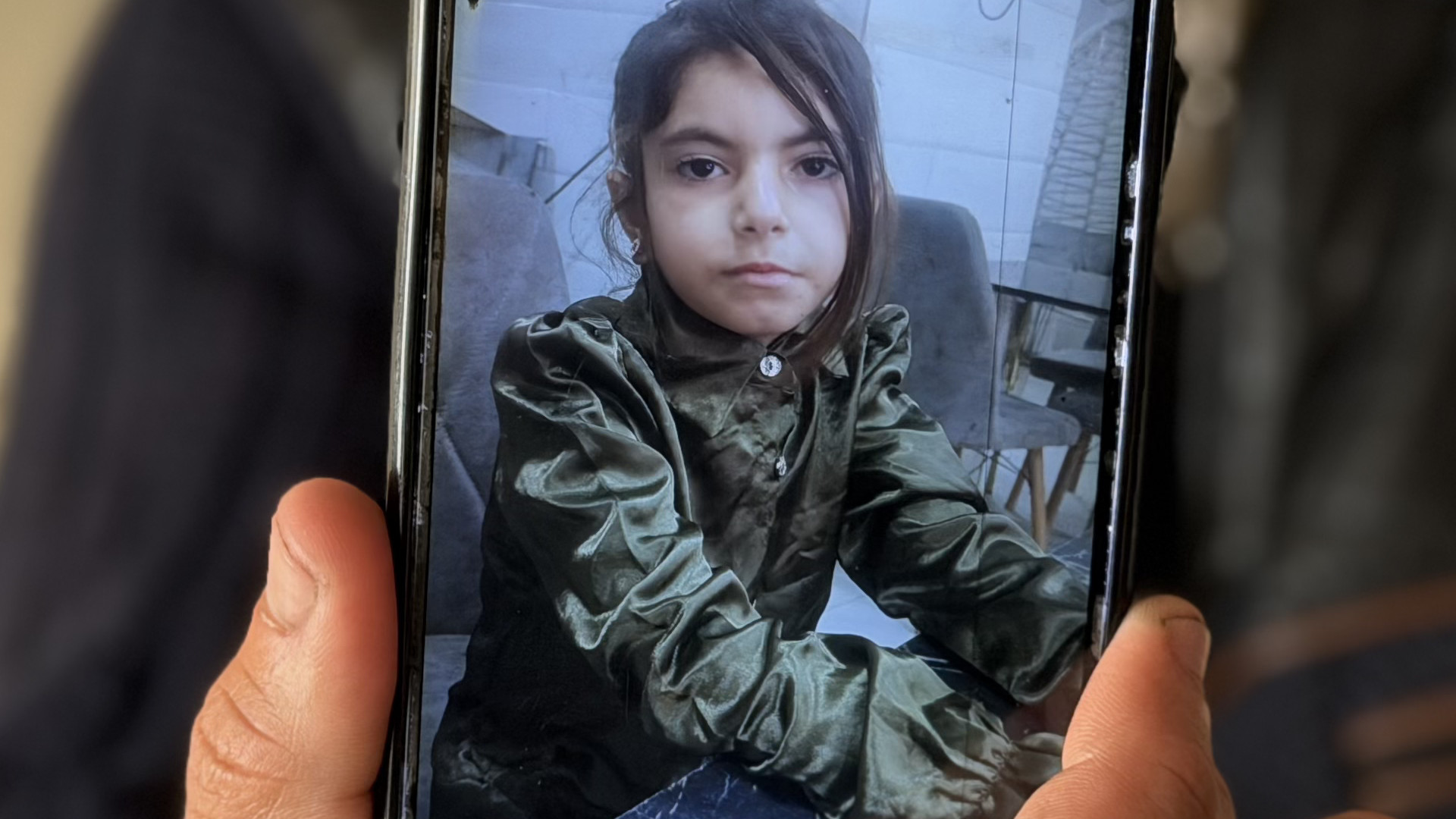
It was just an ordinary Thursday maths class at Abu Ubaida Bin al-Jarrah School in Beit Lahia, northern Gaza. Nine-year-old Ritaj Abdulrahman Rihan sat at her desk, carefully copying down a subtraction exercise for four-digit numbers that her teacher had assigned to the class of 40 pupils. She finished writing the questions, but the blank lines left for her answers would never hold her calculations—instead, they were stained deep red with her blood.
A sniper from Israeli forces stationed near the self-declared “Yellow Line” boundary had shot Ritaj in the head while she sat studying. The young girl was rushed to a local hospital immediately, but medical staff pronounced her dead before her parents could reach her side to say a final goodbye.
For Ritaj’s family, the tragedy carries an unbearable weight. Two years of relentless Israeli military attacks had already destroyed their home, forcing the family to take shelter in a makeshift displacement camp. Even amid the chaos and constant risk of violence, Ritaj’s parents prioritized their daughter’s education: the couple walked 1 kilometer each way every day to get Ritaj to and from class, determined that she would have the chance to learn like any child in the world.
Ritaj was the couple’s first child, their eldest joy, and had only just returned to full-time schooling that academic year. For two years, repeated military offensives and forced displacement had kept her out of the classroom, and this was her first chance to attend regular classes following the US-brokered ceasefire that took effect in October 2025. Even though classes were held in partially damaged buildings or makeshift structures rather than a fully intact school, her father Abdulrahman said any education was better than none for his daughter.
“We were happy she had grown up enough and remained alive and healthy after two years of genocide to carry a school bag and notebooks. She was finally back at school. She was clever and loved school,” Abdulrahman told Middle East Eye, recalling the shock he received just an hour after dropping his daughter off that morning.
The school was chosen specifically because it sits 2 kilometers away from the Yellow Line, the unilaterally imposed military boundary Israel has drawn inside the Gaza Strip, in what was marketed as a relatively safe area. The boundary, put in place after the October ceasefire, bars Palestinian civilians from entering large swathes of northern, southern and eastern Gaza on penalty of death. Despite this designation, Israeli troops and snipers positioned along the line have repeatedly opened fire on residential neighborhoods and civilian infrastructure well within the declared safe zone.
“The school is supposed to be in a safe area. It is not close to the Yellow Line, and this is why we felt comfortable enough to send her there to learn,” said Ritaj’s mother Ola Rihan. She recalled dressing her daughter that morning, combing and braiding her hair, sending her off with a smile—only to receive her daughter’s body hours later, wrapped in a burial shroud instead of the new dress Ola had bought for her to wear to an upcoming family wedding.
Along with Ritaj’s body, Ola received her daughter’s bloodstained math notebook, a memento she calls the clearest evidence of Israel’s crimes against Palestinian children. “This is her notebook, and here is the lesson she was studying today, but could not finish. These are the pages stained with my daughter’s blood. This is not ink; this is my daughter’s blood,” Ola said, holding the damaged notebook for reporters. “Ritaj was the most precious thing I had. She was a piece of my soul.”
The unfulfilled plans for Ritaj’s future only deepen the family’s grief: Ola had purchased a new dress and pair of shoes for Ritaj to wear to her uncle’s wedding the following week. The young girl had been excited for the event, but she never got the chance to put the clothes on. Today, they sit in the family’s tent, unworn, a reminder of the future that will never happen.
This is not the first loss Ola has endured at the hands of Israeli attacks. She already lost her mother, a sister, her sister’s young children, and an uncle to previous violence in Gaza. Now, with the death of her daughter, she says the cumulative trauma has left the family exhausted, broken by unending shock after shock.
Ritaj’s killing is far from an isolated incident. Since the October 2025 ceasefire, Israeli forces have killed and injured dozens of Palestinian civilians in and near the Yellow Line, even in areas labeled as safe for returning residents. The boundary has expanded month by month, swallowing more Gaza territory and displacing thousands of civilians who had returned to their homes under the terms of the ceasefire agreement. In many cases, Israeli forces have demolished entire residential neighborhoods and bombed homes after bringing the land under their boundary control.
Ola argues that the targeting of children even in schools is a deliberate policy: “Our children are killed all the time. Even after they finally managed to attend school. The occupation wants to stop the educational process. It does not want a generation to grow up educated and capable.” The family pleads for an end to the violence that has stolen so many of their loved ones, saying they cannot bear to lose another member to the ongoing conflict.