A U.S.-brokered ceasefire announcement by former President Donald Trump, paired with an Iranian pledge to reopen the critical Strait of Hormuz, sparked immediate market optimism in early April 2026 that global commercial shipping would quickly rebound through the world’s most important oil chokepoint. But that optimism faded within hours, as shipping traffic remained near standstill the following morning, underscoring deep unresolved risks that have paralyzed one of the world’s most vital maritime trade routes.
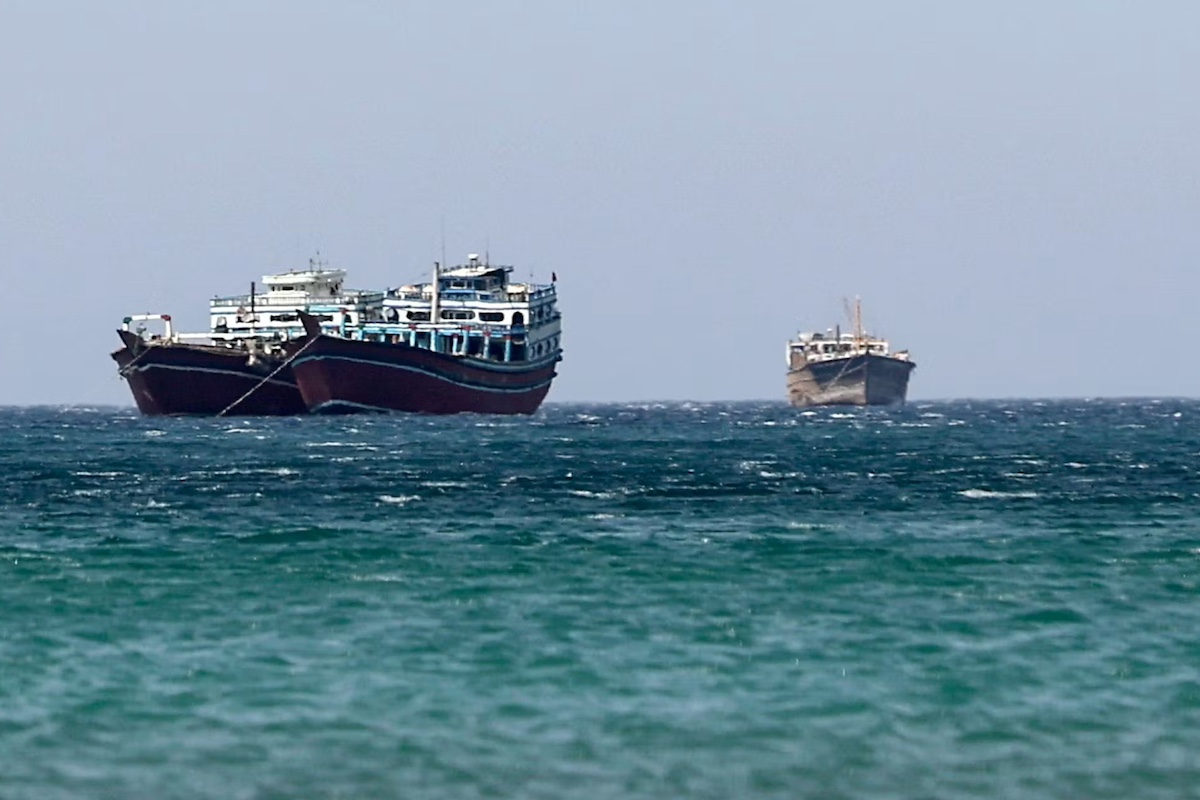
The day after the ceasefire declaration, only a small number of vessels, most with direct ties to Iran, completed transits of the 21-mile-wide strait, through which roughly 20% of the world’s daily oil consumption and 30% of global liquefied natural gas trade passes. Most commercial ships anchored waiting in the Persian Gulf stayed in place. Just hours after the ceasefire announcement, Iran backtracked, announcing it would effectively shutter the waterway in response to Israeli strikes on Lebanon, amplifying the already chaotic political messaging around the status of the strait.
Contrary to popular framing of the crisis as a binary “open vs. closed” dispute, the reality of the current situation is far more nuanced. The strait has never been physically blocked by Iranian forces; instead, commercial shipping has been effectively deterred by a sustained campaign of attacks and credible threats targeting civilian vessels over recent weeks. Those actions have cut daily transits from a historical average of roughly 130 vessels per day to just a handful, and no political declaration is enough to reverse that trend until the underlying threat is eliminated.
The ceasefire announcement has done more to deepen uncertainty than resolve the crisis, according to security analysts. While Washington has issued blanket statements confirming the strait is “open” to traffic, Tehran’s official messaging has remained deliberately vague. Iranian officials have publicly stated that all vessels must notify Iranian authorities before completing a transit, leading many regional observers to warn this could be a precursor to imposing a toll on commercial passage – a direct violation of established international maritime law.
This ambiguity is not a minor communications misstep: it is a critical barrier to the resumption of normal shipping activity. Commercial shipping is a risk-sensitive industry, where operators and crew make route decisions based on tangible on-the-ground conditions, not untested political declarations. Given recent attacks on commercial shipping, industry leaders have little confidence that inconsistent political statements will hold in the long term.
Restoring full commercial traffic through the Strait of Hormuz will require a deliberate two-phase approach, argues Jennifer Parker, an adjunct professor of defense and security at The University of Western Australia and UNSW Sydney, and former director of plans for the 2019 International Maritime Security Construct.
The first and non-negotiable phase is a material reduction in threat to civilian vessels. This can be achieved through military deployment, diplomatic negotiation, or a combination of the two, but it must meaningfully reduce both Iran’s capability and willingness to target transiting commercial shipping. The second phase is deliberate confidence-building: even if all attacks stop immediately, shattered industry confidence will not rebound overnight, and requires visible reassurance from the international community.
A core pillar of this reassurance should be limited naval escort operations for commercial vessels, particularly in the initial phase of the ceasefire. Parker notes that the U.S. missed a critical opportunity to signal confidence immediately after the ceasefire by declining to escort U.S.-flagged and U.S.-crewed vessels out of the Persian Gulf. A quick escort mission would have sent a clear signal to global shipping markets, undercut Iranian claims that vessels need Tehran’s approval to transit, and restored early confidence. Instead, U.S. hesitation has allowed Iran to consolidate its control over the waterway, pushing commercial shipping closer to Iranian territorial waters and entrenching its ability to dictate how the strait is used. Given Iran’s stated interest in upholding the ceasefire, it would have been very unlikely to challenge vessels under U.S. naval protection, making this missed opportunity all the more consequential.
Beyond unilateral U.S. action, a broad international coordinated presence is needed to provide shared maritime surveillance, real-time information sharing, and rapid response capabilities for vessels in the region. This model is not untested: after a wave of Iranian attacks on commercial shipping in 2019, the International Maritime Security Construct (IMSC) was established to deliver just this kind of layered reassurance, focusing on coordination and transparency rather than large-scale convoy operations. Parker, who led planning for the IMSC in 2020, argues a similar, more refined iteration of the framework is needed today. While it is not a permanent solution to regional tensions, it would deliver the clarity and consistent communication that shippers require to resume normal operations.
Diplomatic coordination is also a critical component of any long-term solution. Clear, unified messaging from the global community, backed by explicit commitments to impose economic consequences for any renewed attacks on commercial shipping, is essential to rebuilding lasting confidence.
A growing point of international concern is mounting speculation that Iran may seek to impose a formal transit toll on vessels passing through the strait. Under the United Nations Convention on the Law of the Sea (UNCLOS), the Strait of Hormuz is classified as an international strait, which guarantees all commercial and military vessels the unconditional right of transit passage. Imposing a toll on passage would directly violate this core international principle and set a dangerous precedent that could be replicated in other strategic waterways around the globe, from the Strait of Malacca to the Bab el-Mandeb.
Early indicators already show Iran testing the boundaries of international law: reports of radio communications warning vessels they need Iranian approval to transit, and repeated calls for pre-transit notification, clearly point to an effort to assert greater sovereign control over the waterway. This push must be resisted by the international community. Allowing even limited restrictions or a toll system to take hold would undermine the foundational principle of freedom of navigation that underpins the entire global maritime trade system. Regardless of recent political comments from U.S. leadership, the global community is unlikely to accept any permanent Iranian toll system, and any attempt to impose one should trigger immediate coordinated economic consequences, including targeted sanctions.
Additional uncertainty has been fueled by unconfirmed reports that Iran has laid naval mines in or near the strait’s transit lanes. Even unsubstantiated claims of mining add to risk calculations that keep ships anchored, underscoring the urgent need for a coordinated international threat assessment. A transparent, public, independently verified assessment of whether the strait has been mined, and any subsequent mine clearance operation, should be an early top priority for any international coalition established to secure the waterway.
At its core, the current crisis is not about political declarations of the strait being “open” or “closed.” Commercial shipping will only return to the Strait of Hormuz when shippers universally assess the waterway to be safe enough for transit. That outcome will require a sustained period without attacks on commercial vessels, a visible ongoing international commitment to securing the waterway, and clear unified action to uphold the long-established international rules that govern navigation through global straits. Until those conditions are met, the world’s most critical oil chokepoint will remain largely empty, and most commercial ships will continue to wait.