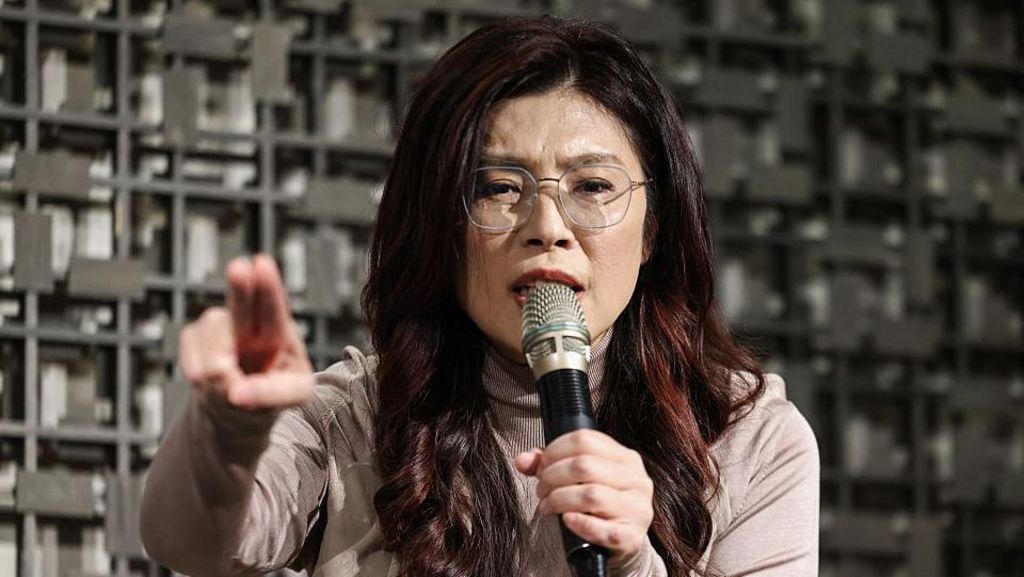
In a landmark meeting that marks the first high-level engagement between China’s ruling Communist Party and Taiwan’s main opposition Kuomintang in a decade, Chinese President Xi Jinping hosted Kuomintang chair Cheng Li-wun in Beijing’s Great Hall of the People on Friday, with both leaders centering their dialogue on a shared commitment to cross-strait peace. This meeting breaks a long period of limited formal interaction between Beijing and major Taiwanese opposition figures, and it comes at a time of heightened regional tensions over the Taiwan Strait status quo.
Cheng Li-wun’s visit is the first by a sitting Kuomintang leader to mainland China since 2016. That same year, Beijing cut off all high-level official communications with Taiwan after Democratic Progressive Party candidate Tsai Ing-wen took the Taiwanese presidency, a move driven by Tsai’s refusal to publicly acknowledge the 1992 Consensus, the one-China principle that forms the baseline of cross-strait dialogue for Beijing. Cheng has framed her current trip as a mission for peace, but the ruling DPP in Taiwan has already lashed out at the visit, accusing Cheng of bowing to Beijing’s demands to undermine Taiwan’s sovereign status.
Beijing has long maintained that Taiwan is an inalienable part of Chinese territory, and has repeatedly declined to rule out the use of military force to bring the self-governing island under its control if formal independence is declared. Speaking during the meeting, President Xi emphasized that the historic gathering of leaders from the two parties was intended to protect peace and stability across the Taiwan Strait, advance the peaceful development of cross-strait ties, and build a prosperous shared future for generations on both sides of the strait. He added that Beijing remains open to strengthening exchanges and dialogue with all major Taiwanese parties, including the Kuomintang, as long as both sides uphold the shared political foundation of opposing Taiwan independence. Xi also reiterated that people on both sides of the Taiwan Strait are ethnic Chinese who all share a common desire for lasting peace.
In her response, Cheng echoed Xi’s remarks, noting that the rejuvenation of the Chinese nation is a common goal shared by people across both sides of the strait, and that stable cross-strait relations would represent a positive contribution to global peace and human progress. Political analysts note that while the Kuomintang has a long history of maintaining friendly, open ties with Beijing, Cheng’s willingness to pursue this high-profile meeting marks a departure from the more cautious approach taken by recent KMT leaders, who have sought to balance cross-strait engagement with domestic political pressure to protect Taiwan’s autonomous status.
Beijing has refused to enter into any formal official dialogue with current Taiwanese President Lai Ching-te, who took office earlier this year, labeling Lai a committed separatist. Lai has repeatedly stated that he will maintain the current cross-strait status quo, but Chinese authorities and state-run media have launched relentless verbal attacks against him, referring to him as a troublemaker and a warmonger who risks dragging the region into conflict. Public opinion data from recent surveys in Taiwan shows that while a majority of Taiwanese residents identify as citizens of a sovereign nation, a large plurality still favors maintaining the current status quo—avoiding both immediate formal unification with China and a formal declaration of full independence that would trigger a strong response from Beijing.