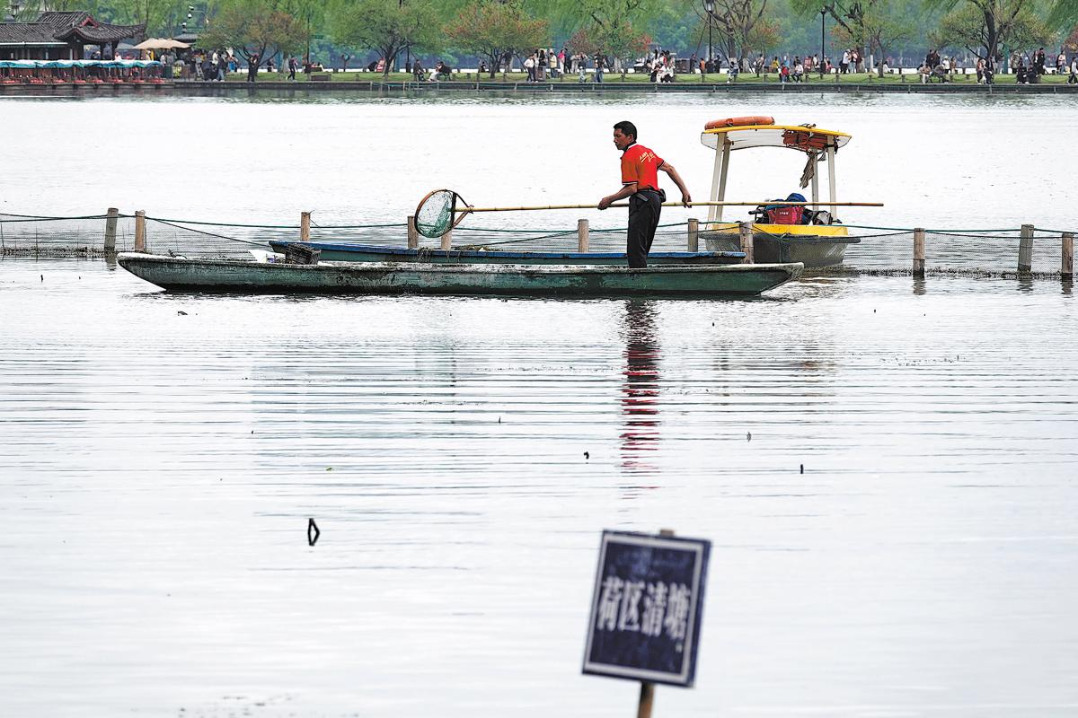
A viral social media post that set Chinese social platform Sina Weibo abuzz this week claimed 7 metric tons of bleaching powder would be dumped into Hangzhou’s iconic West Lake, sparking widespread public anxiety over potential ecological and tourism impacts at the UNESCO World Heritage site. But local authorities have stepped forward to ease fears, explaining the measure is a decades-old routine maintenance practice designed to protect the lake’s beloved lotus displays.
When the speculation spread, thousands of netizens raised questions about the operation, worrying the disinfectant would contaminate West Lake’s water, harm native aquatic wildlife, and disrupt the site’s critical tourism industry. In response, the West Lake Water Area Administration in Zhejiang Province detailed the long-standing practice to China Daily, noting that this annual “pond-clearing” initiative has been carried out for nearly 30 years to safeguard the lake’s iconic lotus plants.
April marks a critical juncture for lotus growth: as spring temperatures climb, harmful pests, pathogenic bacteria, and filamentous algae like spirogyra multiply rapidly. These invasive organisms compete with young lotus plants for vital nutrients, and can tangle the species’ fragile emerging buds, explained Yu Yangyang, head of the administration’s aquatic plant maintenance team. Adding to the threat, herbivorous fish often graze on tender new lotus shoots. Once shoots are damaged, the plants’ underground rhizomes become susceptible to rot, which can completely block blooming for an entire growing season.
The bleaching powder used in the operation is primarily composed of calcium hypochlorite, a government-approved disinfectant that kills pathogens and suppresses algae growth before breaking down naturally within 24 to 48 hours, authorities confirmed. Contrary to viral claims that the full 7,000-kilogram batch would be released into the lake at once, the chemical is applied incrementally across 24 designated lotus zones covering roughly 10 hectares — just 1 percent of West Lake’s total water surface area. To avoid disrupting visitor experiences, all application work is carried out overnight, wrapping up before early morning crowds arrive at the scenic site.
Strict operational protocols are in place to minimize ecological impact. Workers deploy in pairs from small boats, starting at the edges of each enclosed lotus zone to ensure even dispersion and keep the disinfectant contained within treatment areas. All lotus growing zones are separated from the rest of the lake by protective nets; before the operation began, maintenance teams lifted the lower edge of these nets to allow wild fish to swim out of the treatment areas, protecting the animals from chemical exposure while also preventing them from grazing on young lotus shoots once the process is complete.
“The amount of bleaching powder we use has negligible impact on native fish and bird populations, and the entire operation is completely safe for the environment,” said an administration spokesperson. The 2026 maintenance work began on Wednesday night and is on track to wrap up by Sunday, after which lotus buds will begin to emerge, with the first full blooms expected to open by late May.
West Lake’s lotus conservation is a year-round commitment for maintenance teams. Each spring, crews reinforce protective nets; in summer, they pull weeds and thin overcrowded plantings; in autumn, they install new enclosure nets to help lotus roots store nutrients for the winter; and in the cold winter months, they clear away withered plants to prepare for the next growing cycle. This year, visitors will also get a preview of an exciting new addition: a trial planting of a long-flowering autumn lotus variety at Fengyu Pavilion, which will extend the lake’s lotus viewing season all the way to November.