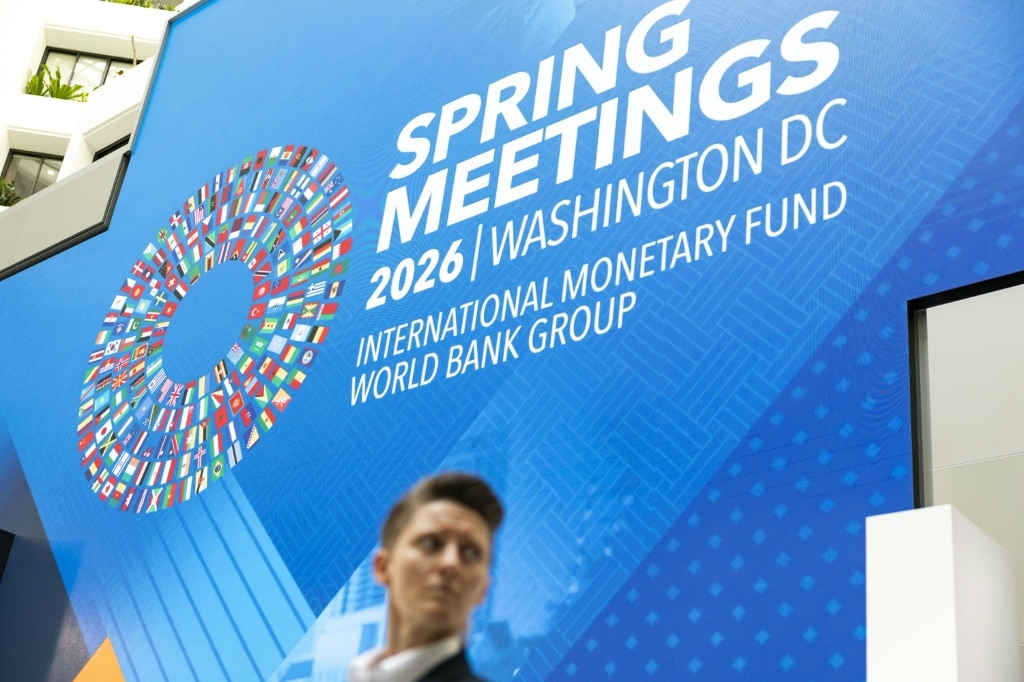
As the ongoing conflict between the United States and Israel and Iran sends shockwaves through the global economy, the head of the International Monetary Fund (IMF) has issued an urgent call to governments worldwide: prioritize disciplined, targeted fiscal measures to avoid worsening the crisis, while the multilateral lender prepares to roll out up to $50 billion in emergency support for the hardest-hit nations.
Speaking to Agence France-Presse (AFP) on the sidelines of the kickoff for the IMF’s annual Spring Meetings, Managing Director Kristalina Georgieva acknowledged that the conflict’s fallout — from skyrocketing energy prices to snarled global supply chains — has already brought unavoidable economic pain, especially for the world’s most vulnerable populations. Low-income countries, which already operate with extremely constrained national budgets, are bearing the brunt of the instability, she emphasized.
The war, which began on February 28 after Iran effectively blocked the Strait of Hormuz, a critical global chokepoint for oil and gas shipments, has sent crude prices surging and disrupted trade routes across the Middle East. While a temporary ceasefire is currently in place, both sides have traded accusations of violations, with new negotiations aimed at forging a lasting peace scheduled to take place this Saturday.
Georgieva laid out clear guidance for fiscal policymakers, who she noted are stuck between a rock and a hard place: acting to ease public hardship can force central banks to maintain restrictive monetary policies longer, triggering a harmful new demand shock, while inaction leaves vulnerable citizens to suffer. “There is no upside scenario at that moment,” she said, stressing that broad, unfocused policies such as blanket price controls, universal subsidies, or widespread export restrictions do more harm than good. Instead, she urged leaders to adopt what she called “restrictive, targeted, temporary actions” that prioritize support for low-income households, preserving limited fiscal space and avoiding additional pressure on monetary authorities.
“My message is going to be: have the discipline on the fiscal front. You don’t have much fiscal space. Use it very wisely, don’t make the job of central bankers harder,” Georgieva said. She added that the Spring Meetings, which will bring together top economic policymakers from every region of the world next week, will center entirely on coordinating a global response to the conflict’s economic fallout, with a goal of helping leaders build collective consensus to navigate the crisis.
In addition to her policy guidance, Georgieva announced that the IMF is preparing to deploy between $20 billion and $50 billion in immediate emergency assistance to member states hit hardest by the conflict. As of Thursday, the Fund has already received two formal requests for emergency financing, with multiple other countries signaling they intend to seek support in the coming days. She did not disclose the names of the countries that have submitted requests, but noted that nations in Asia, sub-Saharan Africa, and small island developing states face particularly acute risk.
Next week’s meetings will include intensive, country-by-country discussions to tailor support to individual needs, she said. In some cases, this will involve adjusting existing IMF loan programs — accelerating fund disbursements or adding additional financing to account for new shocks. Georgieva confirmed that the Fund is already in talks to recalibrate existing programs for a slate of vulnerable nations, including Sri Lanka, Bangladesh, Egypt, Jordan, and Pakistan.
The IMF chief also confirmed that the Fund will downgrade its already-modest global growth forecast in response to the conflict, warning that the economic damage already done cannot be reversed even if hostilities end immediately. More than five weeks of disrupted oil and gas supplies have already left a permanent mark on global economic performance, she explained.
While she acknowledged that maintaining fiscal discipline amid widespread public hardship is an enormous challenge for governments, Georgieva argued it is a necessary step to preserve long-term economic stability. “In a world of more shocks, of exogenous forces, they have no control over, what they have control over is getting the economy in good shape,” she told AFP. “It is hard, but countries have to face it.”