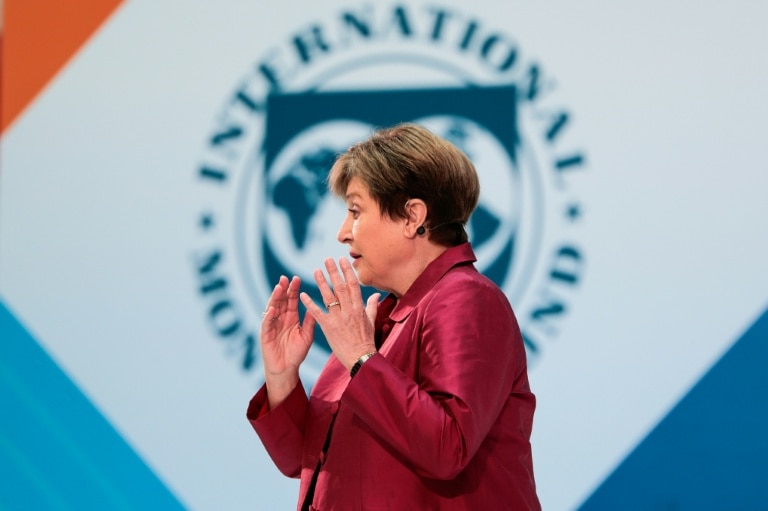
As top global economic policymakers gathered in Washington for the annual joint Spring Meetings of the International Monetary Fund and World Bank, IMF Managing Director Kristalina Georgieva delivered a sobering opening announcement Thursday: the ongoing Middle East war will force the fund to downgrade its projections for global economic growth, even if the fragile current ceasefire holds long-term.
Georgieva emphasized that the conflict has left lasting ‘scarring effects’ that will reshape global economic conditions for years to come. ‘Even in a best case, there will be no neat and clean return to the status quo ante,’ she stated. Even under the fund’s most optimistic outlook, upward spiraling energy costs, widespread infrastructure damage, disrupted global supply chains and eroded investor confidence will pull growth below pre-conflict projections.
The violence, which began when the U.S.-Israel campaign against Iran launched on February 28, has upended regional stability and sent shockwaves through global markets. After Iran effectively blocked access to the Strait of Hormuz, a critical chokepoint for nearly a fifth of the world’s daily oil supply, crude prices surged dramatically, snarling supply chains from the Middle East to the farthest corners of the global economy. While a fragile ceasefire is currently in place, both Tehran and Washington have repeatedly accused the other of violating the agreement’s terms, with negotiations for a more enduring peace set to kick off Saturday.
In anticipation of widening economic fallout, the IMF projects it will need to provide between $20 billion and $50 billion in immediate balance-of-payments support to countries impacted by the conflict. The lower end of that range would be sufficient only if the current ceasefire holds, Georgieva noted. The conflict is also projected to push food insecurity to crisis levels, leaving at least 45 million additional people facing acute hunger as energy and fertilizer price hikes drive up global food costs.
The IMF chief drew particular attention to the asymmetric burden of the crisis, noting that low-income net energy importers will bear the brunt of the damage far more than wealthier or energy-exporting nations. ‘Spare a thought for the Pacific Island nations at the end of a long supply chain, wondering if fuel still reaches them in the wake of such a severe disruption,’ she said.
The warning aligns with earlier comments from the World Bank, which released its own assessment Wednesday noting that the conflict has already taken a ‘serious and immediate economic toll’ across the Middle East. Even excluding Iran, the World Bank projects regional economic growth will slow to just 1.8% in 2026, a massive 2.4 percentage point downgrade from projections made before the war began.
In addition to cutting growth projections, the IMF is also set to revise its global headline inflation forecasts upward, as oil price shocks and supply chain disruptions feed through to consumer prices worldwide. On Wednesday, the heads of the IMF, World Bank and World Food Programme held a pre-Spring Meetings working session to coordinate on the dual economic and food security crises sparked by the conflict, issuing a joint statement warning that rising energy, fertilizer and transport costs will inevitably push more people into food insecurity.
To coordinate a response to energy market volatility, the two global financial institutions have launched a dedicated coordination group, which will hold its first high-level meeting on Monday. As part of the official Spring Meetings agenda, the IMF will also release its annual Fiscal Monitor report, which is expected to highlight growing government debt levels as countries grapple with a consecutive string of major economic shocks.
In a separate analysis of the economic costs of conflict released earlier this week, the IMF found that nations directly experiencing active conflict see an immediate 3% drop in national output, with declines continuing to deepen for years after the start of fighting. A previous analysis focused specifically on the Iran conflict concluded that ‘all roads lead to higher prices and slower growth,’ with a particular focus on how heavily disrupted fertilizer supplies will exacerbate global food insecurity. The report emphasized that low-income countries face the gravest risk of widespread hunger, noting that many will require additional external support even as global development assistance has trended downward in recent years.