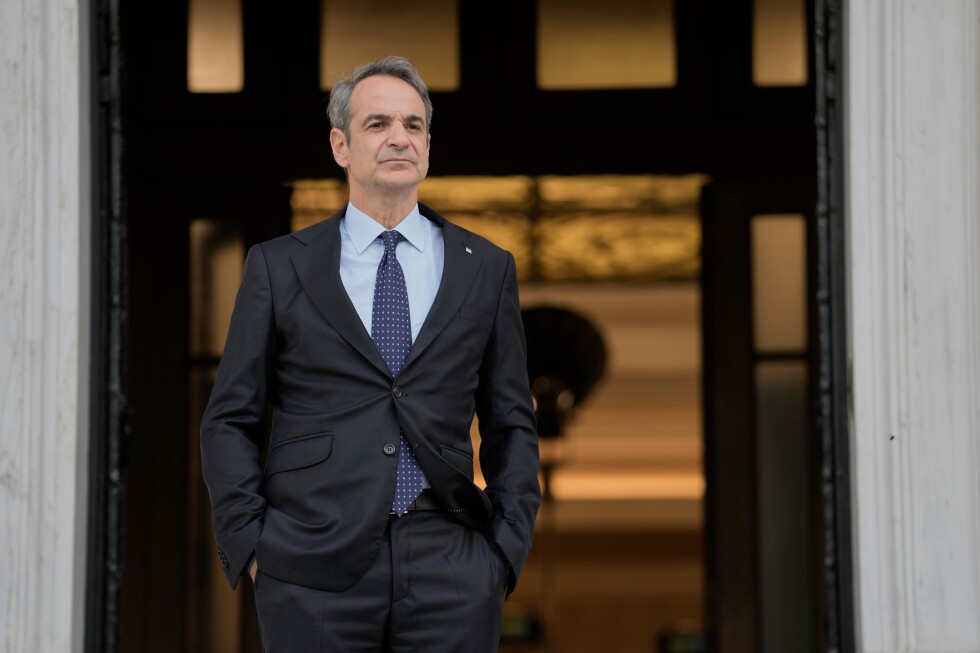
ATHENS, Greece – Greece has stepped into a growing pan-European push for minor online protection by becoming the latest European Union member state to announce draft legislation that would fully block access to social media platforms for all users aged 15 and younger. Greek Prime Minister Kyriakos Mitsotakis framed the national initiative as a deliberate pressure tactic to push the 27-nation bloc to adopt formal, unified age restrictions across all EU member states.
The proposed rules will apply to all major social media services that allow users to create public or private profiles, engage in cross-user interaction, and share user-generated content – covering industry leaders including Meta-owned Facebook and Instagram, as well as ByteDance-owned TikTok.
Once the bill is enacted into law, the obligation to enforce the restriction will fall directly on social media companies, which will be required to complete a full re-verification of the ages of all existing Greek users to remove anyone under the age of 15 from their platforms. Greek regulatory authorities note that the state will only play an oversight role: it will monitor platform compliance and only intervene when violations are reported. Reports of non-compliance will be forwarded either to the regulatory body in the country where the platform is headquartered or directly to the European Commission, the EU’s executive governing branch. Potential penalties for violators are steep, including maximum fines equal to 6% of a company’s annual global turnover, recurring daily fines until the platform comes into compliance, and even temporary or permanent restrictions on operations within Greek territory.
In a pre-recorded video address posted to his own social media channels Wednesday, Mitsotakis spoke directly to young people to explain the rationale behind the ban. He acknowledged that excessive social media use has been linked to rising rates of stress, anxiety, and sleep disruption among adolescents, noting that both parents and young people have privately shared these concerns with him.
“I know many young people will be angry with this decision. If I were your age, I would probably feel the same way too,” Mitsotakis said in the address. “But our job, my job, is not always to be popular. If something makes us more anxious, makes us feel worse about ourselves, less than we really are, then it is better to put an end to it.”
The prime minister emphasized that the new law is not an attempt to cut young Greeks off from digital technology as a whole. Instead, he argued, the regulation targets the inherently addictive design of many major social platforms, whose business models are built on maximizing screen time – a model that he says robs young people of their childhood innocence and personal freedom.
Under the current legislative timeline, the bill will be formally introduced to Greek parliament this summer, with enforcement scheduled to begin on January 1 of next year. Greece is not the first EU country to take this step: it follows similar legislation passed earlier this year by France that also imposes a national ban on social media use for children 15 and under.
In a formal letter sent to European Commission President Ursula von der Leyen, Mitsotakis called for the establishment of a unified regulatory framework for minor online protection across the entire European Union by the end of 2024, to complement national-level protection measures that member states have already enacted. His proposal includes an EU-wide ban on social media access for users 15 and younger, a bloc-wide standardized age verification process that requires platforms to re-verify all user ages every two years, and the creation of a joint body made up of representatives from member states and the commission to review compliance incidents and impose penalties rapidly.