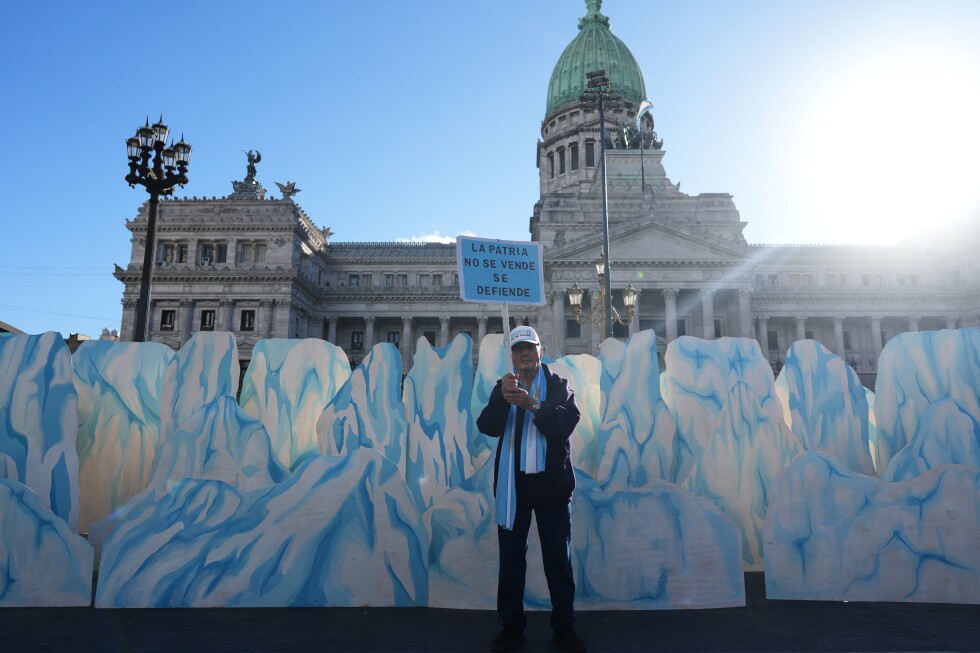
BUENOS AIRES, Argentina — In a contentious early-morning vote that has divided lawmakers, environmental advocates and scientific communities across the country, Argentina’s national Congress has greenlit a polarizing bill backed by libertarian President Javier Milei that rolls back decades-old glacier protections to open more large-scale metal mining projects. The legislation, which already cleared the Argentine Senate in February, passed the lower chamber with a final count of 137 votes in support, 111 votes in opposition, and three abstentions, setting the stage for Milei to sign the bill into law in the coming days.
The core change introduced by the new regulatory framework is a major narrowing of environmental protections that have stood for 14 years. Back in 2010, Argentina enacted a landmark law that imposed a full ban on all mining activity on glaciers and their surrounding periglacial zones — frozen landscapes that act as critical natural water regulators for downstream communities. Under the updated rules, only glaciers and landforms documented to have “specific hydrological functions” will retain protected status, with individual provincial governments granted the authority to make these designation decisions.
Industry leaders in Argentina’s mining sector project that the regulatory shift will unlock more than $30 billion in new investment over the next 10 years, with roughly 70% of that capital earmarked for new copper, gold and silver extraction projects across the country. Argentina is home to more than 16,900 glaciers spanning the Andes Mountain Range and South Atlantic Islands, covering a total area of roughly 3,276 square miles. Glaciology researchers have already documented that human-driven climate change is driving rapid glacial retreat across the nation, and scientific experts warn that weakening protections puts critical water resources at severe risk. For arid regions that depend on glacial melt to sustain river systems and community water access, scientists note that increased mining activity could permanently jeopardize long-term water security.
Opposition political forces have already slammed the bill as unconstitutional, arguing that it eliminates core environmental safeguards that protect public natural resources. But the most immediate challenge to the new law will come from the courts, where leading environmental organizations have already begun organizing a massive public class-action lawsuit to block the legislation from taking effect. Groups including Greenpeace Argentina and the Environment and Natural Resources Foundation say the legislative process was deeply flawed, and that lawmakers ignored widespread public concerns over water safety and ecosystem protection.
“If they refuse to listen in Congress, they will be forced to listen in the courts,” the coalition of environmental groups said in an official public statement. The organizations are urging ordinary Argentine citizens to join the legal action, which argues that the regulatory reform poses an existential threat to both public water access and the fragile, unique ecosystems that surround the nation’s glaciers.