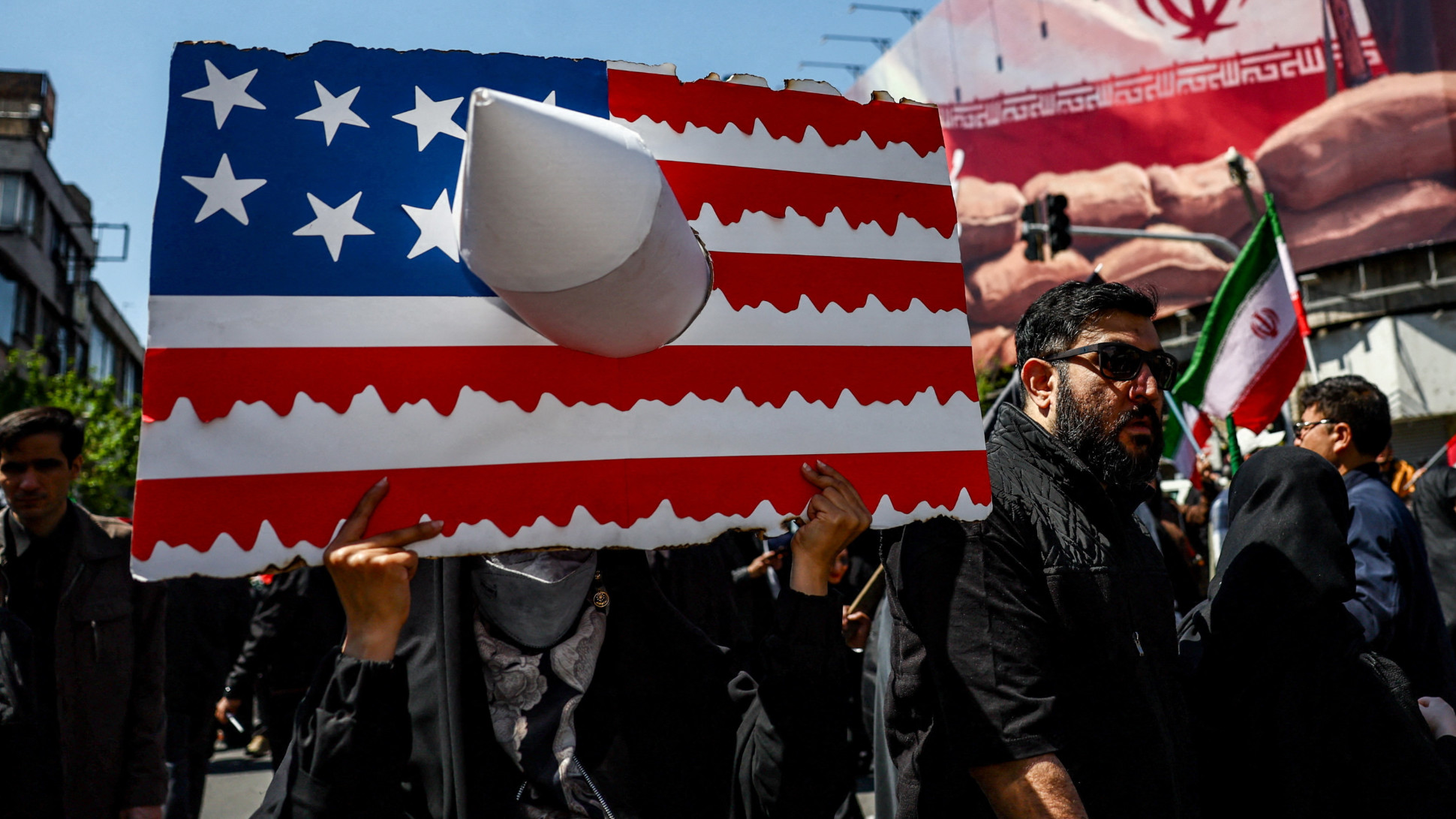
After 40 consecutive days of cross-border strikes targeting Iranian industrial facilities, public infrastructure, educational institutions and healthcare facilities carried out by the United States and Israel, a landmark two-week ceasefire agreement reached between Tehran and Washington has triggered sharp internal backlash from Iran’s influential hardline principlist factions, who are demanding military operations continue rather than grant the opposing coalition time to recover. The deal, announced Tuesday, pauses all offensive military actions for 14 days to pave the way for a new round of diplomatic negotiations, but it has already faced fierce pushback from leading conservative voices in the country.
Hossein Shariatmadari, the high-profile conservative figure and editor-in-chief of hardline Iranian newspaper Kayhan, publicly condemned the ceasefire decision Wednesday, arguing it runs directly counter to core Iranian national interests. In his remarks, he argued that any pause in hostilities combined with new diplomatic talks would only serve as an unexpected opportunity for the US and Israel to regroup their military forces and replenish their supplies, calling the agreement nothing short of a strategic gift to Iran’s enemies. Shariatmadari also cast deep doubt on Washington’s willingness to honor any future deal, noting that even if the United States formally agrees to Iran’s negotiating terms, there is no enforceable guarantee the US side will follow through on its commitments. Pointing to on-the-ground conditions across battlefields, he added that current military indicators show the US-Israeli coalition is already overstretched and exhausted, while Iran holds a stronger strategic position. “We should not let the enemy go when it is out of breath,” Shariatmadari emphasized.
The divide over the ceasefire has spilled onto Iranian social media as well, where a pre-ceasefire interview clip broadcast on Iranian state television has gone viral across Persian-language platforms. In the footage, Mehdi Khanalizadeh, an international affairs analyst with close ties to principlist groups, criticized an earlier proposal for a 45-day ceasefire, warning that any extended pause would allow enemies that have pledged to target critical Iranian energy infrastructure to rebuild their military capacity and carry out devastating planned attacks.
While Iranian authorities have imposed restrictions on media coverage of the full scope of damage caused by the 40-day US-Israeli bombing campaign, independent domestic outlets have continued to publish on-the-ground accounts from rescue and relief teams working at strike sites. Reformist daily Shargh published harrowing firsthand testimony from rescue workers responding to air raids across the country. A Tehran-based rescue worker told the outlet the scenes of destruction were so devastating that he could not bring himself to describe the carnage to his own family, describing one particularly traumatic incident where only a partial human remains were recovered from rubble, leaving rescue workers to grapple with what the victim’s family would be forced to bury.
Another rescue worker described the grim recovery effort at a Minab primary school targeted in a so-called “double-tap” strike—an attack tactic where a second strike hits the same site shortly after the first, targeting first responders. That strike killed at least 165 people, the vast majority of whom were young schoolgirls between the ages of 7 and 12. Recounting the effort to recover a female teacher’s remains from the rubble, the worker told Shargh the body was so badly damaged it was unrecognizable, missing its head. “Everything was so unreal,” he said, adding that workers wrapped the remains in a classroom curtain pulled from the wreckage. The newspaper noted that the scale of destruction the team encountered was beyond what could be easily imagined.
Beyond internal Iranian political divisions, the conflict has sparked a high-profile embarrassment for pro-war Iranian exiles. A group of pro-monarchist Iranian exiles based in Canada, who were traveling to Washington DC to attend a pro-war rally supporting US military action against Iran, were denied entry to the United States by border officials. The group are supporters of Reza Pahlavi, the son of Iran’s deposed Shah, who is openly backed by Israel and has repeatedly publicly supported US-led military strikes against the current Iranian government.
Canada-based pro-Pahlavi Persian-language magazine Kiosk first reported that US border agents turned away the majority of the traveling group on March 28. “Nine out of 12 buses carrying Iranians from Toronto, along with a large number of private cars heading to Washington, were unable to obtain entry permits. After hours of delays, they were turned back,” the magazine reported. The incident has triggered widespread mockery on Persian-language social media, where many pro-war exiles openly refer to US President Donald Trump as “Uncle Trump” for his anti-Iran government policies. One user wrote, “Their Uncle Trump did not receive them, despite all the praise they have given him during this time.” Another commenter added, “Those who betray their country for others will always be disgraced. A mercenary is a mercenary everywhere in the world.”
In a separate development, 320 Iranian political activists, civil society organizers, human rights advocates and university professors have signed an open letter to the Norwegian Nobel Committee calling on the body to revoke the moral validity of the 2003 Nobel Peace Prize awarded to Iranian activist Shirin Ebadi. The signatories argue that Ebadi, a prominent Iranian lawyer and writer, has openly supported military action against Iran in recent years, including a pre-war letter she sent to President Trump explicitly calling for US military intervention in the country.
“The Nobel Foundation has always emphasised efforts for peace, human rights, coexistence and the rejection of violence,” the open letter reads. “However, in recent years, Shirin Ebadi’s positions have been in clear contradiction with these values.” The letter draws a parallel between Ebadi and former Nobel laureate Aung San Suu Kyi of Myanmar, who faced widespread international condemnation for her silence on the campaign of ethnic violence against the Rohingya minority. The letter notes that Ebadi herself previously criticized Aung San Suu Kyi for failing to condemn what she called ethnic cleansing, and urged the Myanmar leader to uphold the core values of the Nobel Peace Prize. “Today, Ebadi finds herself in a similar position, one that is even more concerning,” the letter concludes.