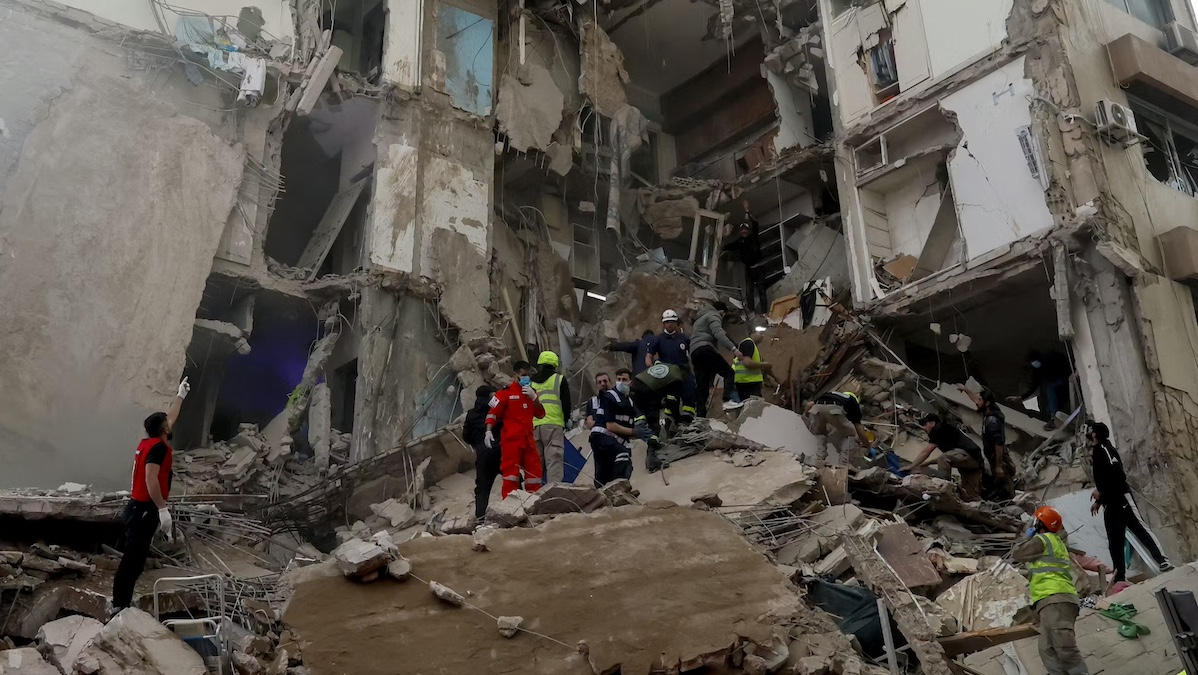
Hours after the United States brokered a tentative two-week ceasefire between Israel and Iran, the fragile agreement already faces imminent collapse, as competing interpretations of the deal’s terms and a devastating new wave of Israeli airstrikes have exposed deep cracks in the diplomatic process. In the 24 hours following the ceasefire announcement, hundreds of Lebanese civilians and combatants were killed in Israeli air raids across the country, a move that directly contradicts Iran’s core condition for the truce and raises urgent questions about whether the agreement can survive its first week.
The core dispute at the heart of the emerging crisis centers on Lebanon’s status in the deal. Iran has repeatedly demanded that an end to all hostilities in Lebanon be a non-negotiable component of the ceasefire, while Israel maintains that the truce only applies to the main open conflict between the two states and excludes military operations against Lebanese militant group Hezbollah. This disagreement is no trivial miscommunication: it cuts to the heart of decades of proxy conflict that has defined Israeli-Iranian tensions across the Middle East.
To understand why Lebanon has become the make-or-break issue for this ceasefire, it is necessary to unpack the long-running regional power dynamic that has shaped the conflict. Since the 1979 Iranian Revolution, the Iranian government has poured funding and weapons into anti-Israel armed movements across the region, building a network of proxy forces that include Hezbollah in Lebanon, Hamas in Gaza, and the Houthis in Yemen. For Israel, these proxies represent an ongoing existential security threat, positioned far closer to Israeli population centers than Iran’s formal military.
Over the course of its modern history, Israel has prioritized establishing expanded security buffer zones along its borders to neutralize these threats. Following the collapse of Bashar al-Assad’s regime in Syria in 2024, Israeli forces quickly moved into a demilitarized buffer zone in southwest Syria, extending their security footprint. Since the October 7, 2023 attacks by Hamas, Israel has launched intensive military campaigns against both Hamas in Gaza and Hezbollah in Lebanon, treating the two proxy groups as equal threats to Israeli security. Though both groups have suffered heavy losses over the past two years of conflict, they remain operational, and the Netanyahu government has seized on the broader war with Iran to push for a permanent expanded buffer zone in southern Lebanon. Analysts widely agree that Netanyahu is highly unlikely to abandon this territorial and security goal, and it remains unclear whether U.S. President Donald Trump has any interest in or ability to pressure him to reverse course.
The current crisis, analysts argue, was largely inevitable given the Trump administration’s approach to the conflict. The White House has shown no willingness to address the deep-rooted intractable issues that lie at the core of Middle Eastern tensions, instead prioritizing a quick exit from a conflict that has become deeply unpopular with U.S. voters. With Trump’s approval ratings sitting at record lows, the administration has rushed to frame a messy partial truce as a diplomatic victory, even as it leaves the core status quo that sparked the war completely intact.
Unless the U.S. can force Israel to halt its operations in Lebanon and bring Netanyahu into compliance with Iran’s terms, the two-week ceasefire will almost certainly collapse within days. For Iran, a halt to fighting in Lebanon is not just a tactical concession: protecting its proxy network is central to the ideological identity of the regime, which has defined itself in opposition to Israel and U.S. influence in the region for decades. As negotiations begin for a potential long-term peace deal, Lebanon will remain the critical sticking point, and as long as the underlying antagonisms driving regional conflict remain unaddressed, there is little prospect of lasting stability.
The Trump administration’s exit strategy is fundamentally flawed, critics argue, because it ignores the core historical and political issues that have shaped the conflict. The president’s primary priority is not resolving the Israeli-Palestinian issue or defusing long-running Israeli-Iranian tensions, but rather extricating the U.S. from a war that has dragged on longer than expected and become a major political liability at home. This shift in priorities explains why the administration has reversed course on Iran’s 10-point negotiating framework, which Trump previously dismissed as “not good enough” but now calls a “workable basis” for talks.
Even a cursory look at the terms of Iran’s proposal shows that it includes core demands that the U.S. could never reasonably accept, such as full Iranian control over the Strait of Hormuz and Iran’s continued right to enrich uranium – a right that directly contradicts the stated core goal of the U.S.-led war: preventing Iran from developing nuclear weapons. By moving ahead with talks on this basis, the Trump administration is creating the illusion of progress to justify a hasty exit, rather than securing tangible concessions that would lead to real peace.
In practice, the U.S. has already ceded significant ground to Iran, which has shown no willingness to compromise on its core demands. While Iran’s conventional military capacity to project power across the region has been diminished by the war, its ideological commitment to opposing Israel and the U.S. remains unchanged. With the two-week ceasefire in place, the most likely outcome is that the U.S. will withdraw claiming victory, leaving a trail of destruction in the region and the same underlying tensions that sparked the conflict still in place, setting the stage for future rounds of tit-for-tat violence between Israel and Iran.