As the deadly Iranian conflict edges closer to a major escalation ahead of a US-imposed deadline for Tehran, Beijing has stepped up diplomatic calls for an urgent end to hostilities and a return to negotiated talks, amid growing global alarm over inflammatory rhetoric threatening wider regional collapse.
At a Tuesday press briefing, Chinese Foreign Ministry spokesperson Mao Ning outlined Beijing’s long-held position on the spiraling crisis, emphasizing that the current confrontation could have been avoided entirely. She traced the root of escalating tensions to the unlawful use of military force by the United States and Israel against Iran, a direct violation of core principles of international law. Mao stressed that military power can never deliver lasting peace; the only sustainable path forward is a negotiated political settlement. Her remarks placed immediate priority on halting all ongoing military operations, restarting dialogue between all parties, and working toward a fundamental resolution of longstanding disputes to restore lasting peace and stability across the Gulf region.
Mao noted that the rapid deterioration of security across the Middle East, with hostilities expanding by the day, has already inflicted collateral damage on the global economy and global energy security, triggering deep concern across the international community. Since the outbreak of the conflict, China has maintained an objective, fair and neutral stance, and has consistently worked to advance a ceasefire and end to fighting. She added that Chinese Foreign Minister Wang Yi has held 26 separate phone calls with leaders and officials from key parties including Iran, Israel, Russia and multiple Gulf nations, while China’s special envoy for Middle East affairs has conducted intensive shuttle diplomacy across the region to facilitate talks. Most recently, China and Pakistan jointly released a five-point peace initiative, which reflects the broad consensus of the global community in calling for an end to the war.
Iranian Ambassador to Pakistan Reza Amiri Moghadam said Tuesday in a post on X that Pakistan’s “positive and productive efforts” to broker an end to hostilities are now reaching a “critical, sensitive stage”, offering a glimmer of diplomatic progress amid rising violence.
The United Nations has meanwhile issued an urgent warning over the threatening rhetoric coming from Washington, as the Trump administration’s self-imposed deadline for Iran draws near. UN Secretary-General spokesperson Stephane Dujarric told reporters Monday that the UN is “alarmed by the rhetoric” in a public threat that promised US strikes on Iranian power plants, bridges and civilian infrastructure if Tehran did not accept a US-brokered deal. Dujarric reiterated that the Secretary-General has consistently upheld commitments to international law, and once again urged all parties to abide by their legal obligations governing the conduct of hostilities.
Citing an anonymous senior Iranian government official, Reuters reported Tuesday that Tehran has laid out clear preconditions for any negotiations on a lasting peace deal with the United States. These demands include an immediate full halt to all US-Israeli strikes, ironclad guarantees that no future attacks will be launched against Iranian territory, and full compensation for the damage already inflicted by the conflict. The official added that Iran rejects any proposal for a temporary ceasefire, pushing for a permanent, sustainable resolution to the confrontation. The official also noted that any final peace deal must recognize Iran’s right to charge transit fees for commercial ships passing through the Strait of Hormuz, with fees adjusted based on ship type, cargo and prevailing transit conditions.
The diplomatic push follows a two-stage peace proposal put forward by Pakistan on Monday, which centers on an immediate end to attacks and the reopening of the Strait of Hormuz, a critical global chokepoint for 20 percent of the world’s daily oil supplies.
As the clock ticked down to his self-declared deadline Tuesday morning, US President Donald Trump issued an inflammatory threat warning that “Iran’s whole civilization will die tonight” if Tehran did not accept his terms to reach a deal and reopen the strait. “A whole civilization will die tonight, never to be brought back again. I don’t want that to happen, but it probably will,” Trump wrote in a post on his social media platform Truth Social, marking a sharp escalation of rhetoric that sent jitters across global energy markets.
In response to Trump’s threat, Iranian President Masoud Pezeshkian wrote Tuesday on X that more than 14 million Iranian citizens have already declared their readiness to sacrifice their lives to defend their homeland.
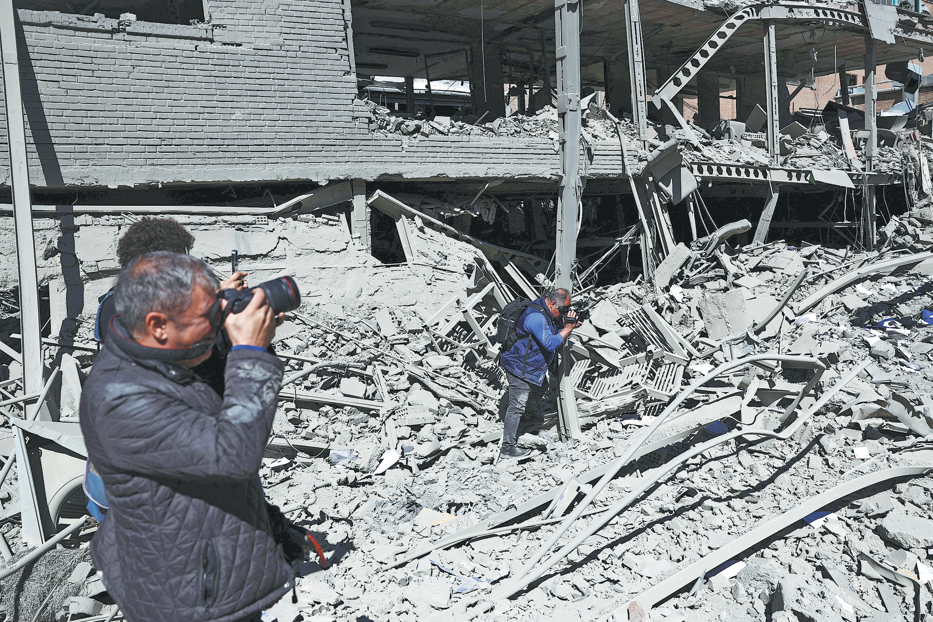
Citing an unnamed US official, Axios journalist Barak Ravid reported Tuesday that the US has already launched limited strikes against military targets on Kharg Island, a key Iranian oil export terminal located off the country’s western coast. The Iranian Red Crescent released a statement Tuesday on X confirming that US-Israeli strikes have hit 17 civilian areas across the country over the past 24 hours, emphasizing that there is no possible justification for attacks on civilian populations. The organization reiterated that targeting defenseless civilians qualifies as a clear war crime under international law. Iranian state media reported that at least 15 people were killed in overnight strikes across the country.
Diplomatic efforts to de-escalate the crisis have been consistently overshadowed by relentless, tit-for-tat strike threats and ongoing attacks across the region. On Tuesday, Gulf nations spent the day fending off new attacks on their territory: Saudi Arabia’s Ministry of Defense announced it had intercepted and destroyed at least 18 drones launched toward the kingdom “during the past hours”. The King Fahd Causeway, a critical infrastructure link connecting Saudi Arabia to Bahrain, was briefly closed after Iranian attacks targeted Saudi Arabia’s Eastern Province, but resumed operations several hours later after security checks confirmed the area was safe.
The escalating conflict has left the international community on high alert, with multiple powers continuing diplomatic outreach to prevent a full-scale regional war that could have catastrophic consequences for the global economy and energy security.