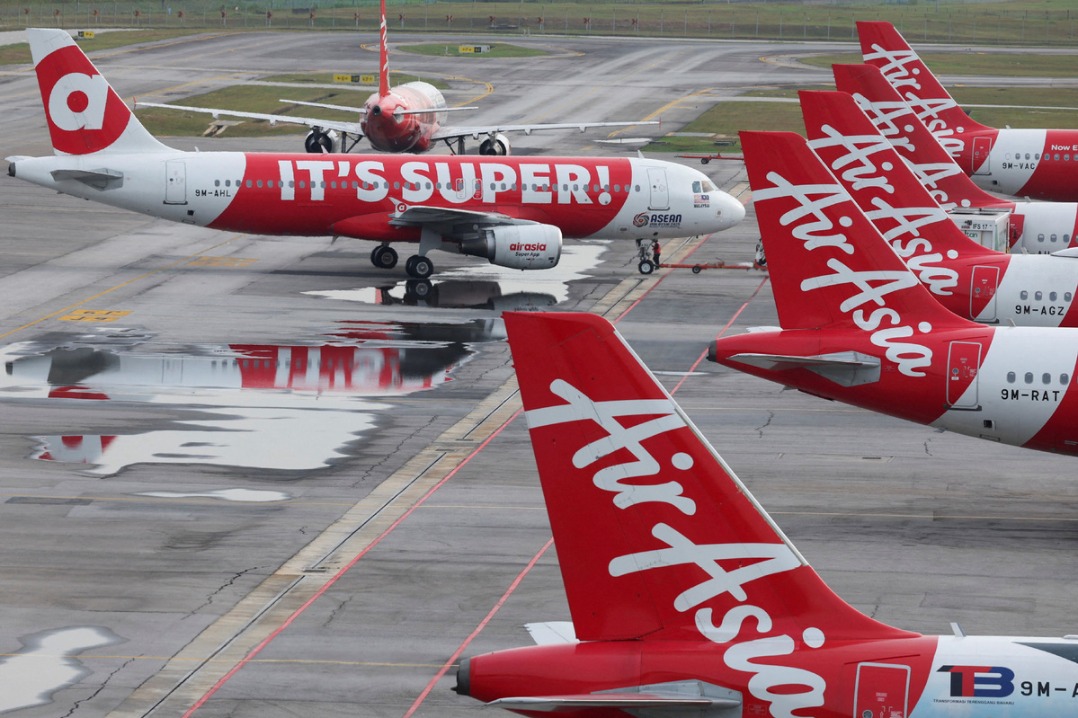
The ongoing Middle East conflict, centered on tensions that led to the temporary closure of the Strait of Hormuz, has triggered an unprecedented jet fuel supply crunch across Asia, forcing regional carriers to slash flight schedules, adopt costly fuel-carrying workarounds, and raise ticket prices to weather the unfolding crisis.
According to trade data platform Kpler, Iran’s closure of the strategic Strait of Hormuz — a chokepoint through which roughly 20% of the world’s seaborne jet fuel transits daily — removed nearly one-fifth of global seaborne jet fuel supply from the market. While Iran, the United States, and Israel announced a tentative two-week ceasefire on Wednesday, uncertainties about the durability of the truce and the reopening of the strait persist. Iran has maintained it will assert full control over waterway access, impose transit fees on passing vessels, and continue its uranium enrichment program, leaving global energy markets on edge.
Unlike past oil market shocks that primarily drove up commodity prices, this crisis has created both pricing spikes and acute physical supply shortages, pushing governments, airport operators and airlines to contingency planning that includes fuel rationing. Aviation industry analysts note that Asia is far more vulnerable to the supply squeeze than other regions due to its thinner strategic fuel reserves and heavier reliance on energy exports that pass through the Strait of Hormuz. Within Asia, lower-income nations that depend almost entirely on jet fuel imports, such as Vietnam, Myanmar, and Pakistan, have seen the worst disruptions so far.
Carriers have already deployed a range of emergency measures to manage limited fuel access. One of the most common workarounds is “tankering” — the practice of loading up on extra fuel at an airline’s home airport before flying to destinations with restricted fuel supplies. AirAsia X CEO Bo Lingam confirmed that the long-haul budget carrier now carries extra fuel from Malaysia for all flights to Vietnamese airports, as local fuel providers cap the volume they sell to foreign carriers. Air India has also added a mandatory refueling stop in Kolkata on its Yangon-to-Delhi route, due to persistent fuel shortages at Myanmar’s main Yangon International Airport. While tankering resolves supply uncertainty, it is an expensive solution: carrying extra weight increases the jet fuel an aircraft burns in flight, eroding carrier profit margins.
For prolonged shortages, deep capacity cuts have become the go-to response for many airlines. Vietnam’s national aviation authority confirmed that Vietnam Airlines has cut 23 domestic flights every week to conserve limited fuel stocks. Myanmar’s transport ministry reported that local carriers suspended multiple domestic services for much of March amid total fuel shortfalls, and aviation data provider Cirium shows several Myanmar airlines have continued trimming capacity through April. Batik Air Malaysia, one of the region’s largest budget carriers, has gone even further, slashing 36% of its domestic capacity to mitigate risk. CEO Chandran Rama Muthy framed the cuts as a necessary proactive step, noting that continuing full operations would expose the airline to unacceptable operational and financial volatility amid the “crisis-mode” market environment.
Industry insiders warn that the uncertainty stretching far beyond the current two-week ceasefire is adding to already crippling pressure on an industry that has not fully recovered from post-pandemic demand shifts. “In my conversations with airlines, they are very concerned about what the future looks like, because we do not know when the war will end and we don’t know when the supply chain, the feedstock, will come from the Gulf area,” said Shukor Yusof, founder of Malaysia-based aviation consultancy Endau Analytics.
Brendan Sobie, an independent aviation analyst based in Singapore, explained that fuel access restrictions have a cascading effect across the region. “Some countries are in better shape than others. Some may be limiting (fuel for) foreign airlines, which then leads to tankering. This could be proactive as some countries fear they could run out,” he said.
European carriers are now bracing for similar disruptions, as the supply crunch spreads beyond Asian markets. Since the conflict began, jet fuel prices have more than doubled, prompting airlines that have not cut capacity to raise ticket fares and add new fuel surcharges to pass higher costs on to consumers. While the ceasefire has offered a brief reprieve for markets, the unresolved standoff over the Strait of Hormuz means widespread volatility in jet fuel supply and pricing is likely to continue for the foreseeable future.