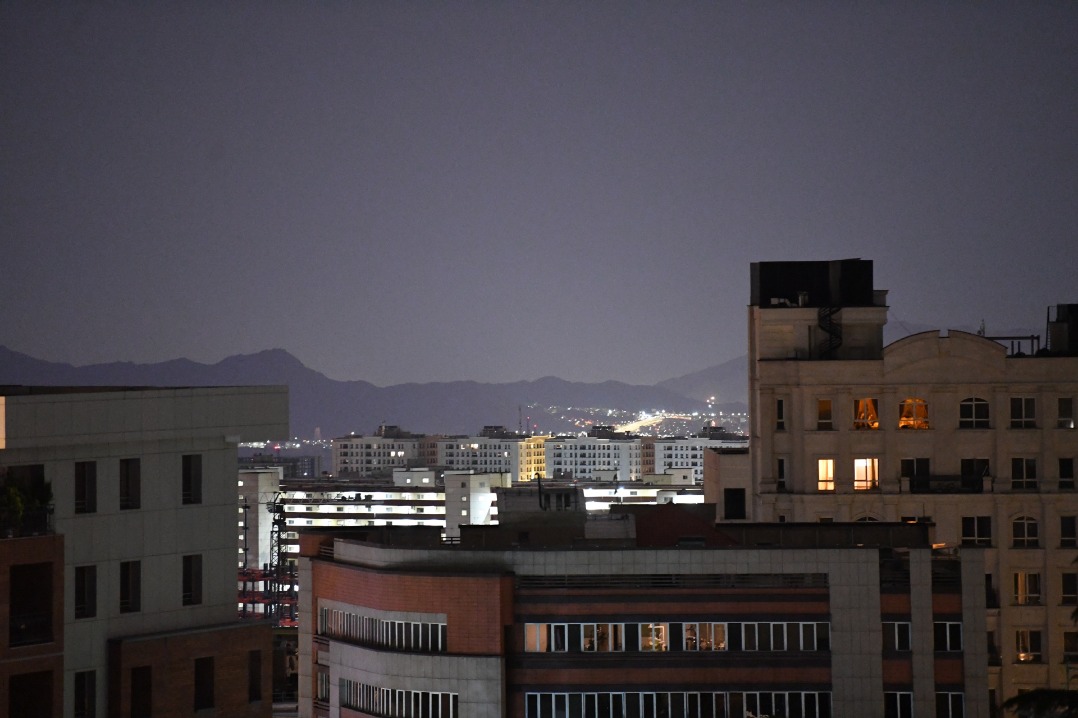
A dramatic last-minute diplomatic breakthrough averted an all-out escalation of conflict between the United States and Iran on Wednesday, just one hour before a sweeping US deadline for military action was set to expire. Global leaders and markets reacted swiftly with relief to the announcement of a two-week ceasefire, which also includes Iran’s commitment to temporarily reopen the strategically critical Strait of Hormuz, a key chokepoint for global oil supplies.
The ceasefire brings an end to more than five weeks of intense cross-border attacks launched by the US and Israel that began on February 28. Under the terms of the deal, Iran has agreed to enter into formal peace negotiations with Washington starting this Friday, with Islamabad set to host the talks aimed at reaching a permanent end to hostilities.
The agreement was brokered by Pakistan, which maintains longstanding diplomatic ties with both sides. US President Donald Trump confirmed the deal in a post to his Truth Social platform, released shortly after his call with Pakistani leadership. “Subject to the Islamic Republic of Iran agreeing to the complete, immediate, and safe opening of the Strait of Hormuz, I agree to suspend the bombing and attack of Iran for a period of two weeks,” Trump wrote.
Iranian Foreign Minister Abbas Araghchi followed up with an official statement on behalf of the country’s Supreme National Security Council, confirming that the Strait would remain open to all commercial shipping for the full 14-day period. The waterway, which carries roughly 20 percent of the world’s daily oil supply, was closed by Iran in late February as retaliation for the opening of hostilities. “If attacks against Iran are halted, our powerful armed forces will cease their defensive operations,” Araghchi said. The statement accompanied a 10-point negotiation framework from Tehran that lays out core demands, including continued Iranian sovereignty over the Strait of Hormuz, international recognition of its civilian nuclear enrichment program, full lifting of all US primary and secondary sanctions, the full withdrawal of US military forces from the Middle East region, and a $2 million transit fee for all commercial vessels passing through the waterway, with a share of revenue allocated to Oman.
Pakistani Prime Minister Shehbaz Sharif confirmed Wednesday that the ceasefire applies to all active fronts, including ongoing fighting between Israel and Hezbollah in Lebanon, and that all major parties had agreed to the terms. A White House official also confirmed that Israel has accepted the ceasefire agreement. However, Israeli Prime Minister Benjamin Netanyahu contradicted that claim hours later, stating that his country’s military campaign against Hezbollah in Lebanon would continue uninterrupted, a direct mismatch with the mediator’s official account of the deal.
Trump added that negotiators are already making solid progress toward a permanent long-term agreement, noting that Iran’s 10-point framework “is a workable basis for negotiation.”
Global financial markets surged on the news of the ceasefire, as investors priced in an end to the month-long disruption of global energy supplies. Crude oil prices plummeted in early trading, with West Texas Intermediate crude falling nearly 20 percent and Brent crude dropping as much as 16 percent. Global equity markets also posted sharp gains: major Asian indexes rose between 2 and 3 percent, while Dubai’s benchmark stock index jumped 8.5 percent, its largest single-day intraday gain since December 2014, per Bloomberg data.
International leaders broadly welcomed the breakthrough as a critical step away from catastrophic regional war. European Union High Representative for Foreign Affairs Kaja Kallas described the ceasefire as a “step back from the brink” that creates a “much-needed” window for diplomatic progress. United Nations Secretary-General also issued a statement hailing the two-week truce as an opportunity to build a lasting peace.
Despite the widespread relief, lingering tensions underscore just how fragile the current diplomatic breakthrough remains. Early Wednesday, even as the ceasefire was being formally announced, active missile alerts remained in place across the United Arab Emirates, Israel, Saudi Arabia, Bahrain and Kuwait. Officials in Abu Dhabi confirmed that a gas processing facility caught fire following an incoming Iranian missile strike, launched before the truce took full effect. Fighting between Israeli forces and Hezbollah in Lebanon also continued through Wednesday morning.
Most critically, core disagreements that sparked the conflict in the first place remain unresolved. The US and Israel launched the campaign to address what they call unacceptable risks from Iran’s nuclear program, its ballistic missile development, and its support for regional armed proxies. There has been no public indication that the two sides have bridged these gaps ahead of Friday’s talks, and the future remains unclear once the 14-day ceasefire period expires.
The crisis began when Trump set a hard deadline for Iran to reopen the Strait of Hormuz, threatening the total destruction of all Iranian power plants and critical infrastructure if the deadline was not met. The deadline passed at 8 pm Washington time on Tuesday, with the ceasefire agreed just one hour before it expired. In the lead-up to the deadline, Iranian authorities reported that 14 million Iranians, including President Masoud Pezeshkian, had volunteered to defend the country, with civilians forming human chains around key national infrastructure including bridges and power plants.