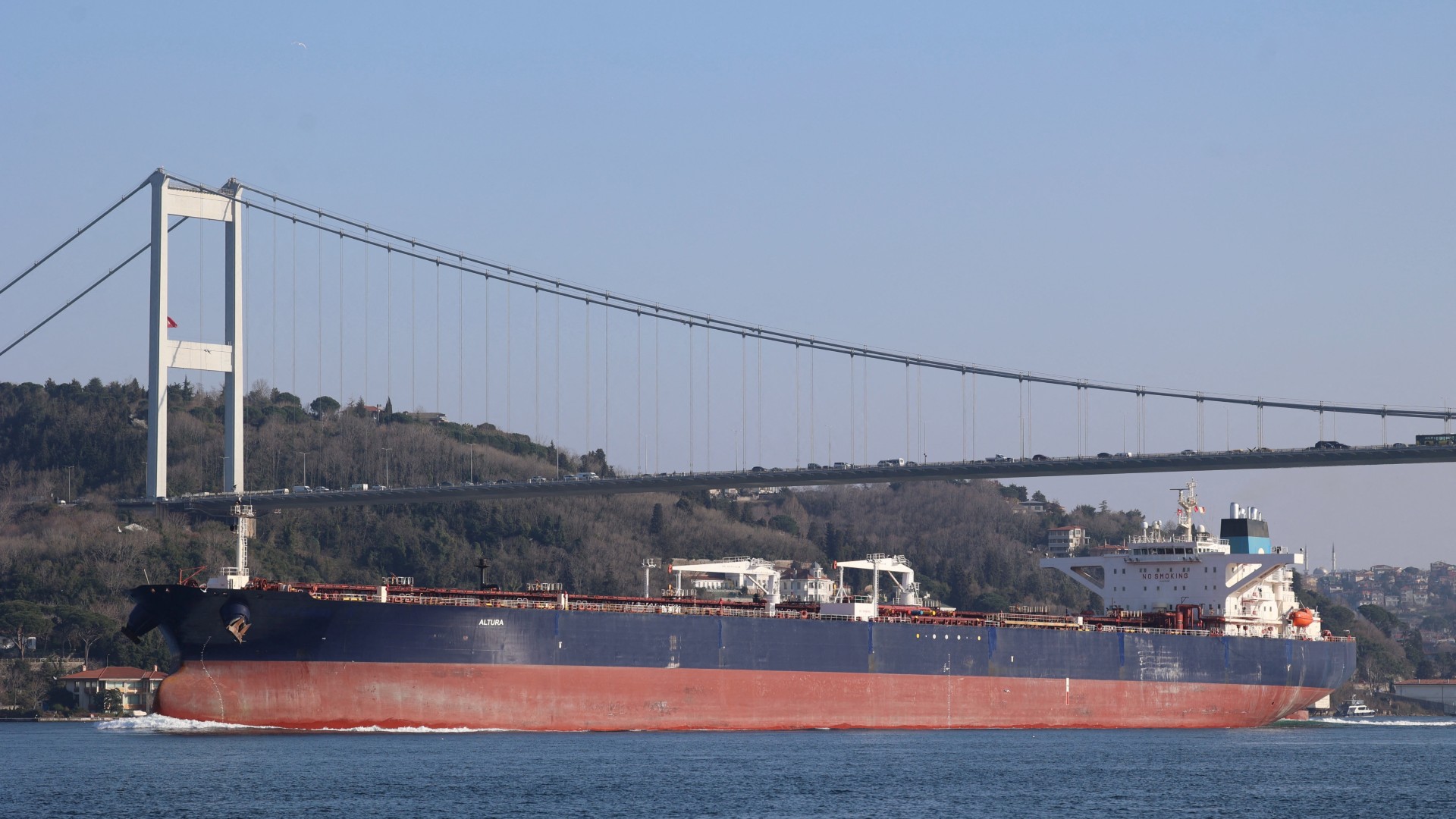
A senior Turkish government official has confirmed to Middle East Eye that Ankara is highly likely to turn down Ukraine’s renewed proposal to ship liquefied natural gas through the Bosphorus Strait off Istanbul, citing a cascade of intractable security, environmental and geopolitical concerns tied to the plan.
The proposal, a long-debated initiative from Kyiv that was reintroduced during high-level bilateral talks in Istanbul over the weekend, calls for constructing a floating storage and regasification unit (FSRU) in the Black Sea and requires regular LNG tanker transits through Turkey’s strategically and ecologically sensitive Bosphorus and Dardanelles waterways. The renewed push came on the heels of a surprise one-on-one meeting between Ukrainian President Volodymyr Zelensky and Turkish President Recep Tayyip Erdogan held in Istanbul this past Friday.
Following the summit, Zelensky noted that the two leaders had explored concrete steps to advance joint gas infrastructure development projects and explore collaborative development of natural gas fields. However, behind closed doors, Turkish authorities have deep and unresolvable objections to the Bosphorus transit route, the senior official disclosed.
The Bosphorus is a 31-kilometer waterway widely regarded as one of the most technically challenging shipping lanes on the planet. At its narrowest point, the strait contracts to just 700 meters, and large vessels are forced to execute sharp turns of 70 to 80 degrees or more to navigate the passage. Against this geographically constrained backdrop, large LNG carriers carry inherent major accident risks, the official argued. A single explosion from a damaged tanker would trigger catastrophic harm to civilian life and irreparable damage to the region’s centuries-old cultural heritage, impacts that Turkey cannot accept.
“We can’t allow that,” the senior official stated plainly.
Traffic congestion is already a persistent issue for the strait: official data shows 40,172 vessels transited the Bosphorus in 2023 alone, and adding consistent LNG traffic would only exacerbate strain on the already overloaded waterway. Beyond physical navigation risks, the ongoing security threats stemming from the full-scale Russian invasion of Ukraine make the proposal untenable. Just last month, a Turkish-owned crude oil tanker was struck by an unmanned surface drone in the Black Sea, only 15 nautical miles from the mouth of the Bosphorus, a reminder that attacks on commercial shipping in the area remain an immediate danger.
Turkish officials also warn of broader long-term geopolitical spillover. Approving Ukrainian LNG transit through the Bosphorus would set a precedent that would likely push neighboring Romania and Bulgaria to follow suit, as both nations are working to diversify their natural gas supply sources away from Russian fossil fuels. This would send even more tanker traffic through the strait, and eventually open the door to requests for Russian LNG carriers to use the route as well, a scenario that would complicate Turkey’s delicate diplomatic balancing act between Kyiv, Moscow and Western allies.
Instead of the Bosphorus transit plan, Turkey has put forward an alternative energy security proposal for Ukraine: routing imported gas through Turkey’s existing FSRU terminals located on the Aegean Sea, then moving volumes to Ukraine via overland pipelines that run through Turkey to Bulgaria and Romania. This model leverages existing infrastructure rather than opening sensitive straits to new high-risk traffic.
Turkey has already locked in a series of long-term LNG purchase agreements with U.S. energy firms to cover its own domestic demand and leave surplus volumes available for re-export to third parties including Ukraine. However, Turkish Energy Minister Alparslan Bayraktar told reporters back in December that the current interconnector pipeline linking Turkey to Bulgaria represents a major bottleneck for the alternative plan. The existing link only has capacity to carry 3.5 billion cubic meters of gas per year, a volume that would need to be doubled to accommodate additional supplies for Ukraine. Bayraktar added at the time that Ukrainian and Turkish state energy firms have been collaborating to resolve this capacity issue.
Despite the disagreement over the Bosphorus route, Zelensky struck an optimistic tone about the bilateral talks in a public statement released on Monday. He described his meeting with Erdogan as “one of the most positive ever” held between the two leaders, and confirmed that Ukrainian national energy firm Naftogaz has already begun working alongside Turkish counterparts to advance all initiatives agreed during the Istanbul summit.
“Working together with Turkey gives us energy security and logistical security,” Zelensky said. “There’s a solid foundation to take new joint steps.”
The proposal comes as Ukraine faces a acute energy supply crisis tied to Russia’s relentless targeting of the country’s domestic energy infrastructure. Before the 2022 full-scale invasion, Ukraine met nearly all of its domestic natural gas demand through domestic production. But repeated Russian missile and drone strikes on energy facilities have cut Ukraine’s domestic gas output by roughly half, according to comments made by Ukraine’s central bank governor late last year. The production loss has forced Kyiv to scale up imports dramatically, and the country began building up stored gas reserves as early as March to prepare for the winter heating season.
Currently, Ukraine meets most of its growing LNG import demand by bringing U.S. LNG through existing terminals in Poland and the Baltic states, as well as overland routes via Greece. Kyiv’s renewed push for the Bosphorus route is part of broader efforts to diversify import pathways and reduce reliance on existing northern routes.