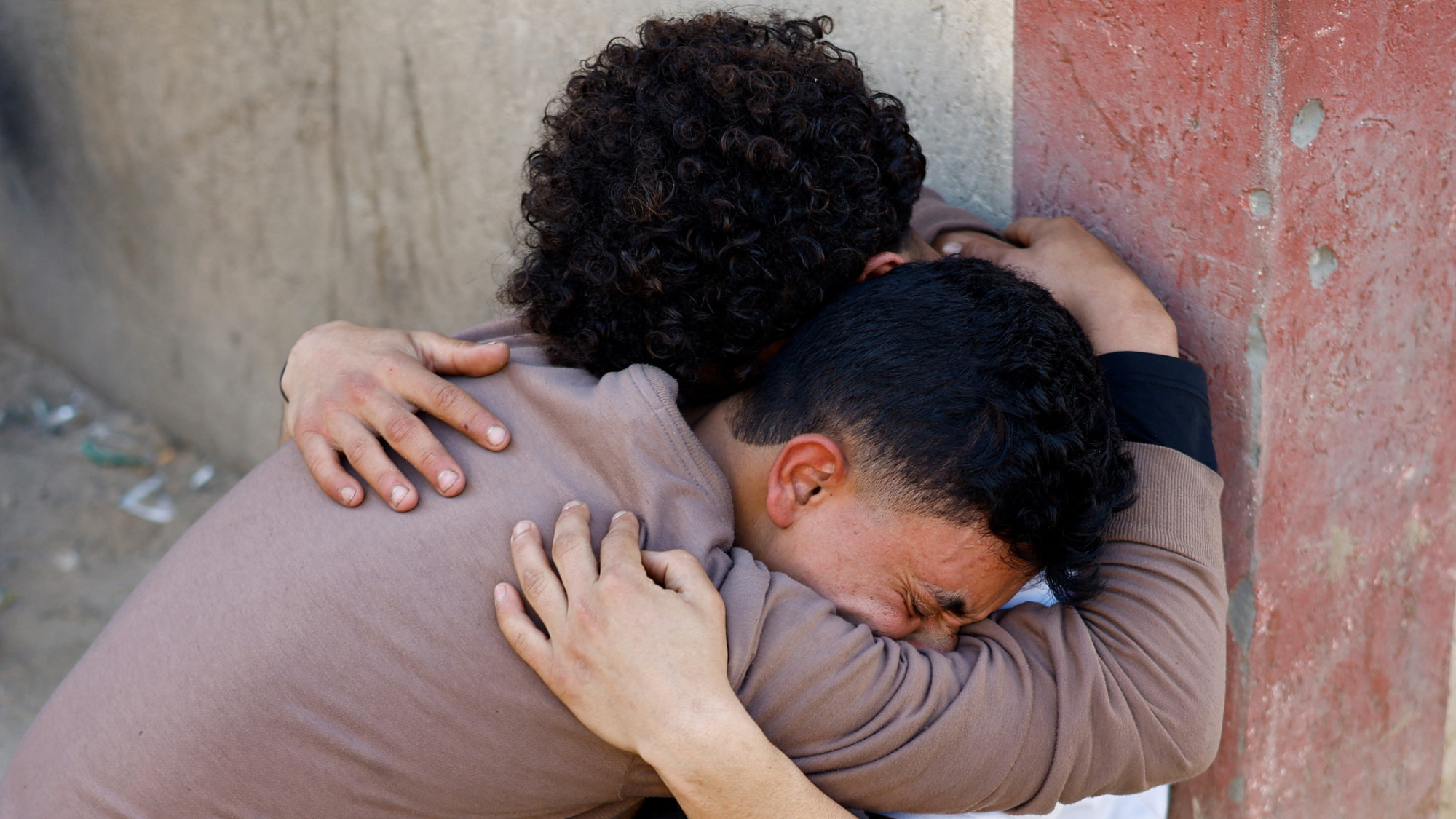
Five months after a ceasefire agreement was reached between Israeli forces and Hamas to de-escalate conflict in the Gaza Strip, repeated violations by Israeli military operations have sent civilian casualty numbers soaring and pushed the enclave’s already collapsing healthcare system to the brink of total failure. The most recent deadly incident unfolded Monday, when Israeli fighter jets launched an airstrike on a school in the Gaza Strip, leaving 10 Palestinians dead.
Local media reports outline the sequence of events that led to the strike: Israeli-backed armed factions first launched a raid on the school, located east of the Maghazi refugee camp in central Gaza, with the stated goal of locating and abducting individuals on their target list. Local residents confronted the raiding groups, triggering intense armed clashes in the immediate area. In line with its longstanding practice of supporting its allied armed groups when they face resistance in Gaza, the Israeli military ordered airstrikes on the clash site, resulting in the 10 civilian fatalities.
Palestinian health authorities confirmed Tuesday that the 10 deaths marked just a fraction of Israeli-inflicted casualties over the preceding 24-hour period, with an additional 144 Palestinians injured in separate operations across the enclave. This violence followed a deadly incident just one day prior, when seven Palestinians were killed including a United Nations contractor who worked as a driver for a World Health Organization (WHO) aid convoy that was targeted in an Israeli strike.
WHO Director-General Tedros Adhanom Ghebreyesus released a statement expressing that he was “devastated” by the killing of the contractor, noting that an official investigation into the attack is currently underway. In the wake of this fatal incident targeting UN and WHO personnel, the United Nations has suspended its coordination of patient transfers from Gaza to Egyptian medical facilities through the Rafah border crossing. This suspension has drastically worsened the plight of an estimated 15,000 critically wounded and ill Gazans who are waiting for urgent medical care that is unavailable inside the blockaded enclave.
Data from Palestinian officials shows that ceasefire violations have become routine for Israeli forces over the past five months. Since the ceasefire was signed, Israeli operations have killed at least 733 Palestinians, 223 of whom are children. Since the full-scale conflict began in October 2023, more than 72,300 Palestinians have been killed by Israeli forces, and more than 170,000 have sustained injuries, according to official Palestinian counts.
Even with the ceasefire in place, Israeli military authorities continue to enforce near-total restrictions on the entry of humanitarian aid and essential goods into Gaza. In addition to blocking aid, Israeli officials also restrict the number of sick and wounded Gazans who are allowed to travel to Egypt for life-saving medical treatment.
The Palestinian Ministry of Health has issued a stark warning that the ongoing Israeli restrictions on medical aid and patient evacuations have pushed Gaza’s medical crisis to a catastrophic tipping point. Shortages of critical supplies have reached unprecedented critical levels: only 50% of all essential medications are currently available to care providers, and more than 70% of all laboratory testing supplies have been completely depleted.
Oncology services, which serve 4,100 Gazan cancer patients, are among the hardest hit, with a 61% shortage of specialized life-saving cancer drugs. Core medical services including primary care, neurology, nephrology, surgery, and intensive care all face essential drug shortages exceeding 40%. Critical cardiac procedures including open-heart surgeries and cardiac catheterisations have been completely halted due to a total lack of necessary resources. Additionally, 89% of all ophthalmic surgical supplies are no longer available, cutting off care for thousands of patients at risk of blindness. Overall hospital bed capacity across the Gaza Strip has fallen by more than 55%, even as the number of injured and ill patients continues to climb steadily with each new Israeli military incursion and strike.