Just weeks ago, the Reserve Bank of India (RBI) lauded the nation’s rare combination of robust economic expansion and contained inflation as a ‘Goldilocks’ moment — a sweet spot few major global economies could claim. Today, that optimism has crumbled, swept away by the escalating conflict in the Middle East that has sent shockwaves through India’s energy-dependent economy.
As one of the world’s most reliant nations on Gulf energy imports, India faces uniquely acute risks from the crisis: 60% of its natural gas, over 90% of its cooking gas (LPG), and a quarter of its fertiliser imports originate from the Middle East. This deep supply dependence has turned regional tensions into an immediate domestic crisis, with visible disruptions rippling from currency markets to neighborhood restaurants.
The most immediate impact has played out in foreign exchange markets, where the Indian rupee has tumbled to repeated record lows, falling nearly 10% against the U.S. dollar over the past 12 months. While the RBI’s intervention to curb speculative trading has temporarily slowed the rupee’s slide, economists warn the relief is likely temporary. Global investment firm Bernstein projects that if the conflict drags on through most of 2026, the rupee could plummet past 110 against the dollar, a outcome the firm describes as catastrophic. Even a quick resolution to the conflict would not reverse the current downward trajectory, analysts agree.
A persistently weak rupee amplifies pressure across every corner of the Indian economy. It raises import costs for energy and goods, pushes up consumer prices, erodes corporate profit margins, widens government fiscal deficits, and discourages foreign investment into Indian equities. Already, India’s benchmark stock indexes have fallen 12% since the start of 2026, driven by broad foreign capital outflows that have erased the wealth effect that had powered upper-class consumption, a key engine of India’s recent growth.
The conflict has also cast a shadow over India’s medium-term growth and inflation outlook. India’s finance ministry warned in its latest monthly economic review that higher import and logistics costs, paired with potential declines in remittances from the 10 million Indian citizens living in the Gulf, could have a significant impact on economic performance. Early indicators already show a measurable moderation in activity across multiple sectors.
Before the crisis, India projected gross domestic product (GDP) growth of 7% for the 2026-27 financial year, a pace that would keep it on track to overtake Japan as the world’s fourth-largest economy. Now, leading brokerages estimate the Gulf crisis could cut growth by up to a full percentage point. Compounded by recent downward revisions to India’s GDP statistics following a base year update, the setback will almost certainly delay the nation’s long-held goal of rising to fourth place in global GDP rankings.
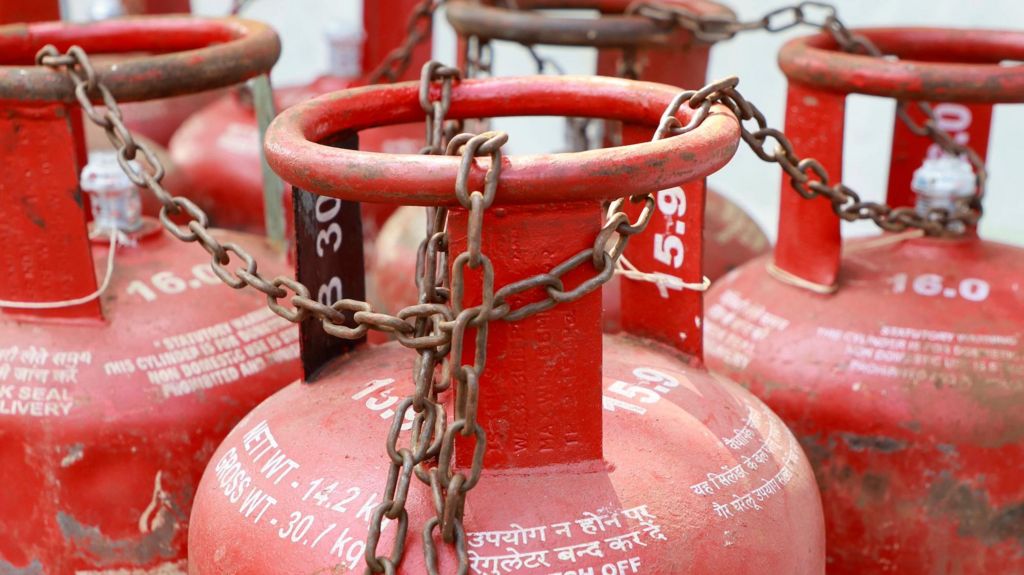
Energy shortages have already hit everyday life across India. While the Indian government has absorbed most of the crude oil price shock to keep pump prices stable ahead of key state elections — cutting excise duties on petrol and diesel and imposing windfall taxes on fuel exports — LPG and natural gas shortages have forced widespread closures. Restaurants, hotels, food processing facilities, ceramics manufacturers, and even funeral services have suspended operations in parts of the country due to lack of fuel. Care Edge Ratings notes that fertiliser supply disruptions could also harm India’s large agricultural sector ahead of the upcoming sowing season, which already faces elevated risk from the El Niño weather pattern.
Former Indian chief economic adviser Arvind Subramanian warns the crisis could deliver a large-magnitude stagflationary shock, with rising inflation paired with stagnating growth. ‘The stag part of the stagflation is already being felt in terms of restaurants closing down and households having less natural gas,’ Subramanian told India Today TV. Early worrying signs include migrant workers beginning to leave major urban centers like Mumbai in response to energy shortages, echoing population shifts seen during Covid-19 lockdowns. Economists warn that if labor shortages emerge and wage pressures rise, the country could face persistent supply-side headwinds.
To address the crisis, the Indian government has proposed a $6.2 billion economic stabilization fund and has requested approval for additional spending on food and fertiliser subsidies. The funding has been freed up by cutting non-essential spending, likely from infrastructure allocations for roads and railways. Even so, Bernstein notes the fund remains modest relative to the scale of the current economic challenge.
For its part, the RBI is widely expected to hold interest rates steady at its upcoming policy announcement this week, as policymakers wait for clarity on how long the conflict will last. Care Edge Ratings explains that a ‘wait and watch’ approach preserves the central bank’s flexibility to adjust policy once the full scale of risks to growth and inflation becomes clear.
Amid the widespread gloom, analysts point to a few bright spots. A weaker rupee could improve the competitiveness of India’s export sector, and the country’s current comfortable foreign exchange reserves provide a larger buffer against market volatility than past crises. Still, Subramanian and other experts frame the crisis as a critical wake-up call for India to address longstanding vulnerabilities in its energy sector. The path forward, they argue, requires building larger strategic energy stockpiles, diversifying import sources, and accelerating the transition to renewable energy in the long term.