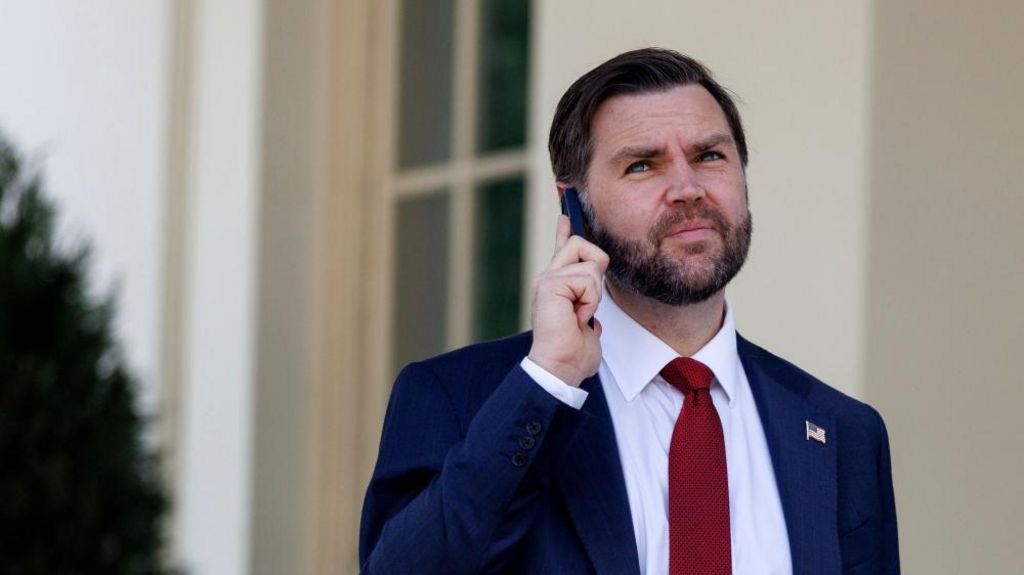
As Hungary prepares to hold a pivotal parliamentary election on April 12 that will shape the future of its 40-year political veteran leader Viktor Orban, the Trump administration is throwing its full weight behind the incumbent prime minister with a high-profile visit from U.S. Vice President JD Vance.
Vance is scheduled to appear alongside Orban at a mass election rally Tuesday, held inside a packed Budapest football stadium, marking the most visible show of American support for Orban’s re-election bid to date. This visit builds on an endorsement from President Donald Trump last month, when the U.S. commander-in-chief released a pre-recorded video message to the Conservative Political Action Conference (CPAC) held in the Hungarian capital, declaring he gave Orban his “complete and total support”.
The upcoming election stands as the stiffest test Orban has faced in his nearly four decades in Hungarian politics. His main challenger is Peter Magyar, a one-time insider within Orban’s ruling Fidesz party who broke ranks two years ago to launch his own centre-right opposition movement, the Tisza Party. Most independent public opinion polls put Tisza 10 to 20 percentage points ahead of Fidesz, with only the pro-Orban Nezopont polling agency recording a narrow lead for the incumbent.
The close alliance between Orban and Trump stretches back to the 2016 U.S. presidential election, when Orban became the only European Union leader to publicly endorse Trump’s candidacy. That long-standing relationship has only deepened over the years: Orban threw his full support behind Trump’s 2024 re-election campaign, and traveled to Washington D.C. last October to negotiate a critical exemption for Hungary from U.S. sanctions targeting Russian energy giants Rosneft and Lukoil. Trump has since framed the exemption as a personal agreement between the two leaders, strongly indicating that a new Hungarian government after the election would lose the exception and be forced to restart the application process from scratch.
Hungary is a notable outlier among EU member states, having openly rejected Brussels’ calls to cut its reliance on Russian fossil fuels. The country currently depends heavily on Russian crude oil delivered via the Druzhba pipeline that crosses Ukraine, and Russian natural gas transported through the TurkStream pipeline running through southern Europe. Both energy routes have run into major disruptions in recent months: no oil has flowed through Druzhba to Hungary since the end of January, after a Russian attack on Ukrainian oil infrastructure left operations halted. Orban has pinned blame on Kyiv for refusing to restart flows, while the Trump administration has offered no public diplomatic support to Budapest on resolving the pipeline standoff. To avoid widespread fuel shortages, Hungary has been forced to draw down its national strategic reserves and import non-Russian crude via an alternative pipeline route from Croatia.
A new crisis emerged just days before Vance’s visit, when Serbian authorities announced they had found and defused explosive devices near the TurkStream pipeline, located close to the Serbia-Hungary border. Orban and his aligned pro-government media have framed the incident as a deliberate terrorist attack targeting Hungary’s critical energy infrastructure. But Magyar and former Hungarian intelligence officials have leveled explosive counter-accusations, claiming Orban orchestrated the incident in coordination with Serbian President Aleksandar Vucic to sway undecided voters ahead of the vote.
Orban has centered his entire re-election campaign on vocal hostility to Ukraine and its President Volodymyr Zelenskyy, a stance that has become a core wedge issue in the race. His administration has also been rocked by a recent damaging leak: private phone conversations between Hungarian Foreign Minister Peter Szijjarto and senior Russian officials spanning multiple years were published. Transcripts of the calls suggest Szijjarto regularly shared confidential details of closed-door EU summit discussions with the Kremlin, and lobbied to remove Russian officials from EU sanctions lists at Moscow’s request. Szijjarto has defended the communications as standard, routine diplomatic practice.
For Orban, Vance’s visit carries high stakes: the incumbent is banking on the show of high-level U.S. support to convince undecided Hungarian voters that he remains a strong, internationally respected leader capable of steering the country through a period of global uncertainty.