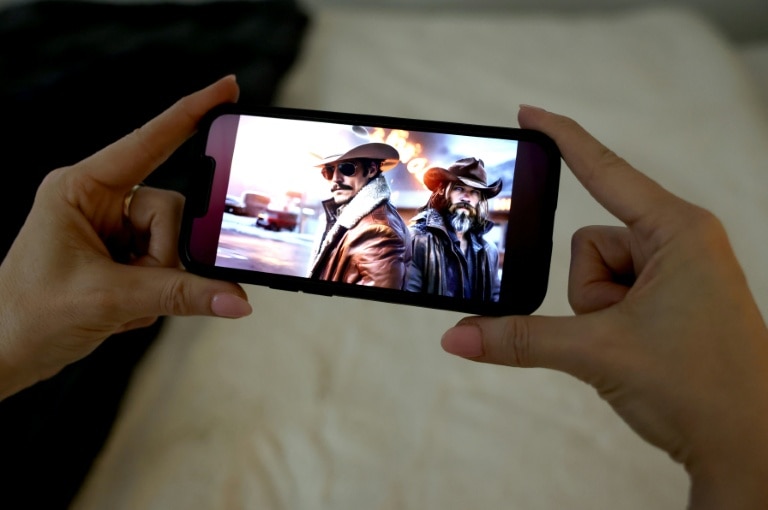
The rise of artificial intelligence has sent ripples through nearly every creative industry in recent years, but few could have predicted that one of its most notable breakthroughs would be in the heart of Nashville’s country music scene. Today, multiple fully AI-created artists regularly rank among the most streamed country acts in the United States, a trend that has sparked heated debate among songwriters, producers and industry analysts about the future of a genre built on personal storytelling and human emotion.
Unlike human country stars who build fanbases through years of touring and live performances, these AI acts — including Breaking Rust, Cain Walker, Aventhis, and Outlaw Gospel — are entirely digital creations. Every part of their public persona, from their stage names and visual likenesses to the melodies and lyrics of their charting tracks, is generated by machine learning models. Even their signature vocal performances, which lean into the genre’s classic raspy, gravelly baritone archetype, are indistinguishable to many listeners from those of human singers. The viral hit “Whiskey & Water,” credited to AI act Cain Walker featuring Cade Winslow, stands as one prominent example of how far this technology has advanced.
For many human songwriters working in the genre, this rapid shift has been unsettling. “That’s a phenomenon I didn’t see coming. I thought AI was going to be curing cancer or something,” said Jennie Hayes Kurtz, a member of the country group Brother and The Hayes. Kassie Jordan, who performs with her husband as the duo Blue Honey, echoed that concern, noting how easy it has become for amateur creators to generate full tracks by typing a few prompts into a chatbot. “As a songwriter, it’s kind of like, is anyone going to even think I really wrote this?” she questioned.
Industry analysts point to a long-running shift in mainstream country music that cleared the way for AI to gain a foothold. Berklee College of Music professor Joe Bennett explained that the modern iteration of country, which rose to mainstream prominence in the early 2000s, has increasingly leaned into a polished, pop-influenced sound built on repetitive melodic structures and formulaic lyrical themes. Many observers argue that mainstream country has grown progressively more formulaic as it chased broader mainstream audiences in recent decades, setting the stage for AI to replicate its signature sound with surprising accuracy. After years of being outperformed by rap and Latin music on streaming platforms, country has staged a major mainstream comeback over the past five years, with stars like Morgan Wallen and Zach Bryan claiming spots among the top 10 most streamed artists on Spotify in 2023. But that commercial comeback has come with a tradeoff, critics say: much of today’s top-charting country prioritizes broad appeal over the raw, personal storytelling that defined the genre’s roots.
“A big portion of popular country music has become kind of shallow, so that is pretty easy to duplicate,” Jordan explained. Bennett’s analysis backs that up: an early review of top AI-generated country tracks found that even very basic, vague text prompts are enough to generate a song that fits the mold of modern mainstream country.
So far, the industry has been slow to address the influx of AI-generated content. None of the creators behind the top AI country projects responded to requests for comment from AFP, and only one major streaming platform — Deezer — currently requires clear labeling for AI-generated music. Bennett argues that the industry must move quickly to implement reliable AI detection tools, noting that consumer demand for transparency around AI content is already growing.
Not all industry insiders are pessimistic about the trend, however. Many note that country music has long evolved with changing technology, and the current shift may ultimately reinforce the value of human-created art. Hayes Kurtz points out that the listener base is split: casual passive streamers may not care whether a track is AI-generated, but the core audience of active country fans — those who attend live shows, buy artist merchandise, and follow artists closely — deeply value the authenticity and personal connection that comes with human-created music. “That audience seems to really care if the music is made by the actual humans they are going to see,” she said.
Jordan remains optimistic that the genre will retain its human core, pointing to a growing movement of new artists returning to the genre’s traditional, storytelling-focused roots. “There’s another wave of country artists that are coming that is really into doing it the old school way and showing emotion,” she said. “That will be harder for AI to duplicate. That might save the genre.”