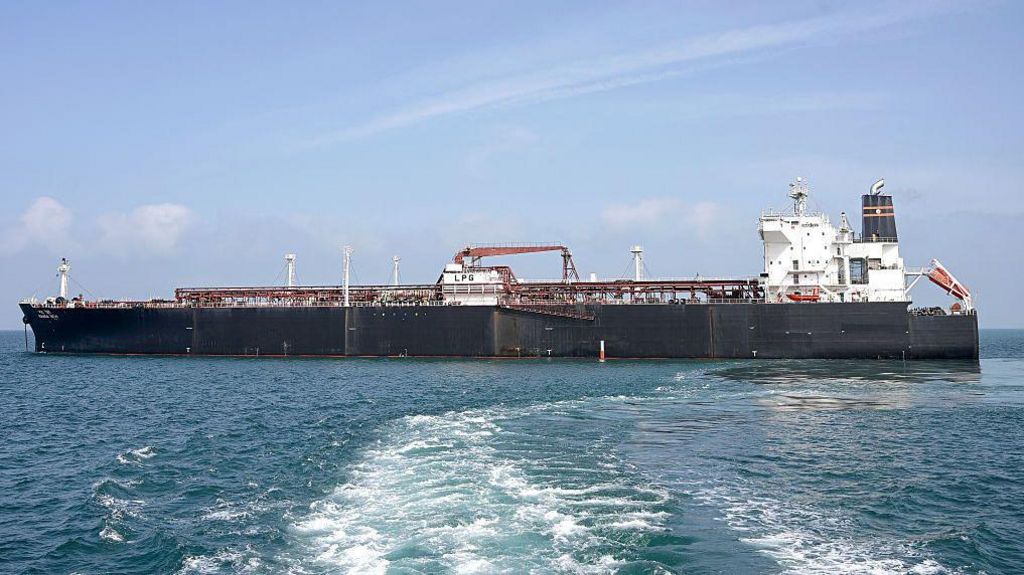
The strategic Strait of Hormuz, one of the world’s most critical energy chokepoints, has emerged as the center of a escalating global geopolitical standoff, with multiple Asian economies reliant on Gulf energy already securing individual safe passage agreements with Tehran even ahead of a harsh deadline set by former U.S. President Donald Trump.
On Monday, Trump issued an aggressive ultimatum to Iran, threatening that the United States could eliminate the Islamic Republic “in one night” if Tehran did not reach an agreement to reopen the Strait of Hormuz by 8 p.m. EDT Tuesday (1 a.m. GMT Wednesday). The threat marked a sharp escalation of tensions that erupted after Iran retaliated for joint U.S.-Israeli airstrikes by vowing to target transiting vessels in the waterway.
Roughly 20% of the world’s total energy shipments pass through the narrow strait annually, and the threat of disrupted transit has sent global oil prices soaring in recent weeks. While Trump has insisted the U.S. does not rely on Gulf crude and has repeatedly pressured energy-dependent nations to deploy their own warships and lead efforts to reopen the route, many Asian countries have opted for direct bilateral diplomacy with Iran instead. That approach has already yielded tangible results, though major questions about the scope and durability of these agreements remain unanswered.
The Philippines is the most recent country to formalize a deal. According to Philippine Foreign Affairs Secretary Theresa Lazaro, Iranian officials guaranteed “safe, unhindered and expeditious passage” for all Philippines-flagged vessels following a productive phone conversation between the two sides last Thursday. Lazaro described the agreement as “vital” for protecting the country’s energy and fertilizer supplies. For the Philippines, the deal comes at a critical moment: the nation imports 98% of its oil from the Middle East, and was the first country to declare a national energy emergency after domestic petrol prices more than doubled following the outbreak of the latest Iran war.
Iran’s willingness to strike a deal with the Philippines, a longstanding U.S. ally, suggests the Islamic Republic is willing to separate security alignments from active participation in the ongoing conflict, analysts note. “Iran appears to be distinguishing between a country’s alliance and its active participation in the conflict,” explained Roger Fouquet, a senior researcher at the National University of Singapore’s Energy Studies Institute, adding that this compartmentalization of relations makes the Philippine deal a particularly notable test case.
The Philippines is far from alone in securing safe passage guarantees. On March 28, Pakistan announced that Iran had approved passage for 20 Pakistani-flagged vessels through the strait. Pakistani Foreign Minister Ishaq Dar hailed the arrangement as “a welcome and constructive gesture by Iran and deserves appreciation,” adding that “Dialogue, diplomacy and such confidence-building measures are the only way forward.”
Iran has also explicitly welcomed Indian-flagged tankers to transit the route. “Our Indian friends are in safe hands, no worries,” the Iranian Embassy in India posted on the social platform X last week, responding to a prior statement from the embassy’s South African office that only Iran and Oman would hold authority over the strait’s future. India’s Foreign Minister Subrahmanyam Jaishankar confirmed in March that the safe passage of Indian tankers was the product of quiet diplomatic engagement between the two nations.
China, the world’s largest purchaser of Iranian oil, has also confirmed that multiple Chinese vessels have recently transited the strait following coordination with relevant parties. “Following coordination with relevant parties, three Chinese vessels recently transited the Strait of Hormuz. We express our gratitude to the relevant parties for the assistance provided,” a Chinese foreign ministry spokesperson told reporters, though Beijing offered no further details on the arrangement. Vessel tracking data shows that millions of barrels of Iranian oil, which is under U.S. sanctions, have been delivered to China in recent weeks despite the ongoing conflict. Beijing maintains close friendly diplomatic ties with Tehran and has joined Pakistan in efforts to broker a ceasefire between the U.S. and Iran.
Other nations have also secured limited safe passage agreements. Over the weekend, Japanese shipping firm Mitsui OSK Lines confirmed that a Japanese liquefied natural gas carrier had transited the strait, and that “The safety of the vessel and all crew members have been confirmed.” The firm declined to comment on whether any fees were paid or how safe passage was secured. In March, Malaysia announced that several of its tankers had been cleared for transit by Tehran, with Prime Minister Anwar Ibrahim thanking Iran’s president for facilitating the passage. Malaysian Transport Minister Anthony Loke credited the country’s “good diplomatic relationship with the Iranian government” for the agreement, though it remains unclear whether all Malaysian-flagged vessels will receive the same guarantee. Roughly two-thirds of Malaysia’s oil imports originate in the Gulf, making the strait critical to the country’s economy.
Despite the string of bilateral agreements, major uncertainties remain. Shipping analyst Dimitris Maniatis, of the consultancy Marisks, notes that it is still unclear whether the Iranian guarantees apply only to specific approved vessels or to all ships flagged under a given country. There is also no public clarity on whether nations paid for safe passage, or what terms were agreed to for the arrangements. A further open question is whether shippers will begin reflagging tankers from open registries like Panama and the Marshall Islands, which have not secured safe passage guarantees, to nations that already hold agreements with Tehran.
While the spate of bilateral deals marks a diplomatic breakthrough for energy-dependent nations, Roc Shi, an energy researcher from the University of Technology Sydney, emphasizes that the agreements do not resolve the core standoff. “While these agreements mark a ‘diplomatic breakthrough’, it is not a resolution to the problem,” Shi noted, adding that it remains unknown how long the guarantees will hold, and how ongoing military operations in the region will impact future transits.