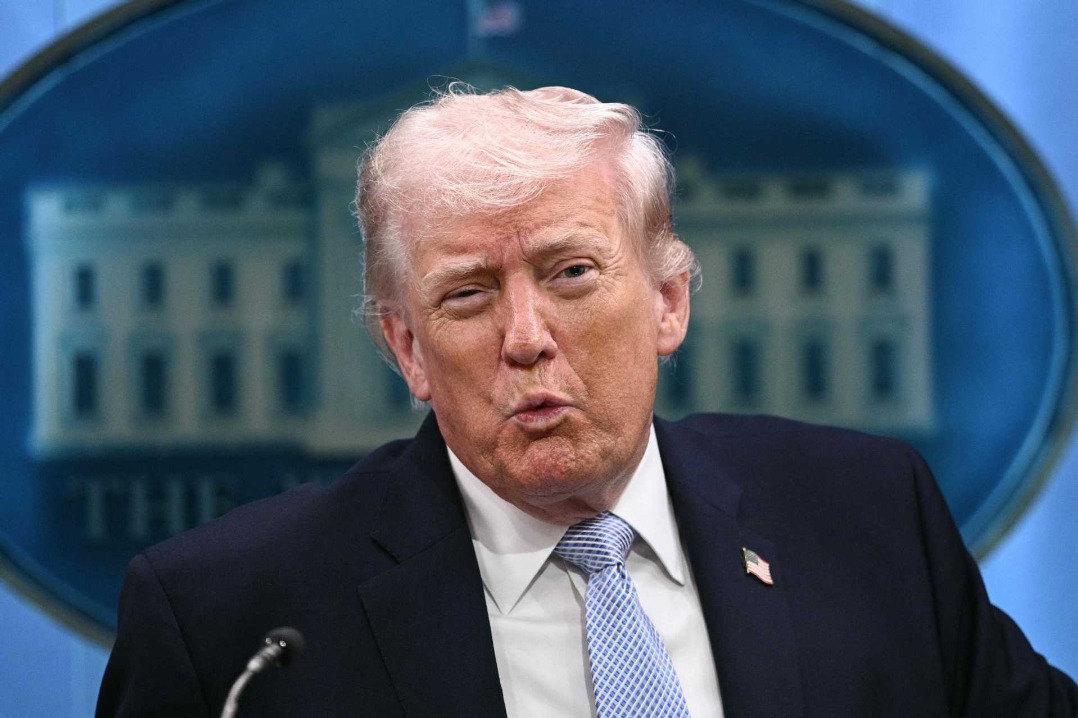
WASHINGTON — In a Monday press briefing at the White House, former President Donald Trump has publicly outlined the full scope of a daring U.S. military search-and-rescue operation that recovered an American airman stranded inside Iranian territory, confirming that the mission relied on a deployment of up to 155 aircraft and included the deliberate destruction of stranded U.S. cargo planes to prevent sensitive technology from falling into Iranian hands.
Trump told reporters the rescued pilot suffered serious, life-altering injuries during the incident. When pressed for additional details about the stranded aircraft, the president confirmed that U.S. forces destroyed the disabled planes, which carried sensitive communications infrastructure and cutting-edge anti-missile technology. After the initial aircraft were disabled, he added, the remainder of the extraction operation shifted to lighter, more maneuverable aircraft that could navigate Iranian airspace and terrain with greater speed and a lower risk of detection.
The high-stakes mission faced internal pushback from some military advisors, Trump acknowledged, with many warning the operation put hundreds of service members at risk of death. “Hundreds of people could have been killed,” he said. “So we had people that were within the military that said this is not wise, and I understood that. But I decided to do it.”
Chairman of the Joint Chiefs of Staff Dan Caine expanded on the role of U.S. air support during the mission, explaining that an A-10 Warthog aircraft that sustained damage over Iran on Friday was part of a specialized “Sandy” close air support mission designed explicitly for rescue operations. The aircraft’s sole task was to position itself between the stranded airman, advancing rescue teams and incoming hostile fire from Iranian forces. Caine confirmed the A-10 was struck multiple times by Iranian anti-aircraft fire, but the pilot managed to steer the damaged plane out of Iranian territory before ejecting safely over territory held by allied forces. “The plane had only one job: Get to the survivor, bring the rescue force forward, and put themselves between that survivor on the ground and the enemy,” Caine told reporters.
Central Intelligence Agency Director John Ratcliffe detailed the agency’s critical role in locating the missing airman, saying the CIA leveraged a network of on-the-ground human intelligence assets and advanced surveillance technologies to pinpoint the aviator’s location by Saturday morning, confirming he was alive and alone. Ratcliffe described the search effort as an extraordinarily difficult challenge, comparing it to “hunting for a single grain of sand in the middle of a desert.”
The mission was also a race against time, Ratcliffe noted, as locating the airman quickly while misleading Iranian forces about the rescue effort was critical to the operation’s success. To pull this off, the CIA launched an elaborate deception campaign against Iran that hid the airman’s location from Iranian forces while keeping U.S. teams updated on his position. The pilot was hiding in a mountain crevice throughout the operation, and remained completely undetectable to Iranian search teams thanks to the CIA’s misdirection, Ratcliffe confirmed.
Trump also confirmed that an Iranian shoulder-fired anti-air missile was responsible for downing a U.S. Air Force F-15E Strike Eagle that crashed in Iranian territory on Friday. Notably, neither the president nor any of his top senior officials provided additional details about the specific type of missile used, or further context for how the fighter jet was shot down over the country.