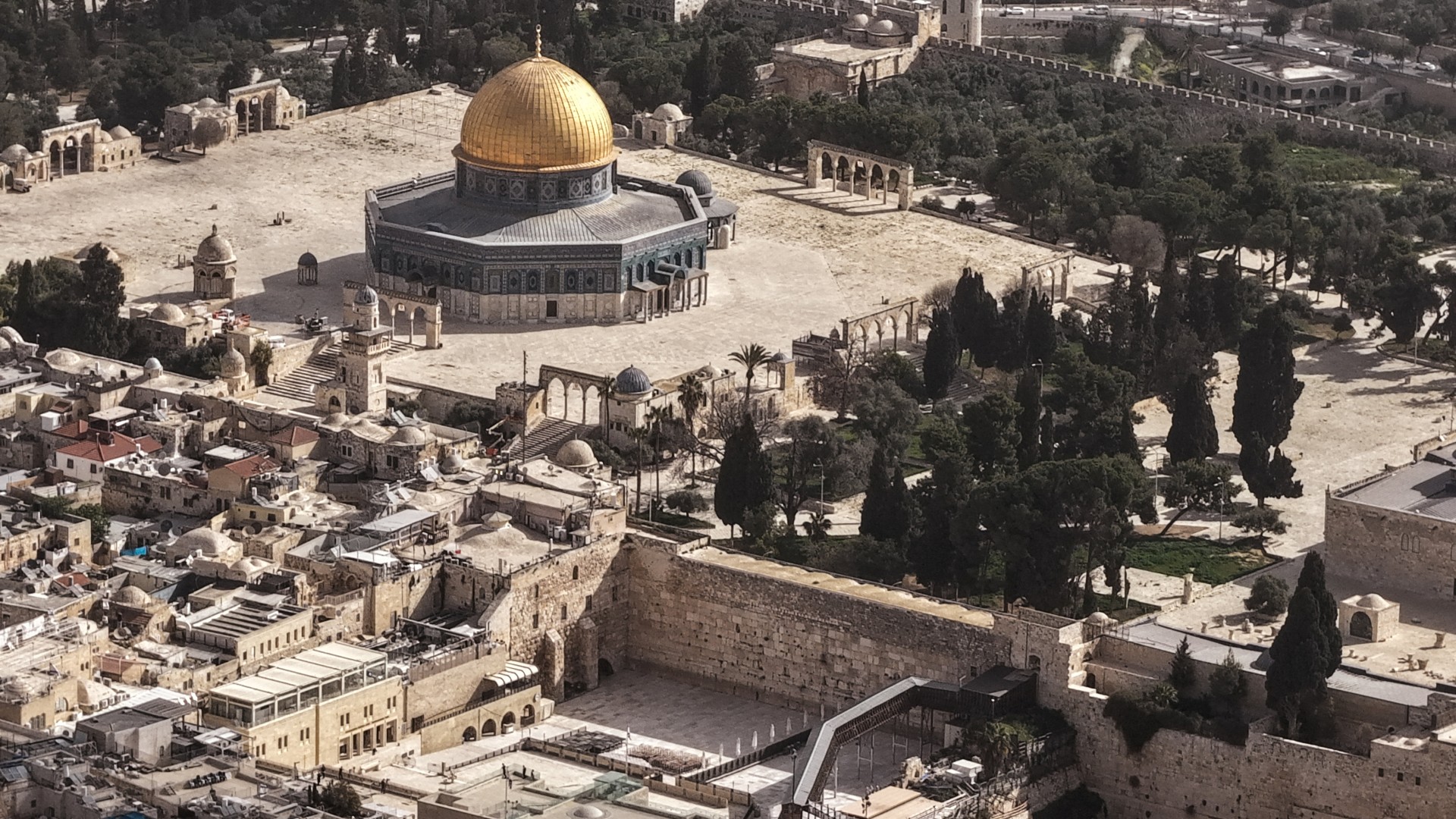
For five consecutive weeks, one of Islam’s holiest sites has stood empty, a situation that has stoked regional tensions and drawn accusations of Western diplomatic double standards across the Muslim world. Now, a senior leader of the Islamic Waqf, the body tasked with administering Al-Aqsa Mosque in occupied East Jerusalem, is publicly demanding Western governments step in to pressure Israel to reverse its sweeping restrictions and uphold long-standing agreements governing the sacred site.
Israel imposed a total entry ban on all Muslim worshippers to the Al-Aqsa compound starting February 28, the same day it launched a joint military campaign against Iran alongside the United States, citing unsubstantiated security threats. The ban has remained in place through key religious milestones on the Islamic calendar, including Friday congregational prayers, Eid al-Fitr, and Laylat al-Qadr – one of the holiest nights of the year for Muslim believers. For nearly the entire holy month of Ramadan, the mosque and its sprawling ancient courtyards sat vacant, forcing thousands of Muslim worshippers to gather for prayers on the narrow streets surrounding the Old City instead.
In an exclusive interview with Middle East Eye, Mustafa Abu Sway, deputy chairman of the Islamic Waqf council, warned the ongoing closure and creeping Israeli control of the site poses a direct threat to stability across the entire Middle East. “If we care about regional stability, Western governments must issue clear statements reaffirming their commitment to preserving the Status Quo, which will prevent Security Minister Itamar Ben Gvir and Prime Minister Benjamin Netanyahu from inflicting further irreversible damage,” Abu Sway said. “A strong public statement would send an unambiguous message to Israel that it cannot tamper with Jerusalem’s holy sites.”
Muslim Palestinians have expressed widespread frustration over what they view as stark double standards in Western policy toward religious access in Jerusalem. Just one week before the interview, the United States, Italy, Spain, the Vatican, and other international actors issued harsh condemnations of Israel after it barred Catholic leaders from accessing the Church of the Holy Sepulchre for Palm Sunday services. That public outcry forced Netanyahu to reverse the restriction within hours. By comparison, the five-week total ban on Muslim access to Al-Aqsa has been met with complete silence from Western capitals.
Jordanian MP Saleh al-Armouti, who heads the parliamentary bloc of the Islamic Action Front, praised the Vatican’s intervention on behalf of Christian worshippers while calling for similar action to reopen Al-Aqsa. “I call on the Pope to publicly demand the reopening of the blessed Al-Aqsa Mosque,” al-Armouti said.
Restrictions across the Old City, which houses Al-Aqsa alongside the Church of the Holy Sepulchre and the Western Wall, have been unevenly enforced. While limits on access to Christian and Jewish holy sites have been loosened at times, the closure of Al-Aqsa has remained rigidly in place. Weeks before the full closure, Al-Aqsa’s leading imam, Sheikh Muhammad al-Abbasi, was arrested by Israeli forces directly inside the mosque’s courtyards.
A coalition of eight Muslim-majority nations, led by Jordan, has repeatedly called on Israeli authorities to lift the entry ban and reopen the site to Muslim worshippers. In an early March joint statement, the group condemned the restrictions as a “flagrant violation” of international law and the long-standing principle of unrestricted access to houses of worship. The statement also reaffirmed that Jordan’s Ministry of Awqaf and Islamic Affairs is the only legal body with exclusive jurisdiction over Al-Aqsa, and that Israel has no valid claim to control the site. A second joint statement issued by the same bloc last week reaffirmed the demand, citing binding legal and historical Status Quo agreements – and was again ignored by the Israeli government.
The Status Quo arrangements that govern access and administration of Jerusalem’s holy sites date back to the 19th century. Under the terms of this agreement, Al-Aqsa is managed by the Waqf under Jordanian custodianship. When Israel seized full control of East Jerusalem during the 1967 Six-Day War, it formally recognized the Status Quo and acknowledged that Muslim authorities retain exclusive control over access, security, and the religious character of the Al-Aqsa compound.
On-the-ground reporting from Middle East Eye confirms a heavy, intimidating Israeli military presence remains deployed across the area surrounding Al-Aqsa, with soldiers positioned to block any attempted entry by worshippers. Internal sources familiar with the situation tell MEE that Israeli interference extends far beyond the entry ban on worshippers. Israeli police have also barred nearly all Waqf staff from entering the compound to carry out critical maintenance work, capping entry at just 25 employees out of the Waqf’s total workforce of roughly 1,000.
This creeping encroachment has fueled widespread fears that Israel intends to permanently alter the long-standing governing rules of the site once it reopens, including reallocating space or prayer time to Jewish ultranationalist groups. While Israel’s chief rabbinate has formally banned Jewish prayer on the Al-Aqsa compound – which is believed to sit atop the site of the ancient Jewish Second Temple – ultranationalist Israeli groups have increasingly staged incursions into the compound and conducted unauthorized Jewish prayers there, with open political backing from senior government figures including Ben Gvir.
Abu Sway ruled out any possibility of a compromise that would alter the Status Quo, noting that Jordan’s King Abdullah II has repeatedly declared Al-Aqsa a red line that cannot be violated. “King Abdullah has made clear there will be no time sharing, no space sharing at Al-Aqsa. He has left no room for doubt on this position,” Abu Sway said. “I am grateful that Jordan has our full backing. Without Jordanian support, Israel would have a completely free hand to alter the character of Al-Aqsa. Jordan will never compromise on the Status Quo.”