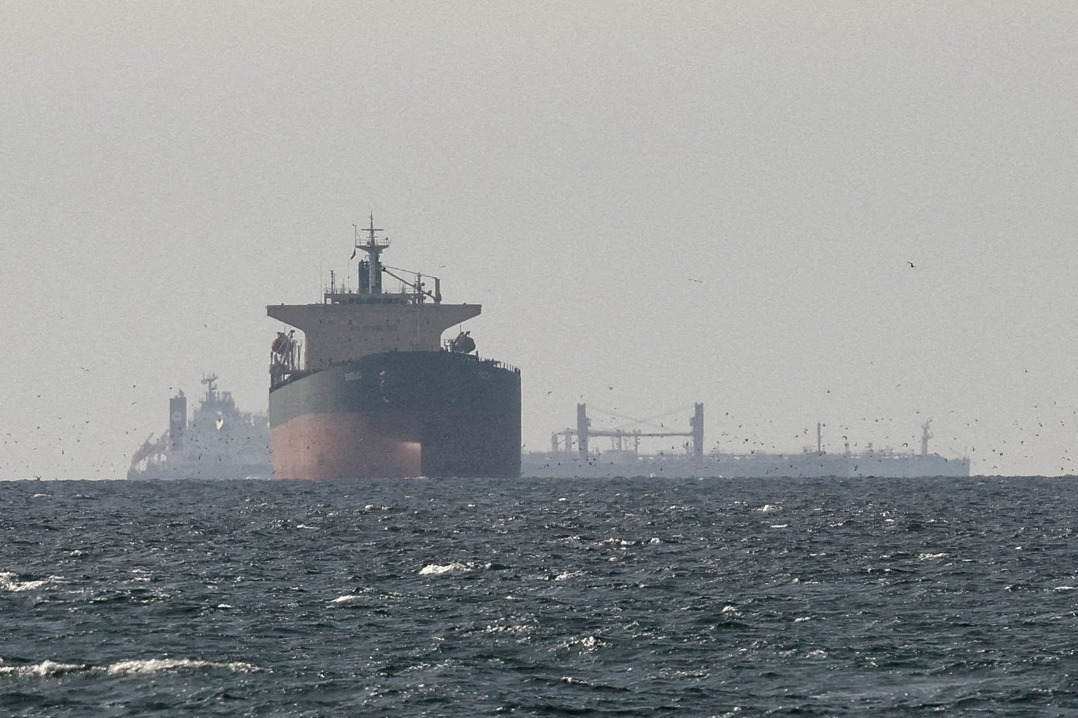
Fresh violence erupted across the Middle East on Monday 6 April 2026, as Iran defied a belligerent ultimatum from former US President Donald Trump that threatened catastrophic bombing of critical Iranian infrastructure unless the Strait of Hormuz was opened to all commercial shipping by Tuesday. The hardening of positions comes amid a spiraling exchange of cross-border attacks between Iran, Israel and US-aligned partners in the Gulf that has left more than 40 people dead and sent international oil prices surging to multi-year highs.
In an incendiary social media post published Sunday, Trump issued a stark threat to Iran, declaring that Tuesday would mark simultaneous “Power Plant Day” and “Bridge Day” for the country, promising that Iranians would be “living in Hell” if the strategic Strait of Hormuz—through which roughly 20% of the world’s daily oil supplies pass—did not reopen to unimpeded traffic by the deadline. Iran’s parliamentary speaker Mohammad Bagher Ghalibaf quickly pushed back against the rhetoric, taking to social media to label Trump’s threats reckless war crimes, warning the US would gain nothing from the escalation.
By Monday, joint US and Israeli air and missile strikes had pounded targets across eastern, southern and western Iran. Iranian state media confirmed at least 34 fatalities from the bombardment, including six children, with senior military commander Major General Majid Khademi, head of intelligence for the Islamic Revolutionary Guard Corps, counted among the dead. Israeli strikes hit energy infrastructure at Iran’s massive South Pars natural gas field, and also damaged Sharif University of Technology, one of Iran’s leading centers of engineering and higher education.
Iran quickly retaliated for the attacks, launching its own missile and drone barrages against targets in Israel and US-aligned Gulf states. In Haifa, a major Israeli coastal city, an Iranian missile struck a residential building, killing at least four people. The Israeli military has since issued urgent warnings to residents that a second large-scale missile attack from Iran is imminent.
Across the Gulf Cooperation Council region, Iranian strikes targeted critical civilian and energy infrastructure. In Kuwait, missiles hit power generation, water desalination and oil facilities, while an oil installation in Bahrain sustained damage. In the United Arab Emirates, a drone attack damaged the headquarters of a telecommunications firm in the emirate of Fujairah, with no injuries reported. One person was wounded by falling debris from an intercepted attack in an industrial zone of Abu Dhabi, the UAE’s capital.
The escalation of hostilities at the Strait of Hormuz has already roiled global energy markets. Brent crude, the global benchmark for oil prices, jumped to $109 per barrel in early Monday spot trading, representing a 50% increase from pre-conflict levels. The price spike comes just one day after the OPEC+ alliance, which groups major oil exporting nations including Saudi Arabia and Russia, announced a modest output increase of 206,000 barrels per day set to take effect in May.
International mediators have already stepped in to push for de-escalation. According to reporting from The Associated Press, citing two anonymous senior Middle Eastern officials, mediators from Egypt, Pakistan and Turkey have submitted a joint draft peace proposal to both Tehran and Washington. Titled the tentative “Islamabad Accord”, the plan calls for an immediate 45-day ceasefire, the immediate reopening of the Strait of Hormuz, and 15 to 20 days of negotiations to finalize a broader long-term settlement, with final talks scheduled to be held in Pakistan.
Neither Iran nor the US has issued an official formal response to the proposal, which was delivered Sunday night to Iranian Foreign Minister Abbas Araghchi and US Middle East envoy Steve Witkoff. However, a senior anonymous Iranian official told mediators that Iran would not agree to reopen the key waterway in exchange for only a temporary truce, arguing that the US has not demonstrated it is serious about achieving a lasting peace. Iran’s core demands for a final settlement include binding security guarantees against future attacks, war reparations for damage already sustained, and formal international recognition of Iranian sovereignty over the Strait of Hormuz.
Anwar Gargash, diplomatic advisor to the UAE’s president, offered his government’s position Sunday, stating that any viable peace deal must guarantee full unimpeded access through the strait. He added that any agreement that fails to address concerns over Iran’s nuclear program, ballistic missile development and drone production would leave the region more unstable and dangerous than before the current conflict.
Monday’s surge in violence follows a controversial rescue operation last Friday, after a US Air Force F-15E fighter jet was shot down over Iranian territory. US forces successfully rescued the two crew members on board, but were forced to destroy two C-130 cargo planes and at least two MH-6 Little Bird helicopters that became stuck during the mission. Iran has claimed it shot down the abandoned aircraft, and Iranian state media has broadcast footage of charred wreckage to support the claim.