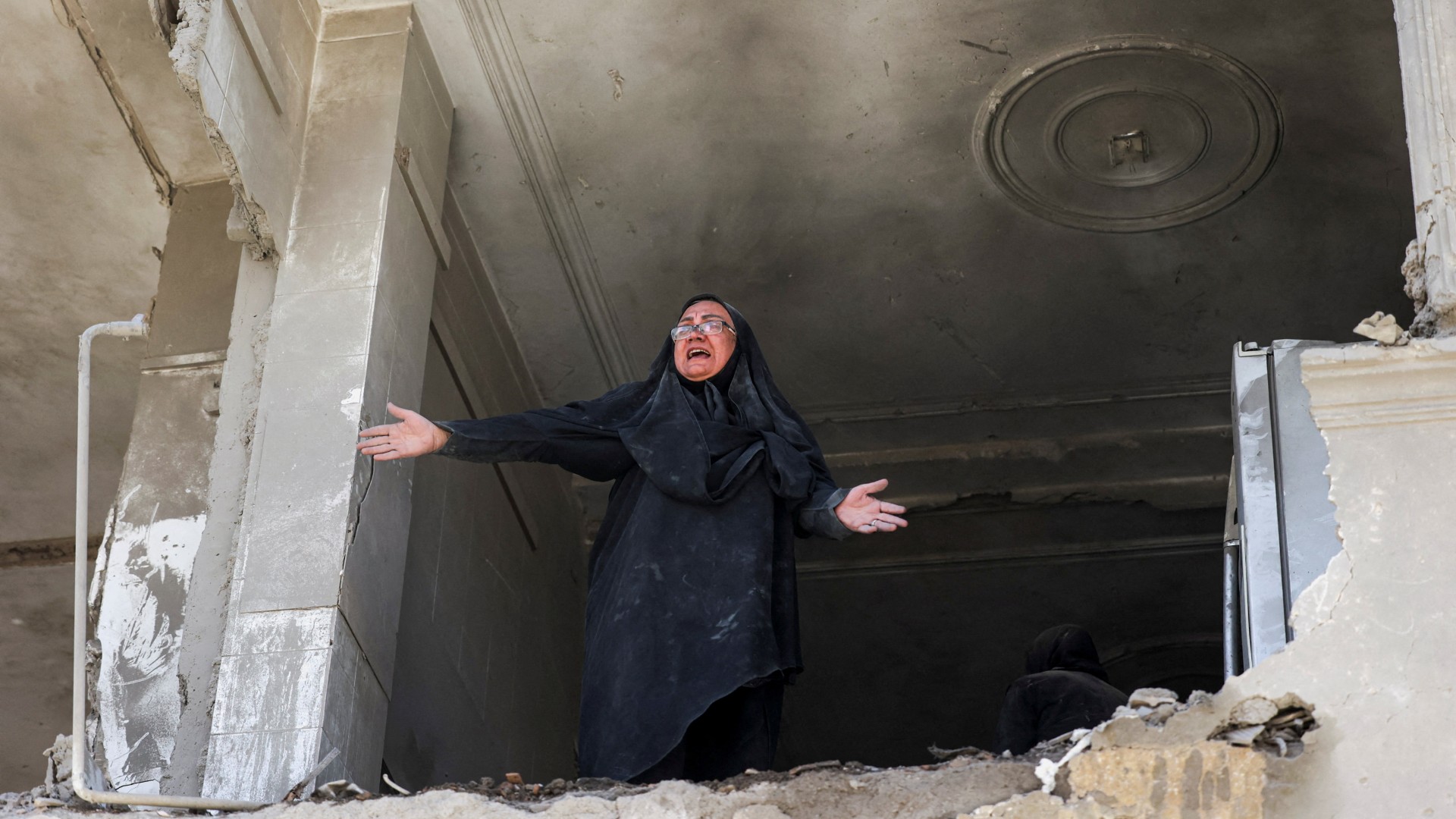
More than 100 American legal scholars and practicing legal professionals have signed an open letter arguing that the military campaign against Iran launched jointly by former U.S. President Donald Trump and Israel violates core tenets of international law, with multiple military operations rising to the level of potential war crimes. The letter asserts that the campaign was unlawful from its very commencement on February 28.
“From its initiation, this military offensive stands as a clear violation of the United Nations Charter,” the document reads. “The actions of U.S. armed forces since the campaign began, paired with public remarks from senior U.S. government officials, raise urgent, credible concerns about breaches of international human rights law and international humanitarian law — including the commission of potential war crimes.”
While the letter centers its criticism on the actions of the U.S. government, it also joins in condemning two distinct sets of unlawful actions: the Iranian government’s violent suppression of internal domestic dissent, and Tehran’s continued unpermitted strikes on civilian infrastructure using explosive ordnance in heavily populated civilian areas.
The signatories emphasize the foundational importance of the principle that international law must apply equally to all nations, regardless of their global power and influence. They reject the rhetorical framing used by senior U.S. officials that seeks to minimize the importance of international laws governing armed conflict, calling this language “profoundly alarming and dangerously short-sighted.”
“These claims, particularly when paired with the on-the-ground conduct of U.S. military forces, are eroding the international legal order that our professional lives have been dedicated to building and protecting,” the letter adds.
The open letter also outlines the far-reaching human and economic costs of the ongoing campaign: it notes the operation has drained between $1 billion and $2 billion from U.S. taxpayers every single day, while inflicting catastrophic harm on Iranian civilians and regional stability across the Middle East. Thousands of civilian lives have been lost, the letter says, while regional ecosystems and national economies have been left severely damaged.
The legal experts level two core layers of criticism: they challenge both the inherent illegality of the decision to launch the war, and the potentially unlawful conduct of military operations throughout the campaign. First, the group reaffirms a position widely held by legal experts since the offensive began: the attack cannot be justified under the international legal framework governing the right to self-defense.
“The use of military force against a sovereign state is only permitted in two circumstances: an act of self-defense in response to an actual or imminent armed attack, or explicit authorization from the United Nations Security Council,” the signatories explain. “The Security Council never granted authorization for this attack. Iran never launched an armed attack against either the United States or Israel.” They add that no credible evidence exists to demonstrate that Iran posed an imminent armed threat that would legally justify a pre-emptive self-defense claim.
Beyond the question of the war’s legality at inception, the letter documents multiple alleged violations of the laws of armed conflict. These include U.S. strikes targeting civilian individuals and infrastructure, among them non-military Iranian politicians, critical energy facilities, and civilian desalination plants that supply drinking water to Iranian communities.
The letter cites data compiled by the Iranian Red Crescent documenting strikes on more than 67,000 civilian sites across Iran between February 28 and March 23. That tally includes 498 damaged or destroyed schools and 236 health care facilities. The data also confirms that at least 1,443 Iranian civilians have been killed in the joint strikes, including 217 children.
Of particular note is the February strike on a primary school in the Iranian city of Minab, which killed at least 175 people, the vast majority of whom were young schoolgirls. The letter concludes this strike “likely violates international humanitarian law,” adding that “if evidence confirms that those responsible for the strike acted with reckless disregard for civilian life, it may also qualify as a war crime.” While the Trump administration has denied U.S. involvement in the attack, a preliminary U.S. government investigation has already confirmed that U.S. military forces carried out the strike, and that the school was targeted based on out-of-date intelligence.
The legal experts also draw attention to inflammatory public remarks made by U.S. Secretary of War Pete Hegseth, including his statement that “We will keep pushing, keep advancing, no quarter, no mercy for our enemies.” Under both U.S. military law and longstanding international military law, declaring that no quarter will be given — a policy that means refusing to spare the lives of combatants who have surrendered — is explicitly prohibited. The signatories note that ordering or threatening a policy of no quarter is explicitly classified as a war crime under international criminal law.
The letter also denounces additional remarks from Hegseth, who has publicly stated the U.S. military does not abide by “stupid rules of engagement,” as well as a comment Trump made in January stating “I don’t need international law.” The experts add that repeated threats from Trump to attack Iranian energy infrastructure would also qualify as war crimes if carried out.
Under international law, deliberate strikes on civilian energy infrastructure are strictly prohibited, the letter explains. If an energy facility serves both civilian and military purposes, it can only be classified as a legitimate military target if it makes an “effective contribution to military action” and an attack on it would deliver a “definite military advantage.” Regardless of classification, all strikes must adhere to the international legal principles of proportionality and precaution to avoid unnecessary civilian harm.
The experts also issue a special warning about potential strikes on Iranian nuclear power plants, noting that such facilities require extraordinary care due to the catastrophic risk that a breach could release radioactive material, endangering the lives of millions of civilians across the region.
Beyond individual strikes and public statements, the legal experts raise broader concerns about policy changes pushed by Hegseth since he took office as U.S. Secretary of Defense that are designed to weaken U.S. compliance with international law. Under his leadership, the letter says, multiple senior military legal advisors have been fired, and the judge advocates-general of the Army, Navy and Air Force have all been replaced. This systemic shakeup has gutted independent legal oversight of U.S. military operations, the experts argue.
Additionally, Hegseth’s 2026 U.S. National Defense Strategy removes all explicit references to civilian protection and adherence to international law. “We are gravely concerned that the conduct and threats outlined here are causing serious harm to civilians in the Middle East, and that they also contribute to escalating the conflict, damaging the environment and the global economy, and that they risk degrading the rule of law and fundamental norms that protect every nation’s civilians,” the letter states.
“Public statements by senior officials indicate an alarming disrespect for the rules of international humanitarian law accepted by states, and which protect both civilians and members of the armed forces,” the authors continue. In closing, the group issued a formal call to action: “We urge U.S. government officials to uphold the UN Charter, international humanitarian law, and human rights law at all times, and to publicly make clear U.S. commitment to and respect for norms of international law.”