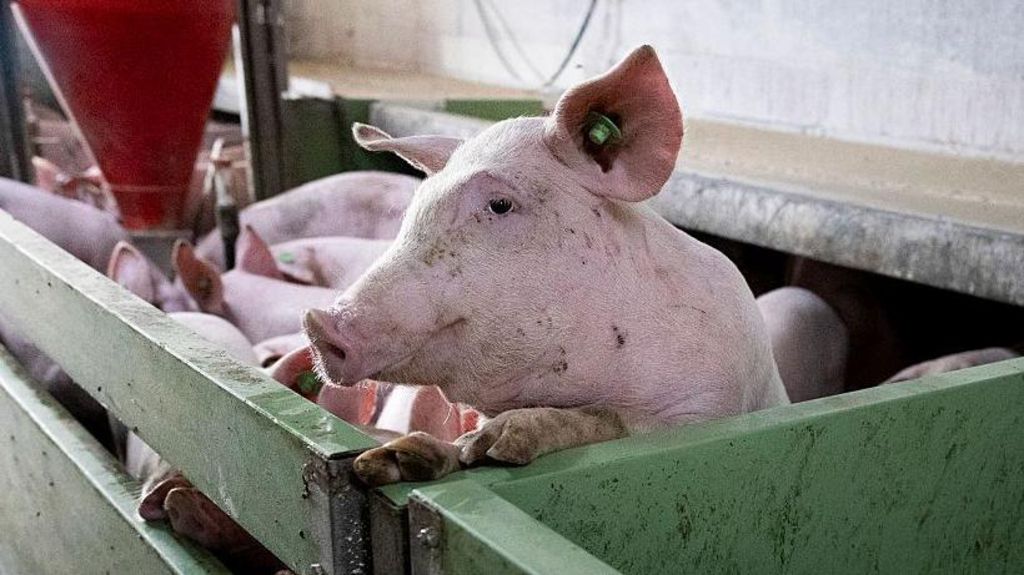
For third-generation pig farmer Jordi Saltiveri, the November 2023 announcement of the first African Swine Fever (ASF) detection in Spain hit with a mix of grief, frustration, and helplessness. Though his 8,000-head farm, nestled in the isolated countryside of Catalonia’s Lleida province hundreds of kilometers from the outbreak’s origin, has never recorded a case, the economic damage has already upended decades of stable production.
“Every slaughter pig we sell now brings 30 to 40 euros less per head than it did before the outbreak was announced,” Saltiveri, who also serves as president of Catalonia’s federation of agricultural cooperatives, explained. The fallout is universal across Spain’s $27 billion pork sector, the largest in Europe, that has grown exponentially since the country eradicated its last ASF outbreak 30 years ago.
The first case of the highly contagious, pig-lethal virus — which poses no risk to human health — was traced to a wild boar carcass found in Collserola Park, a protected natural reserve on the outskirts of Barcelona. A preliminary investigation quickly ruled out a leak from a nearby animal research facility as the source, but experts have pinned the risk of wider spread on the region’s booming wild boar population, which has grown unchecked due to relaxed wildlife management policies.
Catalonia’s regional agriculture minister Òscar Ordeig noted that overpopulation of wild species, from rabbits to deer to boar, has created cascading public safety and health risks, with boars contributing to a sharp rise in traffic collisions and disease transmission. Current estimates put Catalonia’s wild boar population between 120,000 and 180,000 animals, many of which roam into Barcelona’s suburban outskirts. To curb spread, the regional government has set a target to cut the wild boar population in half, with 24,000 animals culled in the first three months of 2024 alone.
Culling operations are concentrated in a 6-kilometer high-risk radius around the initial detection site, with a broader 20-kilometer low-risk zone also monitored. Teams use a combination of net traps, enclosed box traps, and silenced firearms, supported by drone and camera surveillance to track boar movement. All culled carcasses are tested for ASF; by the end of March 2024, 232 positive cases had been confirmed. Movement restrictions backed by reinforced fencing and strict biosecurity protocols — including disinfection of all vehicles and personnel that enter high-risk zones — are also in place to slow transmission.
“We are deploying every available resource to protect our pork industry, our rural economy, and our farming families,” Ordeig said, emphasizing that Spain has long maintained some of the strictest biosecurity standards in Europe. “There is far too much at stake here to cut corners.”
But the economic damage arrived almost instantly. As soon as ASF was confirmed, multiple major export markets including Brazil, Japan, Mexico, South Africa, and the United States immediately moved to close their borders to all Spanish pork imports. Other trading partners, including EU member states, China, and the United Kingdom, implemented targeted restrictions banning only pork from Catalonia and the affected northeastern region.
The collapse in international demand has sent domestic pork prices plummeting, cutting directly into farmer profits. Data from Catalonia shows that pork exports from the region dropped 17% year-over-year in January 2024. Farmers’ advocacy group Unión de Uniones estimates that the entire Spanish pork sector has already lost more than 600 million euros since the outbreak began. Under international animal health rules, Spain cannot regain full free export status until 12 full months have passed since the last confirmed infection is eliminated.
The stakes of a prolonged outbreak are high: in recent years, Germany’s ongoing ASF crisis has cut national pork production by roughly 25% and forced thousands of small farms to close. Spanish officials point to Belgium as a successful model, where the country fully eradicated ASF just 14 months after its first detection. Saltiveri, who maintains strict biosecurity protocols on his farm that predate the current outbreak, says he is confident his operation and other Spanish commercial farms will remain free of the virus.
Still, many industry voices have criticized the government’s containment response as too slow. After positive cases were detected outside the initial high-risk zone in February 2024, Mercolleida, Catalonia’s leading benchmark agricultural market for all of Spain, issued a public rebuke of the culling effort in the Barcelona area, warning that delayed action was already hurting producers across the country. “Farmers from every corner of Spain are already paying the price for this outbreak,” the board said in a statement. “We cannot allow Spain to become the next Germany.”
Domestically, however, consumer confidence has remained steady, even just a few kilometers from the outbreak’s origin at Barcelona’s central Sants Market. Multiple shoppers purchasing pork told reporters they trusted the government’s safety controls, noting that ASF cannot infect humans — a stark contrast to the 1990s BSE (mad cow disease) crisis, which posed direct risks to human health and upended beef consumption across Europe.
“I feel more confident buying pork now than I did before the outbreak, because every cut is subject to extra checks,” said shopper Nati Martínez. Longtime pork butcher José Rodríguez added that retail prices have held steady since the outbreak began, and any softness in sales is tied to broader cost-of-living pressures, not consumer concern over ASF. For Spanish consumers, Rodríguez noted, pork remains a staple of the national diet: “We eat every part of the pig, from nose to tail. That isn’t changing anytime soon.”