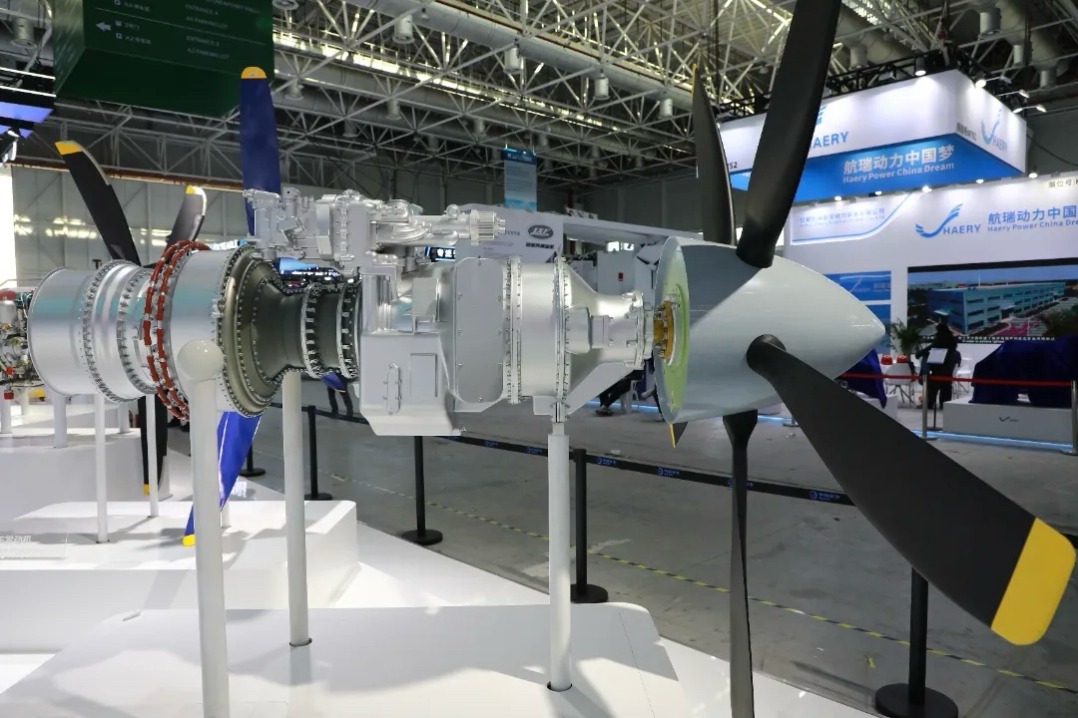
In a historic milestone for global green aviation development, an independently developed Chinese megawatt-class hydrogen-fueled turboprop engine has completed the world’s first successful maiden test flight. The 7.5-tonne unmanned cargo aircraft fitted with the AEP100 engine completed the 16-minute flight at an airport in Zhuzhou, Hunan Province on Saturday, marking a new chapter for carbon-free aviation technology.
According to the Aero Engine Corporation of China (AECC), the developer of the engine, the AEP100 system operated stably and reliably throughout the entire flight. The aircraft traveled 36 kilometers, holding a steady cruising speed of 220 kilometers per hour at an altitude of 300 meters, before returning safely to base after completing all pre-planned test missions. AECC experts noted that this successful maiden flight represents a transformative breakthrough, moving China’s domestic hydrogen-powered aviation engine program from purely conceptual technological development to practical engineering application.
The achievement also confirms that China has built a fully self-contained, end-to-end technical supply chain for hydrogen-fueled aviation engines, spanning from the manufacturing of core specialized components to full system integration. The successful test verified that integrating hydrogen-powered propulsion systems with aircraft flight platforms is engineeringly feasible and reliable, creating a solid foundation for future mass industrial deployment of hydrogen energy in the aviation sector. This milestone also signals that China’s green aviation power development has crossed a key threshold, shifting from early technological exploration to hands-on engineering practice.
Beyond the technical breakthrough itself, experts project that the advancement of hydrogen-powered aviation technology will drive coordinated upgrades across the entire hydrogen energy industrial chain. This spans upstream green hydrogen production, midstream hydrogen storage and refueling infrastructure construction, and downstream development of high-end equipment and advanced new material clusters. These linked developments will in turn accelerate the shift toward green, low-carbon, high-quality growth across China’s whole aviation industry.
Looking ahead, as production costs for green hydrogen continue to fall globally, the economic and energy security benefits of hydrogen-powered aviation will become increasingly prominent. Industry planners expect the technology to first enter early commercial use in low-altitude aviation segments, such as unmanned cargo delivery and inter-island logistics transport, before gradually expanding to serve regional passenger routes and eventually long-haul mainline passenger aircraft.