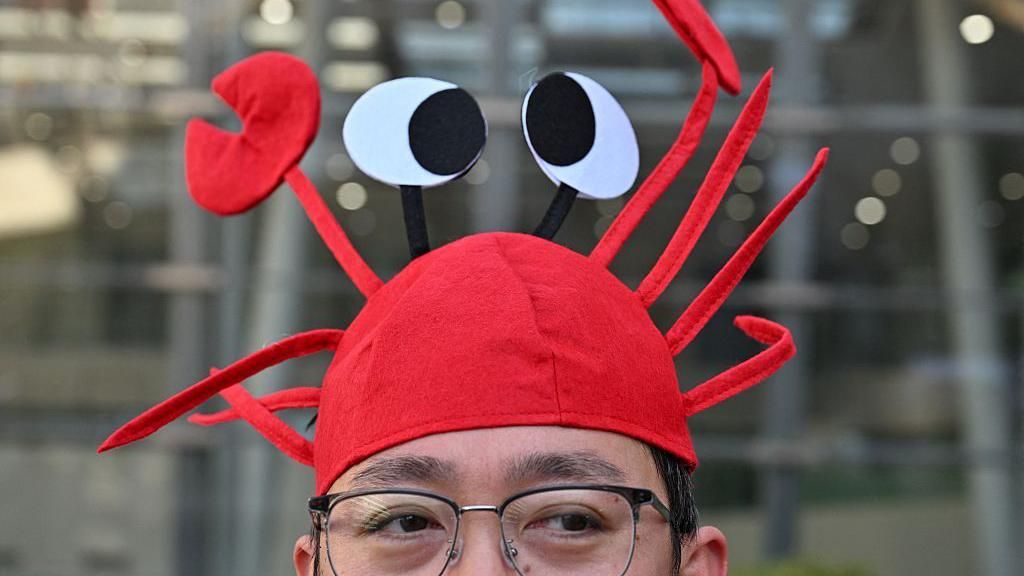
In March 2026, an unconventional artificial intelligence tool called OpenClaw sparked a nationwide digital frenzy across China, where users have affectionately nicknamed the customizable agent a “lobster” and coined the term “raising lobsters” to describe the process of fine-tuning the tool to fit their personal and professional needs. The viral trend has laid bare China’s accelerating push to integrate artificial intelligence across every corner of its economy, while also highlighting the growing tensions between rapid innovation, regulatory oversight, and shifting labor markets.
For many Chinese users, OpenClaw has been a revelation. The tool was originally developed by Austrian coder Peter Steinberger, and its open-source codebase gives it a unique advantage in China’s market: unlike closed, Western AI platforms such as ChatGPT and Claude that remain inaccessible to most Chinese users, OpenClaw’s code can be freely adapted to run on domestic large language models developed by Chinese tech firms. That accessibility has turned it into a grassroots AI movement that has captured the attention of everyone from casual hobbyists to major technology corporations and government policymakers.
Wang, a young IT engineer who asked to keep his full name private due to his unregistered side business selling digital goods on TikTok — a platform banned in mainland China — is one of the millions of Chinese users who have dived into “raising lobsters” in recent months. When he first tested a custom OpenClaw build modified for his e-commerce work, he said he was stunned by its capabilities. Manually uploading new product listings to TikTok Shop is an hours-long grind: it requires editing images, writing SEO-friendly titles and product descriptions, adjusting pricing and promotional discounts, registering for marketing campaigns, and coordinating with influencer partners. Normally, Wang can only complete around 12 listings a single day. But his custom “lobster” can push out up to 200 complete listings in just two minutes, he claimed. “It is scary, but also exciting. My lobster is better than I am at this,” Wang told the BBC. “It writes better, and can instantly compare my prices with every competitor – something I would never have time to do.”
OpenClaw had already earned significant attention in global tech circles even before its viral rise in China: Nvidia CEO Jensen Huang publicly hailed it as “the next ChatGPT”, and Steinberger, its creator, was recently recruited to join leading U.S. AI lab OpenAI. But the grassroots enthusiasm that turned it into a nationwide cultural trend is a distinctly Chinese phenomenon, according to Wendy Chang, an analyst with the Mercator Institute for China Studies (MERICS).
The viral traction of OpenClaw in China is no accident. It comes on the heels of years of targeted investment in AI development, backed by top-level political support from China’s central leadership that has encouraged domestic innovation in the sector. The groundwork was laid in early 2025, when Chinese open-source AI platform DeepSeek, built by domestic engineers educated at China’s top universities, surprised global observers with its capability, proving that Chinese developers could compete in the global AI race and demonstrating strong domestic demand for open, adaptable AI tools. This set the stage for OpenClaw’s rapid adoption once it caught the attention of Chinese tech communities.
Major domestic tech giants such as Tencent and Baidu quickly got in on the trend, releasing their own custom-built versions of OpenClaw for users. In cities ranging from Beijing to Shenzhen, hundreds of people from all age groups — from secondary school students to retired residents — lined up outside the two firms’ headquarters to claim free custom OpenClaw builds. Public figures from across China’s digital ecosystem have also embraced the trend: popular comedian and author Li Dan told his millions of Douyin followers that he was so immersed in his OpenClaw that he even talked to his “lobster” in his sleep, while Cheetah Mobile CEO Fu Sheng regularly documented his own experience “raising lobsters” on social media, cementing the phrase in the country’s online lexicon.
Users have adapted their “lobsters” for a huge range of use cases: some stock market enthusiasts have claimed their custom OpenClaw builds can analyze market trends to identify optimal entry and exit points for trades, even executing trades automatically despite the high risk of costly errors. Other users highlight the tool’s ability to cut down on repetitive work and streamline multi-tasking for daily personal and professional tasks. Wang summed up the sentiment of many users when he called OpenClaw “the AI era’s answer for ordinary people.”
China’s national strategy of “AI Plus”, which aims to integrate artificial intelligence across all major industries from manufacturing to services, has created a policy environment that encouraged OpenClaw’s early growth. Multiple local governments rolled out financial incentives to encourage entrepreneurs to integrate OpenClaw into their business operations. The eastern manufacturing hub of Wuxi, for example, offered rewards of up to 5 million yuan ($726,000) for OpenClaw-based applications in manufacturing such as industrial robotics.
“Everyone in China knows that the government sets the pace, and the government tells you where the opportunities are,” said Rui Ma, founder of the Tech Buzz China newsletter. “It’s practical for most people. That’s probably a better plan, to just follow the government directive than to really try to figure it out on your own.” Since Beijing prioritized AI development, thousands of domestic startups and established tech firms have rushed into the AI sector, supported by a range of policy perks including subsidized office space, low-interest loans, and cash grants for innovation. Today, companies across almost every sector — from automotive manufacturing to healthcare, consumer electronics to logistics — are racing to integrate AI into their products and internal operations. The competition in China’s domestic AI market is already fierce: since 2023, more than 100 domestic large language models have launched in what local media have dubbed the “Hundred Model War”, and only around 10 remain major competitors today.
Experts note that while Chinese AI platforms still lag behind leading Western models in overall capability, the gap has narrowed steadily in recent years. For Chinese policymakers, promoting the open-source OpenClaw framework is a strategic move to help close that gap further, according to analyst Jenny Xiao.
But as the initial hype has cooled, growing challenges have emerged that have forced a shift in the narrative. First, many users have been caught off guard by the recurring cost of running custom OpenClaw agents, which require paid “tokens” for every interaction. More critically, national cybersecurity authorities have raised alarms about unregulated use of the tool. Last month, Beijing’s cybersecurity watchdog issued a public warning about major security risks linked to improperly modified and deployed OpenClaw builds, and a growing number of government agencies have since banned staff from installing the tool on work devices. Many institutions that once offered custom OpenClaw installations have now shifted to removing the tool from official systems.
This back-and-forth is characteristic of China’s top-down policy approach to emerging technology, observers say. Local governments often rush to embrace new tools that align with central leadership’s priorities to compete for approval, then pull back when risks emerge. Ma describes this dynamic as “disorder with control”, and notes that Beijing’s regulatory intervention does not mean policymakers are turning against AI development broadly.
In fact, policymakers see AI tools like OpenClaw as a potential partial solution to one of China’s most pressing social problems: youth unemployment, which has remained above 16% in recent months. Many government incentive programs tied to OpenClaw specifically target “one-person companies” — small, solo-run startups built with the support of AI tools — offering subsidies of up to 10 million yuan to encourage new business formation. “Who’s the most likely to build a one-person company? Probably young people who face a tough job market,” Xiao explained.
For many Chinese workers, the rapid spread of AI tools like OpenClaw has already created widespread anxiety about job displacement. A recent commentary in state-run newspaper *People’s Daily* captured the growing national mood: “Some say that in 2026, if you don’t ‘raise lobsters’, you’ve already lost at the starting line.” Jason, an IT programmer whose team now only hires candidates with prior experience working with AI tools, called the shift “genuinely terrifying.” “It’s mostly people leaving, with very few new hires coming in,” he said.
Wang, the e-commerce entrepreneur who built his own custom “lobster” to streamline his business, acknowledges that the rapid pace of AI change is scary, with widespread fears that many workers could be replaced by AI tools. But he remains optimistic about his own future. He expects his TikTok shop business, scaled up by his “lobster”, to become his full-time occupation, eliminating the need for his regular IT job. And if AI eventually advances enough that “lobsters” can run entire e-commerce shops on their own, squeezing him out of the market? “I’ll use AI to find another business,” he said.