LONDON – A fresh wave of diplomatic tension has emerged between the United States and the United Kingdom after U.S. President Donald Trump and Defense Secretary Pete Hegseth launched sharp public criticism of the Royal Navy’s operational capabilities, remarks that cut deep for a nation with centuries of iconic maritime heritage – but which also touch on long-running debates about Britain’s eroding military standing.
The friction between the two allies traces back to the outbreak of the Iran war on February 28, when newly installed British Prime Minister Keir Starmer rejected a U.S. request to grant American military forces access to UK military bases. While Starmer’s government has since partially reversed that decision, allowing U.S. operations from bases including the key Indian Ocean outpost Diego Garcia for limited defensive purposes, Trump has remained vocal about feeling betrayed by the UK’s initial refusal.
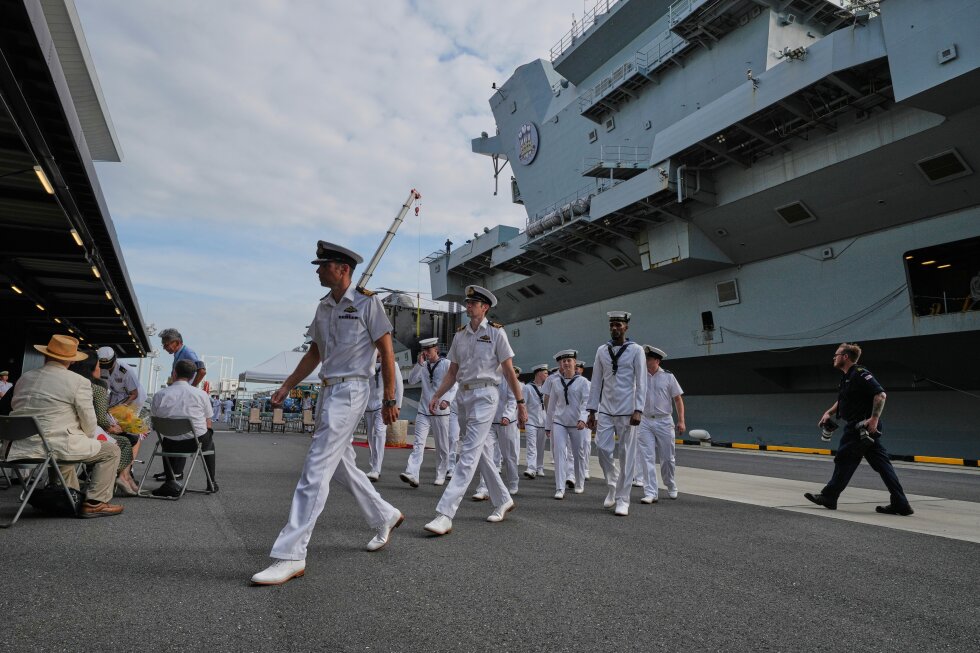
In an interview with Britain’s Daily Telegraph published Wednesday, Trump went as far as dismissing the Royal Navy’s two flagship new aircraft carriers as mere “toys.” “You don’t even have a navy,” he told the newspaper. “You’re too old and had aircraft carriers that didn’t work.” Not to be outdone, Hegseth took a sarcastic shot at the service, suggesting the “big, bad Royal Navy” should step up to secure commercial shipping lanes in the Strait of Hormuz, a critical global chokepoint for energy trade.
The two 65,000-ton carriers at the center of Trump’s attack, HMS Queen Elizabeth and HMS Prince of Wales, are the largest and most lethal warships ever built for the Royal Navy. While they are smaller and less power-projected than the U.S. Navy’s supercarriers, defense analysts widely regard them as highly capable platforms, particularly for integrated coalition operations – even if they faced well-documented technical teething problems in their early years of service.
It is true that the Royal Navy of 2025 bears little resemblance to the globally dominant force that controlled the world’s oceans during the height of the British Empire. But experts emphasize that the service is far weaker than its Cold War peak, but not as impotent as Trump and Hegseth’s remarks portray it, holding a similar operational standing to the French Navy, its closest European peer.
“There is a grain of truth to the critique: the Royal Navy is smaller today than it has been in hundreds of years,” explained Professor Kevin Rowlands, editor of the Royal United Services Institute (RUSI) Journal and a former Royal Navy captain. “On the other hand, the service notes it is entering its first period of sustained growth since World War II, with more new ships scheduled for construction than at any point in decades.”
A look back at recent British naval history puts the current size of the fleet in context. As recently as 1982, the UK was able to assemble a 127-ship task force – including two aircraft carriers – to retake the Falkland Islands after Argentina’s invasion, a campaign that then-U.S. President Ronald Reagan openly opposed. That operation is now widely viewed as the final demonstration of Britain’s traditional naval dominance; no deployment of anywhere near that scale could be mounted today.
Analysis of UK Ministry of Defence and House of Commons Library data by the Associated Press shows the steady, dramatic contraction of the Royal Navy’s combat fleet over the past 50 years. In 1975, the service counted 166 active vessels, including aircraft carriers, destroyers, frigates, and attack submarines. By 2025, that number had fallen to just 66. The UK went seven years in the 2010s without any operational aircraft carriers at all, despite today having two in service. The destroyer fleet has shrunk by half to just six vessels, while the frigate force has been cut from 60 ships to only 11.
The delayed deployment of the destroyer HMS Dragon to the Middle East in the immediate aftermath of the Iran war outbreak became a high-profile symbol of the Royal Navy’s stretched capabilities for critics. While naval personnel worked around the clock to reconfigure the vessel for its new mission after it had been preparing for a completely different deployment, the incident reinforced widespread perceptions that British military power has dwindled significantly since the fall of the Berlin Wall in 1989.
That decline did not happen by accident. During much of the Cold War, the UK invested between 4% and 8% of its annual gross domestic product in defense. After the collapse of the Soviet Union, that share steadily dropped to a low of 1.9% of GDP in 2018, giving ammunition to Trump’s criticisms.
Like many Western allies, successive UK governments embraced the post-Cold War “peace dividend,” redirecting funding once allocated to the military to domestic priorities including public health and education – a shift accelerated by the Labour governments of Tony Blair and Gordon Brown. When the global financial crisis hit in 2008, Conservative-led governments introduced harsh austerity measures that froze defense spending even as Russia’s aggression began to reshape European security, most notably after its 2014 annexation of Crimea.
Only after Russia’s full-scale invasion of Ukraine in 2022 did cross-party consensus emerge that decades of defense cuts had gone too far. The previous Conservative government began reversing the trend of declining spending, and since Labour returned to power in the 2024 general election, Starmer has moved to ramp up defense investment – a shift that has required cuts to the UK’s long-standing foreign aid budget.
Starmer has committed to raising UK defense spending to 2.5% of GDP by 2027, with an updated target of 3.5% of GDP by 2035 to meet a NATO goal championed by Trump. That commitment translates to tens of billions of pounds in additional defense spending, which would fund a major expansion of military equipment across all three services.
But accelerating that expansion is easier said than done. The UK’s public finances have already been strained by the economic fallout from the Iran war, leaving no clear path to find extra funding for faster military growth.
For his part, RUSI’s Rowlands expects the U.S. criticism to continue despite its overstated claims. “We are dealing with an administration that doesn’t do nuance,” he noted.