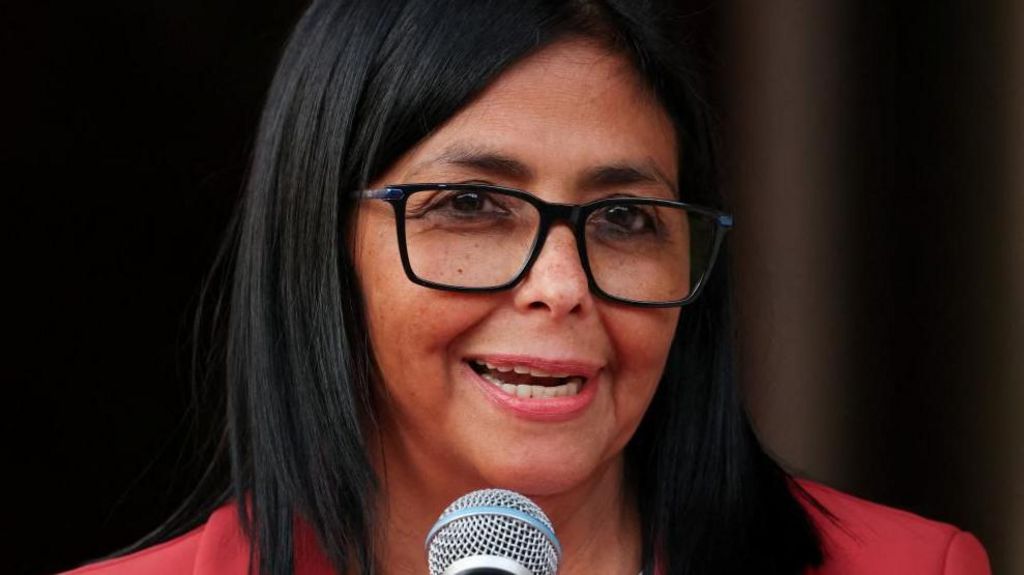
In a significant shift in U.S.-Venezuela relations that marks the latest step in a rapidly unfolding diplomatic thaw, the United States has removed interim Venezuelan President Delcy Rodríguez from its Specially Designated Nationals (SDN) sanctions list. This policy change comes less than three months after U.S. military forces carried out a high-profile raid in Caracas that captured former Venezuelan leader Nicolás Maduro and his wife, transferring them to New York to face federal drug trafficking charges.
Rodríguez, a longstanding close ally of Maduro who previously served as his vice president, was first added to the U.S. sanctions roster in 2018 over Washington’s accusations that she had undermined democratic governance in Venezuela. Just days after the raid that removed Maduro from power, she was sworn in as interim president by Venezuela’s National Assembly, which holds a majority loyal to Maduro’s faction. U.S. President Donald Trump has publicly praised Rodríguez, describing her as “a terrific person” who has collaborated effectively with Washington.
Inclusion on the SDN list carries severe financial restrictions: all assets held by listed individuals within U.S. jurisdiction are frozen, and U.S. citizens and entities are prohibited from conducting any commercial transactions with them. Rodríguez welcomed the delisting in a public post on X, framing the move as “a significant step in the right direction to normalise and strengthen relations between our countries.”
White House spokesperson Anna Kelly echoed that positive framing, emphasizing that the decision reflects tangible progress “between our two countries to promote stability, support economic recovery and advance political reconciliation in Venezuela.” She reaffirmed Trump’s assessment, noting “Delcy Rodríguez is doing a great job and is working with the United States very well.”
Despite the upbeat tone from both governments, the decision has drawn sharp criticism from Venezuelan opposition activists based in Caracas. These critics argue that Washington should have used the leverage of sanctions to push Rodríguez to fulfill longstanding demands to release all political detainees still held in Venezuelan prisons. The release of political prisoners was one of the core conditions Secretary of State Marco Rubio laid out for Rodríguez shortly after Maduro’s removal from office.
While Venezuela’s ruling National Assembly has approved an amnesty law that has led to the release of hundreds of detainees, leading prisoners’ rights organization Foro Penal reports that nearly 500 political prisoners remain in custody.
The delisting of Rodríguez is the most visible signal yet of a steady warming of ties between the Trump administration and the interim government. Earlier this same week, the United States formally reopened its embassy in Caracas, seven years after it shuttered the diplomatic mission in response to the Maduro government’s actions. In a reciprocal move, Venezuela has also sent a diplomatic delegation back to Washington to reopen its own embassy there.
In the months since Maduro was ousted, multiple high-level U.S. delegations have traveled to Caracas to hold talks on expanding U.S. access to Venezuela’s extensive oil and mineral reserves. But critics of Rodríguez’s interim administration have raised alarms that there has been almost no public discussion of scheduling free and democratic national elections, a key long-term demand from the international community.
Venezuelan opposition leader María Corina Machado, who has lived in exile since leaving the country to accept the Nobel Peace Prize she was awarded in December, held a meeting with Marco Rubio on Tuesday. Though Trump has sidelined Machado to prioritize cooperation with Rodríguez, she struck a constructive tone, calling the discussion “excellent” and praising Rubio’s “dedication to democracy, freedom and Venezuelans’ well-being.”
Speaking to Fox News after the meeting, Rubio said Washington is making steady progress in its engagement with Venezuela. Outlining a three-part strategy for the country’s transition, Rubio confirmed Venezuela has now entered the second phase: economic and political recovery. “Ultimately, there will have to be a transition phase. There will have to be free and fair elections in Venezuela, and that point has to come,” he stated. “It’s not forever, but we have to be patient, but we also can’t be complacent,” he added, declining to provide any timeline for when democratic elections would be held.