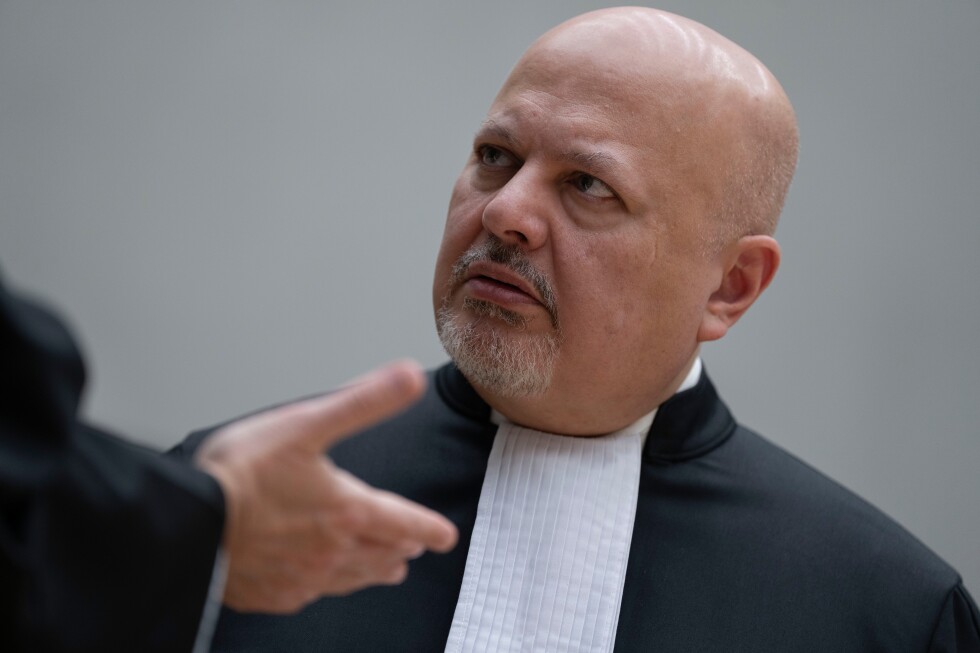
### Key Developments in the ICC Chief Prosecutor Sexual Misconduct Case
In a landmark ruling that has sent ripples through global judicial circles, a three-judge independent panel has concluded that a United Nations investigation into alleged sexual misconduct by International Criminal Court (ICC) Chief Prosecutor Karim Khan failed to meet the legal standard to prove wrongdoing, clearing the way for the embattled British barrister to potentially resume his leadership duties.
The findings, reviewed by The Associated Press, mark a major turning point in a case that has roiled the world’s permanent war crimes court since allegations first emerged in late 2024. The ultimate decision on Khan’s future, however, now rests with the Assembly of States Parties (ASP), the 123-member governing body that oversees ICC operations. On Wednesday, the ASP voted to extend the ongoing review process, as leaders grapple with an unprecedented situation that has sparked internal staff unrest and drawn intense external geopolitical pressure.
Khan first temporarily stepped aside from his post in May 2025, after the U.N. Office of Internal Oversight Service (OIOS) launched a formal probe into claims of non-consensual sexual contact with a female junior ICC staff member. Khan has repeatedly and categorically denied all allegations, asserting he never engaged in any inappropriate behavior—either sexual or otherwise—toward the complainant, and rejecting even claims of a consensual relationship. Through his legal team, he reaffirmed this denial in a statement shared with AP this week.
The U.N. investigation’s final report, a copy of which has been obtained by AP, claimed there was evidence of “nonconsensual sexual contact” between Khan and the aide that occurred across multiple locations: his ICC office, his private residence, and during official overseas work missions. But when the three-judge panel, appointed specifically by the ASP to conduct an independent legal review of the U.N. findings, assessed the more than 5,000 pages of evidence collected by OIOS, it identified critical flaws that undermined the probe’s conclusions.
In its 85-page assessment, the panel noted that U.N. investigators “failed to indicate which witnesses’ testimony they found credible” and left multiple key “narrative inconsistencies” in witness accounts unresolved. The judges ruled that the U.N. probe did not meet the high legal bar of proving misconduct or a breach of professional duty under the ICC’s governing framework, writing that “the resolution of a number of disputes, which remains outstanding, would be necessary before a proper characterisation of the facts can be made.” The panel’s finding is advisory and not legally binding on the ASP, and OIOS was never tasked with making a formal misconduct determination—only with gathering evidence for the ICC’s governing body to evaluate.
### The Origin of the Allegations
The accusations against Khan first came to light in an October 2024 AP investigation, based on internal whistleblower documents reviewed by the news agency. Those documents allege that after Khan encountered the woman, who worked in a separate ICC department, he arranged to transfer her to his own office team. She subsequently became a regular member of his entourage on official international travel.
Specific claims laid out in the whistleblower materials include an incident on a foreign trip where Khan allegedly asked the woman to rest with him on his hotel bed before sexually assaulting her, and another occasion where he banged on her hotel room door for 10 minutes in the early hours of the morning. Other alleged non-consensual behaviors include locking the door of his ICC office and reaching into the woman’s pocket, as well as repeatedly pressuring her to join him on a personal vacation.
Two of the woman’s colleagues first reported the alleged misconduct to the ICC’s internal oversight body in May 2024. At that time, the investigation was closed after just five days when the complainant declined to file a formal report, citing intense fear of professional retaliation. The case has inflicted severe harm on the complainant: the U.N. investigation confirmed that the woman was placed on suicide watch at one point during the proceedings. In an interview, she told AP, “I have been left with little dignity and no privacy.” AP has followed its standard policy of not identifying survivors of sexual misconduct.
### Internal Tension and Geopolitical Context
The panel’s ruling has done little to ease deep divisions within the ICC’s own ranks. A group of current prosecutor’s office staff sent an open letter to the ASP on Wednesday, warning that the U.N. investigation’s findings make it incompatible for the ICC community to maintain confidence in Khan’s leadership if he returns to office. Multiple current and senior ICC staff, speaking to AP on condition of anonymity over fear of retaliation, confirmed that many colleagues remain deeply unsettled by the situation, with widespread anxiety about potential retaliation against staff who spoke out in support of the complainant. The U.N. investigation itself noted that before Khan stepped aside, he was accused of retaliatory behavior toward two ICC staff members who backed the complainant.
This unprecedented disciplinary process, the first of its kind in the ICC’s 23-year history, has forced the ASP to draft new procedural rules from scratch to manage the review. The case also unfolded against a backdrop of intense geopolitical pressure on the court, just weeks before Khan requested historic arrest warrants for Israeli Prime Minister Benjamin Netanyahu over alleged war crimes in the Gaza Strip. A three-judge panel of the ICC approved those warrants in November 2024, prompting immediate retaliation from then-U.S. President Donald Trump, who imposed sweeping sanctions on 11 senior ICC staff including Khan. The sanctions resulted in the closure of judges’ and prosecutors’ U.S. bank accounts and the revocation of their U.S. travel visas, a move that has severely disrupted the court’s daily operations and battered already low staff morale.
Judges say ICC prosecutor in sexual misconduct inquiry can potentially resume work, documents show