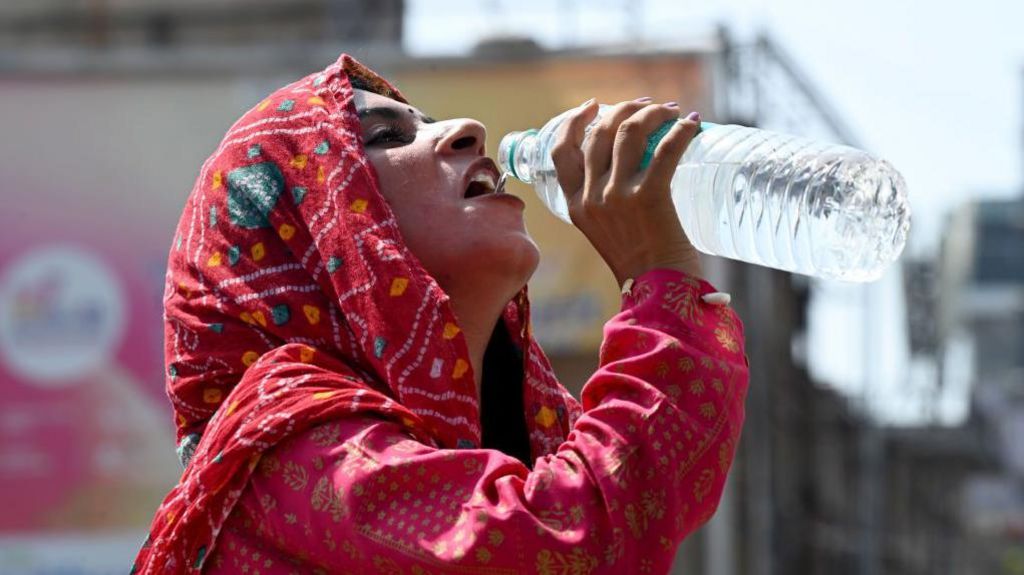
As India prepares to enter its scorching summer season, with peak forecasts predicting temperatures will climb above 45°C across multiple regions, a growing humanitarian and economic crisis is unfolding: the ongoing war with Iran has upended global energy markets, sending shockwaves through India’s $6 billion bottled water sector, an industry that millions of already water-insecure Indians rely on for safe drinking water.
Already, major industry players have begun passing rising costs down to consumers. Last month, Bisleri, India’s largest bottled water brand, raised prices by 11%, increasing the cost of a case of 12 one-liter bottles by 24 rupees, or approximately $0.26. Other leading brands including Bailley and Clear Premium Water have followed suit with similar hikes, Reuters confirmed.
Even before the current conflict, access to reliable, clean potable water remained an unresolved public health challenge across India. Data from research organization Data for India shows that 15% of urban households and 6% of rural households depend entirely on bottled water for their drinking needs. For low-income and rural communities, relying on commercially bottled water is already a significant financial burden, but systemic issues including widespread groundwater contamination, chronic water shortages during hot months, and crumbling public water infrastructure leave millions with no alternative.
Industry leaders warn that a prolonged extension of the Iran conflict could push the cost of this essential commodity out of reach for vast swathes of the Indian population. The root of the crisis lies in the disruption of global energy trade through the Strait of Hormuz, the strategic narrow waterway that typically carries 20% of the world’s total oil and liquefied natural gas supplies. Since the outbreak of war, the strait has been almost completely blocked, triggering a sharp global spike in fuel and crude oil prices. As a country that meets most of its domestic energy demand through imports, India has borne the full brunt of this market disruption.
Vijaysinh Dubbal, president of the Maharashtra Bottled Water Manufacturers Association, explained that the surge in crude prices is directly driving up the cost of plastic bottled water production. Nearly all commercial bottled water in India is sold in single-use PET plastic bottles, which are manufactured from PET resin pellets derived directly from crude oil. Earlier this week, Brent crude prices briefly spiked to $119 per barrel, near the highest levels recorded since the start of the Iran-US-Israel conflict.
The production chain for PET bottles starts with crude-based PET resin, which is formed into small, test-tube shaped components called preforms that are then sold to bottlers to be blown into final bottle shapes. According to Dubbal, preform costs have jumped from 115 rupees per kilogram to roughly 180 rupees per kilogram, alongside widespread supply shortages that have idled production. Around 20% of all bottled water manufacturing facilities in Maharashtra, one of India’s most populous industrial states, have already paused operations temporarily.
To avoid immediately passing steep costs on to consumers, many smaller brands and local vendors have chosen to absorb the extra production expenses so far, keeping retail prices for a one-liter bottle around 20 rupees, and 60 to 70 rupees for a five-liter bottle. But Dubbal stressed that this strategy is not sustainable long-term. If market conditions continue to deteriorate, consumers will inevitably face both higher prices and tighter supply, just as demand for bottled water surges during the April to May peak summer season.
The impact of the energy crunch extends far beyond the bottled water sector, rippling across India’s entire packaging and manufacturing landscape. Vaibhav Saraogi, director of Chemco Plastic Industries Pvt Ltd, one of India’s largest PET preform suppliers, noted that rising preform prices will raise costs across all industries that rely on PET packaging. India’s PET packaging market was valued at $1.5 billion in 2024 and is projected to grow to $2.2 billion by 2033, with widespread use not just in beverages but also in personal care, pharmaceuticals, food service and food delivery.
Glass bottle manufacturers, which supply the beverage and pharmaceutical sectors, are also facing severe disruption. Glass production relies on large natural gas-powered furnaces to melt raw materials into molten glass for shaping. Last month, the Brewers Association of India, which represents global brands including Heineken and Carlsberg, told Reuters that glass bottle prices have surged by roughly 20% across the board, prompting the group to ask state governments to approve 12 to 15% increases in retail beer prices (alcohol pricing is regulated at the state level in India). The Confederation of Indian Alcoholic Beverage Companies has submitted similar requests to state authorities.
Vithob Shet, CEO of Vitrum Glass, a leading producer of amber glass bottles for the pharmaceutical and brewing industries, explained that price hikes stem from natural gas supply disruptions tied to the war. Since the conflict began, the Indian government has tightened natural gas allocation rules, prioritizing supplies for residential use and select critical commercial sectors, cutting commercial gas supplies to glass manufacturers by 20%. While some producers like Vitrum have switched to oil to offset the gas deficit, sky-high crude prices have still sent production costs soaring.
New Delhi has maintained that the country’s overall national energy supplies remain stable, but the ripple effects of the crunch are already visible across multiple sectors. Dozens of commercial eateries have already shut operations across the country due to cooking gas shortages. The ceramics and fertilizer industries have also been hit hard, while the aviation sector is struggling with rapidly rising jet fuel prices.
For industry leaders, the stakes extend far beyond corporate profits, as essential consumer goods face growing supply risks. “The situation is serious,” Shet said. “Things like water and medicines are essential commodities and even a slight decline in supply can have major consequences.”