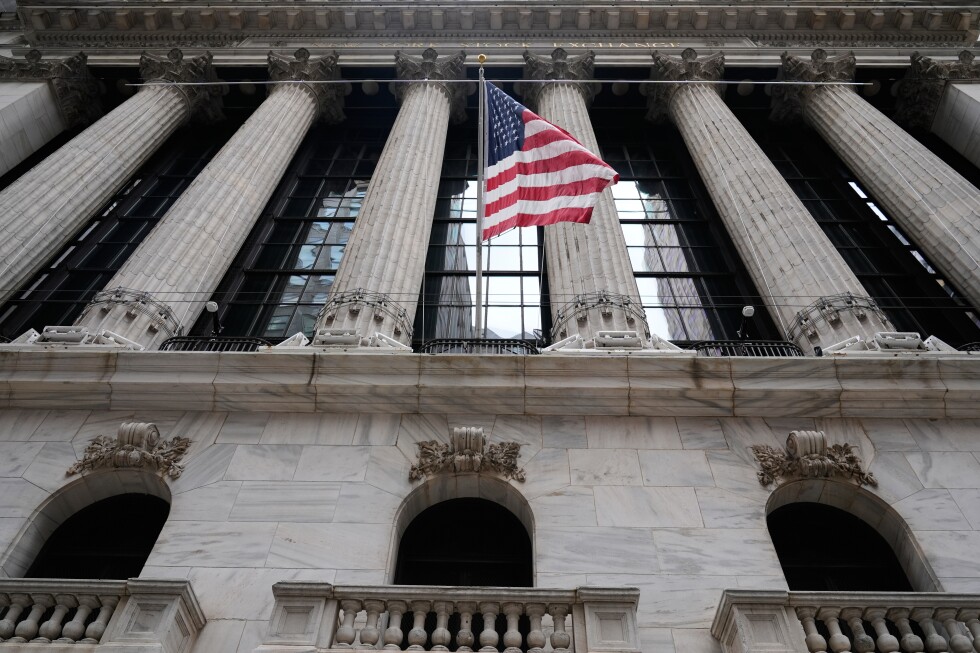
Early trading on Good Friday saw U.S. equity futures edge lower, triggered by unexpectedly robust monthly employment data from the U.S. federal government. While traditional equities markets were shuttered for the Easter holiday, futures trading continued through Friday morning in a muted, low-volume session. The S&P 500 futures contract dropped 0.3%, Dow Jones Industrial Average futures retreated 0.2%, and Nasdaq futures slid 0.4% by early morning.
The Labor Department’s latest jobs report delivered a far stronger reading than most analysts projected: U.S. employers added 178,000 new positions in March, bouncing back sharply from February’s revised 133,000 job loss. The national unemployment rate also ticked down to 4.3% from 4.4% the prior month, marking a surprise improvement in labor market conditions.
Meanwhile, global energy markets were also closed for the Good Friday holiday, a day after dramatic price spikes driven by growing fears that the ongoing conflict between the U.S. and Iran will be prolonged. On Thursday, the U.S. benchmark West Texas Intermediate crude surged 11.4% to settle at $111.54 per barrel, while global benchmark Brent crude jumped 7.8% to close at $109.03 per barrel.
The uncertainty around the conflict stems from remarks made by U.S. President Donald Trump late Wednesday, when he pledged that the U.S. would continue military operations against Iran and declined to provide a clear timeline for withdrawing forces or ending the Middle East conflict. Analysts at BMI, a division of Fitch Solutions, warned that a drawn-out conflict would carry significant risks for global energy supplies. “A more extended conflict raises the threat to physical infrastructure, extends disruptions through the Strait of Hormuz, and will entail a longer postwar recovery period, with price impacts spilling over later into the year,” the BMI report noted.
Even though the U.S. only sources a small share of its imported oil from the Persian Gulf, global oil pricing operates as a single interconnected market, meaning any disruption to regional supplies pushes up prices for consumers and businesses worldwide. The dynamic is far more acute for Asian economies: Japan, for example, depends on the Strait of Hormuz for the majority of its oil imports, and would need to secure alternative supply routes if transit through the key chokepoint is blocked long-term. Still, some analysts note that many Asian nations are currently negotiating contingency agreements with Iran to keep fuel shipments moving through the strait even amid the conflict.
Across major European markets, trading was also closed for Good Friday, with sessions suspended in France, Germany and the United Kingdom. In the Asia-Pacific region, market activity was mixed as most major exchanges stayed closed for the holiday. Japan’s Nikkei 225 benchmark gained 1.3% to close at 53,123.49, while South Korea’s Kospi index jumped 2.7% to finish at 5,377.30. The only major open mainland Chinese market, the Shanghai Composite, fell 1.0% to end the session at 3,880.10. Exchanges in Hong Kong, Singapore, Australia, New Zealand, the Philippines, Indonesia and India were all closed for the holiday.