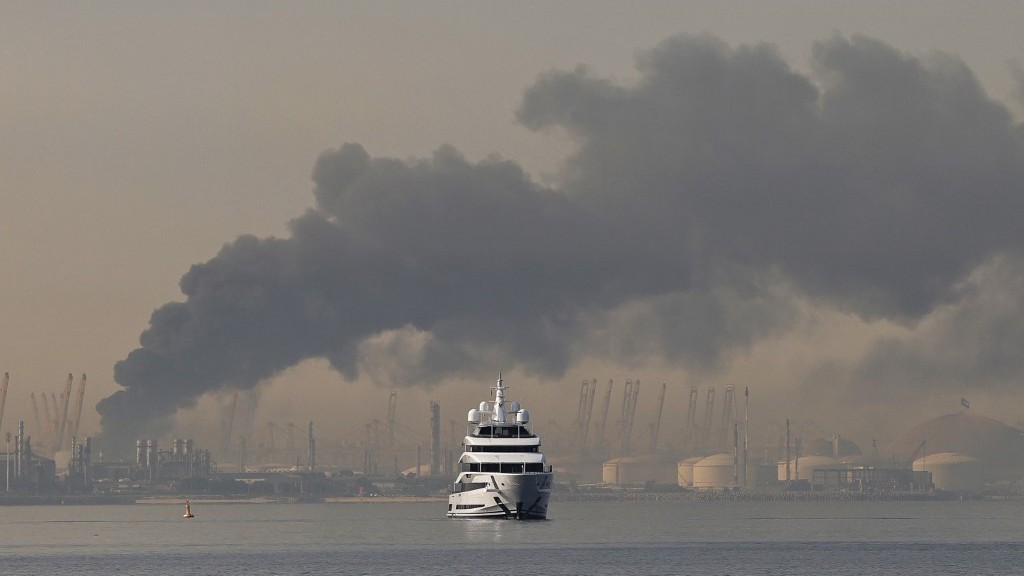
A 25-year-old British cabin crew member has been taken into custody in the United Arab Emirates (UAE) after sharing an image of drone strike damage in a private WhatsApp conversation with colleagues, in a case that has thrown a spotlight on widening restrictions on documentation of regional conflict and sparked fresh debate over Dubai’s reputation as an open, globally connected hub.
The young worker posted a photograph of destruction close to Dubai International Airport to the group chat, where he simply asked his coworkers whether it remained safe to pass through the airport grounds, according to initial reporting from the Daily Mail. After he was detained, law enforcement officials searched his personal mobile device and filed charges against him under the country’s strict cybercrime legislation. If convicted, he could face a maximum sentence of two years in prison and financial penalties exceeding $50,000.
This arrest is not an isolated incident: it forms part of a sweeping surge in detentions that began when the Israel-U.S. conflict against Iran launched on February 28, rights campaigners and media investigations confirm. To date, dozens of British citizens — including leisure travelers, long-term expatriate residents, and aviation workers just like the detained flight attendant — have been taken into custody for filming or circulating imagery connected to recent missile and drone attacks across the UAE.
Detained in Dubai, an advocacy organization that supports foreign nationals held in the emirates, reports that most detainees are charged under laws that criminalize any content ruled to “disturb public security.” The group estimates the total number of affected British nationals could climb as high as 70. In one high-profile example already documented, a 60-year-old British tourist was detained after capturing footage of a strike, even though witnesses confirm he deleted the clip immediately when approached by police officers.
The ongoing crackdown comes at a time when the UAE has invested heavily in marketing Dubai as a welcoming global crossroads for international tourism, cross-border business, and digital content creators. Expatriate communities make up the overwhelming majority of Dubai’s total population, and critics warn the wave of arrests risks alienating the very groups that form the foundation of the emirate’s economic strength and global soft power.
The UAE’s attorney general has publicly reaffirmed that anyone sharing conflict-related content during periods of crisis will face “immediate criminal accountability.” But human rights advocates argue the strict new measures threaten to erode the carefully crafted image of openness Dubai has built over decades, as state officials move to tightly control how the ongoing regional conflict is reported and discussed within the country’s borders.
Radha Stirling, CEO of Detained in Dubai, noted in a public statement that countless pieces of imagery, video, and reporting on the conflict circulate freely online across global platforms. “People understandably assume that if something is already widely shared or published by media outlets, it must be acceptable to comment on or repost it. In the UAE, that assumption can be extremely dangerous,” Stirling said.