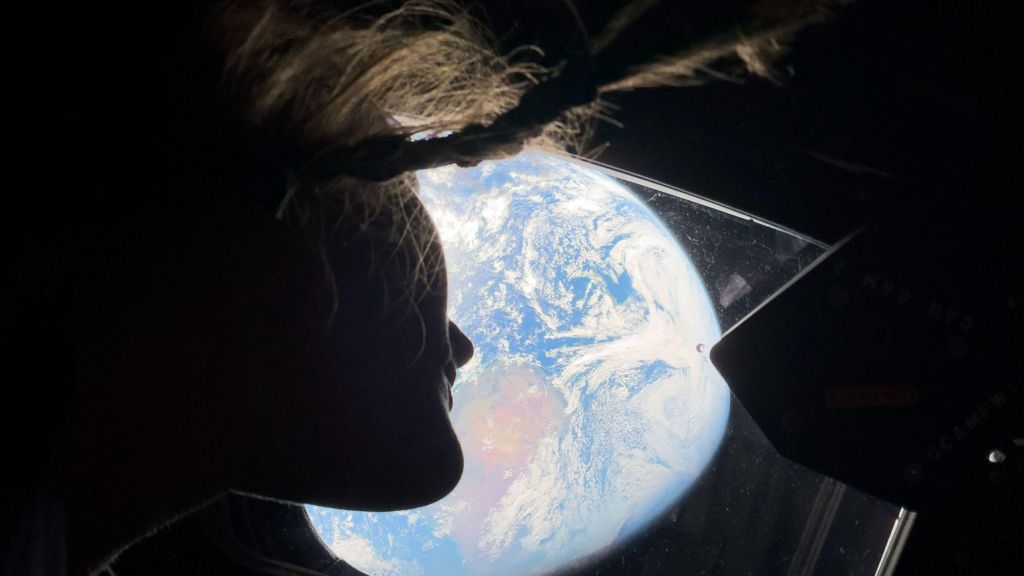
More than five decades after the final Apollo mission carried humans farther from Earth than any expedition in history, NASA’s Artemis II mission is making new headlines for a cascade of breathtaking high-definition imagery of the Moon and our home planet captured by its four-person crew. Shared widely across social media platforms, where the photos have racked up millions of likes, the shots showcase both celestial bodies from rarely seen vantage points, bringing the awe of deep space exploration directly to the public. But the striking visuals have sparked a key debate: do these images offer groundbreaking new scientific insight, or are they simply the space equivalent of scenic holiday snapshots?
To build public buy-in for the ambitious program, NASA has leaned into transparency and accessibility throughout the 10-day mission. The entire journey is live-streamed for global audiences, and the four astronauts deliver regular video updates, narrating their progress with palpable excitement. The crew has been so eager to observe the passing Moon and Earth that the viewing window of the Orion spacecraft even became smudged, forcing mission control to send step-by-step instructions for the astronauts to clean it mid-flight.
This mission marks the first time consumer digital cameras have been deployed this deep into space. The Orion capsule is outfitted with 32 imaging devices total: 15 mounted to the craft’s exterior and 17 held by the crew for handheld shooting. Contrary to assumptions that NASA would rely on cutting-edge custom hardware, most of the equipment consists of off-the-shelf models more than a decade old, including Nikon D5 DSLRs, GoPro action cameras, and standard smartphones. NASA even publishes photo metadata on its Flickr photostream that explicitly notes which device captured each publicly released shot.
The first major set of images from the mission dropped last Friday. The iconic shot “Hello, World” was captured by Commander Reid Wiseman when the capsule was positioned nearly equidistant between Earth and the Moon: 142,000 miles from our home planet and 132,000 miles from lunar surface. The image captures a rare double aurora during an Earth eclipse of the Sun, with the planet Venus glowing brightly at the frame’s bottom. Earth appears upside down in the composition, with the Sahara Desert and Iberian Peninsula visible on the left, and eastern South America on the right. While widely praised as a visually stunning shot, astronomers note it holds little new scientific data; NASA’s own Deep Space Climate Observatory, which launched in 2015 with the Earth Polychromatic Imaging Camera (Epic), regularly captures imagery of Earth from nearly one million miles away, far farther than Artemis II’s current position.
A day later, NASA released a second historic image, tagged “history in the making”, that captures the Orientale basin: a massive impact crater located on the Moon’s little-seen far side, a region defined by a thicker crust and a far higher density of impact craters than the near side that always faces Earth. The image was released in advance of the mission’s Monday lunar flyby, when the crew will circle the far side and pass within just 4,600 miles of the lunar surface. NASA says the shot marks the first time the entire Orientale basin has been observed directly by human eyes; even Apollo mission astronauts never got a full view of the crater, limited by their orbital paths and illumination conditions during their flights.
NASA has emphasized that the unique contribution of this mission lies in human observation, rather than data collected by robotic explorers. The agency notes that the human eye and brain are far more sensitive to subtle variations in color, texture, and lunar surface characteristics than automated instruments, a capability that could lead to unexpected new discoveries and a deeper, more nuanced understanding of the Moon’s geologic features.
But not all experts agree. Chris Lintott, an astrophysics professor at the University of Oxford and co-host of the BBC’s long-running astronomy series *The Sky at Night*, argues that the primary value of the Artemis II images is aesthetic and cultural, not scientific. Lintott explains that ever since the Apollo program of the 1960s and 1970s, robotic missions have comprehensively mapped the Moon’s far side. In 2023, India’s Chandrayaan-3 probe captured highly detailed imagery of the same Orientale basin terrain, and in 2024, China’s Chang’e-6 mission collected the first ever surface samples from the far side, following up China’s 2019 milestone as the first nation to land a robotic probe on the region.
“Unless something very unusual happens, there will be nothing for the [Artemis] astronauts to discover,” Lintott explained. While he acknowledges that the crew could potentially spot an impact flash if a large meteoroid strikes the far side’s dark surface, any systematic survey of such events would be far better conducted with automated video cameras than human observers scanning from a capsule window. Still, Lintott stresses that the lack of new scientific discovery does not make the mission meaningless. “The [images] we already have back are beautiful, stunning and iconic – taken by astronauts not by robots. This is a voyage of exploration, not lunar science and that’s fine!” he said.
While NASA frames the mission and its imagery around scientific progress, a closer look reveals broader political and institutional context that shapes the program. The United States is currently locked in a new 21st century space race with other global powers, most notably China, with both nations competing to be the first to return humans to the lunar surface. A successful Artemis II mission would signal that the U.S. has taken a decisive early lead in this competition for now.
The mission also comes at a critical moment for NASA’s institutional standing. Current U.S. policy has cut funding for many federal scientific institutions, putting increased pressure on NASA to demonstrate its public value at a time when private space companies like SpaceX are rapidly advancing their own human spaceflight capabilities and raising expectations for accessible deep space travel. As history shows, scientific progress is driven by inquiry and evidence, but it is never isolated from political and institutional priorities.
This is not the first time a NASA lunar mission has produced culturally transformative imagery. In 1968, Apollo 8 astronaut Bill Anders captured the iconic “Earthrise” photograph from lunar orbit, which showed our blue planet rising above the gray lunar surface. The image highlighted Earth’s fragility at the height of Cold War global tension, reminding audiences across the world that all humans share a single home planet. It proved that a single powerful image could reshape public understanding of our place in the universe, and NASA is hoping Artemis II will deliver a similarly resonant cultural moment for a new generation. For now, audiences across the world can only sit back, enjoy the journey, and marvel at the stunning new views of space captured by the Artemis II crew.