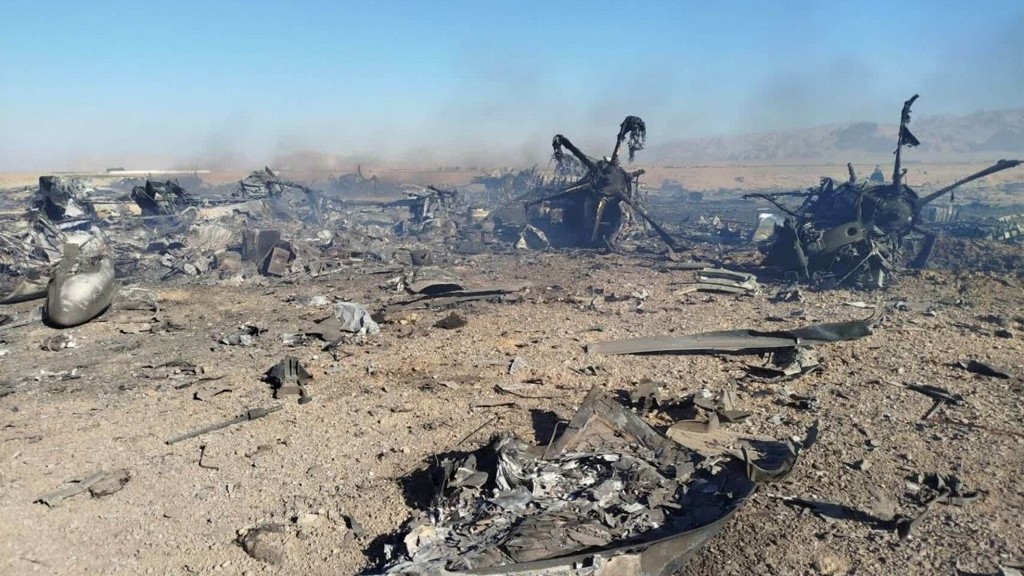
A high-stakes, multi-day diplomatic and military drama has unfolded across the Middle East this week, after a US F-15E fighter jet was shot down over Iran’s oil-rich Khuzestan Province, triggering a daring US rescue operation and deepening the standoff between Washington and Tehran amid stalled ceasefire negotiations.
The crash of the F-15E left two crew members stranded in Iranian territory, prompting the Pentagon to launch a large-scale recovery mission involving dozens of US aircraft fitted with the most advanced weaponry in the US arsenal, former President Donald Trump confirmed. In a public statement, Trump announced the successful extraction of both airmen, writing, “WE GOT HIM! … SAFE and SOUND!” He added that the second crew member, a serving colonel, had sustained non-life-threatening injuries and was expected to make a full recovery. Trump emphasized that no US personnel were killed or wounded in the operation, crediting what he called “overwhelming Air Dominance” for the mission’s success.
However, Iranian state media has offered a conflicting account of the operation. Iranian outlets report that five civilians and military personnel were killed in air strikes carried out by US forces during the rescue. The IRGC, Iran’s elite military force, also claimed it destroyed a US surveillance aircraft that was tracking the downed crew near the southern city of Isfahan, though no additional details about the incident have been released to the public. The New York Times also confirmed that two US transport planes suffered mechanical failures mid-mission and were deliberately destroyed by US forces to prevent sensitive military technology from falling into Iranian hands.
Khuzestan Province, the site of the jet crash, is a critical economic backbone for Iran, housing the country’s largest oil, gas and steel production facilities. The region has faced intense bombardment over the past week, forcing production shutdowns at key industrial sites and stoking growing fears of long-term economic damage across Iran’s already strained economy.
Beyond the immediate military operation, the standoff between the US and Iran has deadlocked efforts to broker a ceasefire after more than a month of joint US-Israeli military operations on Iranian territory. On Friday, Iran’s Fars News Agency reported that Iranian officials had rejected a US proposal for a 48-hour bilateral ceasefire, which was submitted via an unnamed third country on Wednesday. It remains unclear whether Israel would have been party to the proposed truce.
This rejection aligns with earlier reports of stalled mediation efforts. The Wall Street Journal confirmed Friday that Pakistani-mediated ceasefire talks have collapsed after Tehran refused to hold direct talks with US officials in Islamabad, citing what Iranian leaders call unacceptable American demands. Iran’s core conditions for any ceasefire agreement include a full US military withdrawal from all bases across the Middle East, and substantial compensation for the destruction of civilian infrastructure including schools and hospitals across the country, which have been damaged in weeks of bombardment.
Multiple regional powers have stepped forward to explore mediation opportunities, leveraging their established diplomatic ties with the Trump administration. Turkey, Egypt and Qatar have all been approached to facilitate talks, but Qatar has so far resisted international pressure to take on the mediator role, according to WSJ sources. This deadlock comes after an earlier public dispute between Tehran and Washington, when Trump claimed Iran had requested a ceasefire, a claim Iranian officials immediately denied.
A new US intelligence assessment, first reported by CNN Thursday, suggests Iran has prepared for a prolonged conflict. The report found that after more than a month of joint US-Israeli military strikes, Iran still retains roughly half of its pre-war missile launchers and half of its stockpile of kamikaze drones. This assessment contradicts repeated public claims from Trump and Israeli Prime Minister that Iran’s military capabilities have been nearly completely obliterated, a narrative both leaders have repeated since the opening days of the conflict and as recently as this week.