The fragile stability of the Middle East has crumbled further in the past 48 hours, with a cascade of military strikes, conflicting claims over a high-stakes rescue mission, and shifting energy policy roiling the already volatile region. What began as long-simmering cross-border clashes has erupted into broader confrontations that threaten to draw global powers into open conflict, with multiple interconnected developments unfolding across Iran, Israel, Lebanon and the Persian Gulf.
One of the most high-profile rifts opened between the United States and Iran, centered on control of the Strait of Hormuz — the world’s most critical chokepoint for global oil shipments. Former President Donald Trump, in a profanity-laced social media post, issued an extreme threat to Tehran, promising “hell” and pledging targeted strikes on Iranian bridges and power plants if Iran did not reopen the strategic waterway by his self-imposed Monday deadline. Speaking to Fox News shortly after the post, Trump softened his tone slightly, saying he believed a negotiated deal with Iran remained achievable, but added that he was prepared to “blow everything up and take over the oil” if no agreement was reached.
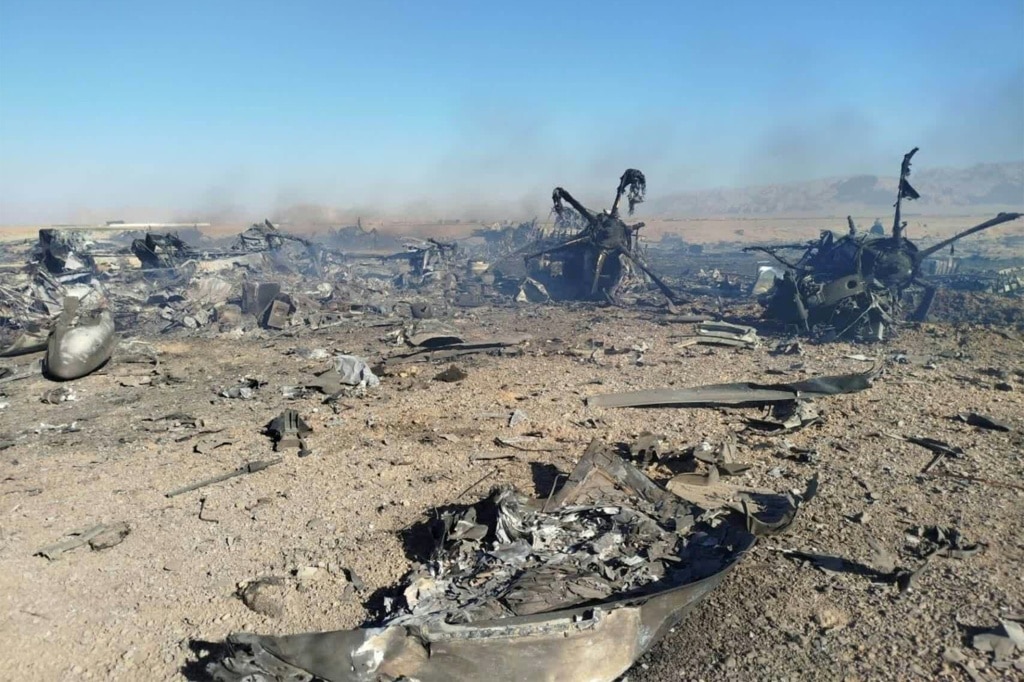
Parallel to the Hormuz standoff, a contentious cross-border rescue operation deep inside Iranian territory has deepened mistrust between Washington and Tehran. The U.S. says a rescue mission conducted by American commandos recovered a missing airman whose F-15 fighter jet had crashed in Iranian territory, with Trump hailing the operation as “daring” and “miraculous”. Trump added that dozens of U.S. aircraft participated in the mission, and that the recovered airman had been seriously wounded. Iranian military officials have issued a starkly contradictory account, claiming the entire U.S. operation was “completely foiled”. Iranian military spokesperson Ebrahim Zolfaghari claimed two U.S. C-130 transport planes and two helicopters were destroyed during the incursion. U.S. mainstream outlets including The New York Times and CBS later corroborated parts of the Iranian account, reporting that two U.S. aircraft that became stranded at an abandoned airport in Iran’s southern Isfahan province were destroyed by American forces to prevent them from falling into Iranian custody.
Military strikes have targeted key infrastructure across multiple countries in the region. A joint U.S.-Israeli airstrike hit the Qasem Soleimani International Airport in southwestern Iran, according to Iranian state media. Across the border in Lebanon, the Israel Defense Forces launched a new wave of strikes on the capital Beirut and its southern suburbs, targeting what it described as key infrastructure sites belonging to the Iran-backed militant group Hezbollah. Lebanese official data confirms the strikes killed at least four people and wounded 39 more. Further south in Lebanon, an Israeli airstrike on the town of Kfar Hatta — which Israeli officials previously ordered residents to evacuate — killed seven people, including an entire family of six who were waiting on the street for a relative to pick them up, Lebanese civil defense sources told Agence France-Presse. Following an Iranian attack on energy and civilian infrastructure across the Gulf, damage has been reported in three Gulf states: the United Arab Emirates, Bahrain and Kuwait. Kuwait’s state petroleum company reported “severe” damage to the country’s oil and petrochemical facilities caused by Iranian drones, while Abu Dhabi officials confirmed they were working to extinguish fires at a petrochemical plant sparked by falling drone debris.
On the energy front, the OPEC+ alliance of major oil-producing nations announced a policy shift, agreeing to raise collective production quotas by 206,000 barrels per day starting in May. The cartel issued a stark warning alongside the quota hike, noting that repairing energy infrastructure damaged by recent regional attacks is both extremely costly and time-consuming, meaning disruptions to global oil supplies could persist for months or even years. OPEC+ also emphasized the “critical importance” of keeping global maritime trade routes open to ensure the uninterrupted flow of global energy supplies. Even as military tensions climb, limited diplomatic outreach continues: Oman’s state news agency confirmed that Omani and Iranian officials held talks focused on easing shipping restrictions through the Strait of Hormuz, with technical experts from both sides putting forward a range of proposals to de-escalate the standoff over the waterway.
International voices have begun calling for de-escalation, with Pope Leo XIV issuing a urgent plea for peace in his first Easter blessing as pontiff, addressing thousands gathered in St. Peter’s Square. The pope condemned growing global indifference to the violence, saying “We are growing accustomed to violence, resigning ourselves to it, and becoming indifferent. Indifferent to the deaths of thousands of people.” He called directly on leaders with the power to authorize military action to “choose peace” over conflict. The shadow of war has even fallen over one of Christianity’s holiest sites: Israeli security forces imposed new access restrictions on the Church of the Holy Sepulchre in annexed East Jerusalem, the site where Christian tradition holds Jesus was crucified, buried and resurrected. On what is normally one of the busiest days of the year for the Old City, the usually crowded alleyways were silent on Easter Sunday, the holiday overshadowed by ongoing regional conflict.