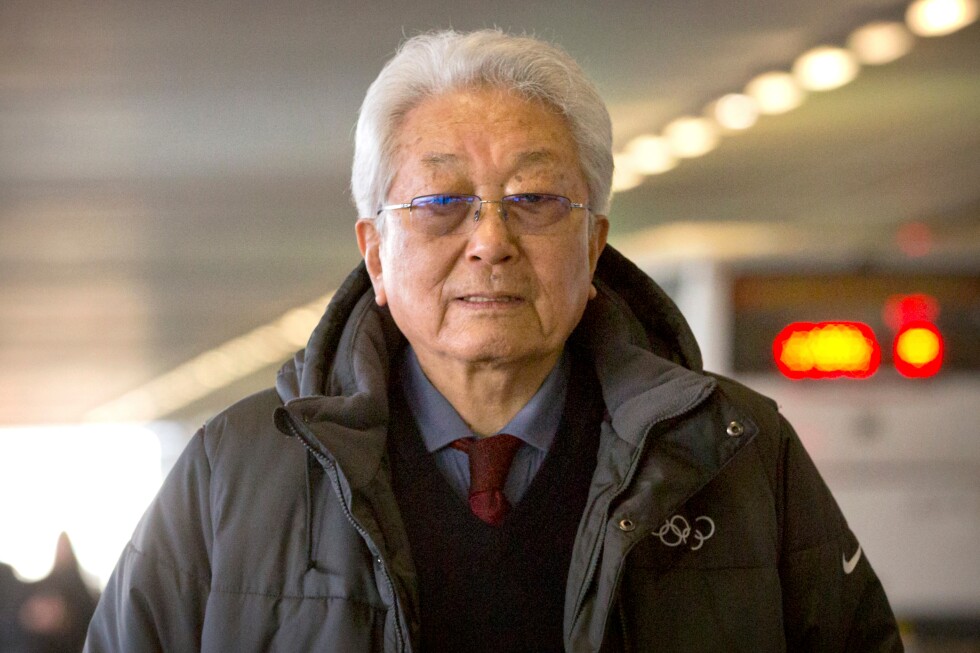
The International Olympic Committee confirmed Wednesday the passing of Chang Ung, North Korea’s first and only member of the global Olympic governing body, who spent decades advancing cross-border sports exchange between the divided Korean Peninsula. He was 87 years old.
The IOC announced that Chang died on Sunday, releasing a statement expressing “extreme sadness” at the loss of the longtime sports diplomat. To honor his legacy, the Olympic flag will fly at half-mast for three days at Olympic House, the IOC’s headquarters in Lausanne, Switzerland. No cause of death was included in the IOC announcement, and as of Wednesday, North Korea’s state-run media outlets had not publicly acknowledged his passing.
Born in 1938, Chang began his career as an athlete, captaining North Korea’s national basketball team before transitioning to sports administration after retirement. Over decades of service, he rose through the ranks of North Korea’s athletic establishment, holding senior positions including vice sports minister, vice chairman of North Korea’s National Olympic Committee, and vice president of the Olympic Council of Asia. He was elected to the IOC in 1996, becoming North Korea’s sole representative to the organization for the entirety of his tenure.
For nearly three decades, Chang led the vast majority of negotiations between North and South Korea aimed at expanding sports cooperation, a diplomatic track that often faced obstacles amid broader political tensions between the two rivals. His most high-profile achievement came at the 2000 Sydney Olympic Games, where athletes from both Koreas marched together during the opening and closing ceremonies under a single unification flag depicting the Korean Peninsula. This marked the first unified public appearance by the two Koreas’ athletic delegations since the peninsula was divided into two separate states in 1945.
Joint marches became a recurring feature of subsequent Olympic Games and major international sporting events, including the 2018 Winter Olympics hosted by Pyeongchang, South Korea. After watching the opening ceremony joint parade in Pyeongchang, Chang told reporters he was “deeply moved” by the moment. Beyond ceremonial parades, Chang’s early dialogue with South Korean counterparts laid the groundwork for the two Koreas to field their first unified men’s and women’s teams at the 1991 World Table Tennis Championships in Chiba, Japan. At the 2018 Pyeongchang Games, the nations competed together for the first time at an Olympic Games, launching a combined women’s ice hockey team.
In recent years, however, inter-Korean sports ties have stalled alongside a broader collapse in political relations. No cross-border exchange programs of any kind, including sports initiatives, have taken place for years. After the collapse of 2019 nuclear diplomacy between North Korean leader Kim Jong Un and then-U.S. President Donald Trump, North Korea has pulled back from talks with both the U.S. and South Korea, with Kim branding Seoul a permanent enemy and ruling out future unification talks.
IOC President Kirsty Coventry highlighted Chang’s outsized contributions to the Olympic movement in her tribute, noting his work to advance access to sports, cross-cultural dialogue, and the positive role of athletics in civil society. “His efforts to promote cooperation on the Korean Peninsula demonstrated the power of sport to build bridges and inspire hope,” Coventry said.
During his IOC tenure, Chang served on multiple key committees, including the Sport for All Commission and the International Olympic Truce Foundation. Most recently, North Korea’s official Korean Central News Agency mentioned Chang in 2023, when he received the Olympic Order — the IOC’s highest honor, awarded to individuals who make extraordinary contributions to the global Olympic movement — during an IOC session in Mumbai, India. Then serving as an honorary IOC member, Chang participated in the awarding ceremony via video link.