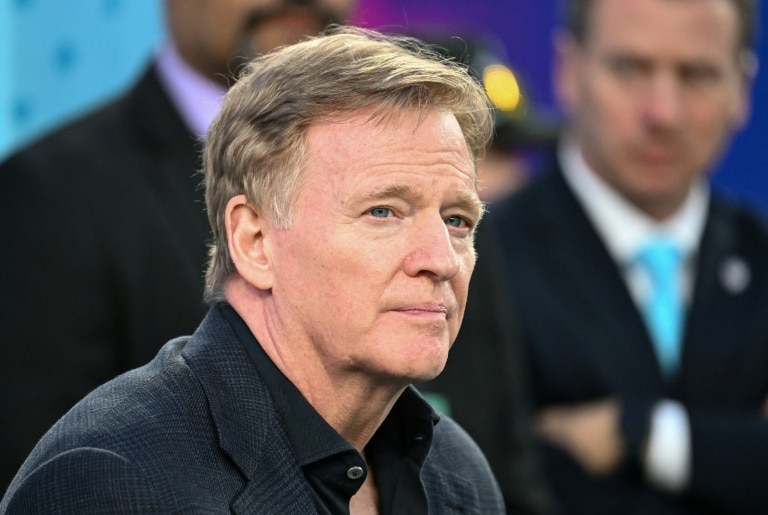
The National Football League will maintain its longstanding pro-diversity hiring policy, the Rooney Rule, despite escalating legal and political pressure from conservative Republicans led by Florida’s Republican attorney general, league commissioner Roger Goodell confirmed Tuesday at the NFL’s annual owners meeting. The Rooney Rule, a landmark policy first introduced in 2003 to address the persistent underrepresentation of people of color in top-tier coaching and front office roles, requires every NFL franchise to interview at least one minority candidate for open senior positions. Crucially, the rule does not mandate that teams hire a specific candidate based on race or ethnicity, only that they expand their candidate search to include qualified minority applicants. The policy has become the latest target of a nationwide conservative crackdown on diversity, equity and inclusion (DEI) initiatives, a movement spearheaded by former and current President Donald Trump, who has prioritized rolling back decades of anti-discrimination measures across U.S. public and private sectors. Last week, Trump signed an executive order barring federal contractors from implementing any workforce policies designed to counteract systemic racism or sexism. That same week, Florida’s top prosecutor James Uthmeier, a close Trump ally, sent a formal letter to the NFL declaring the Rooney Rule an “illegal” affirmative action policy, arguing that “NFL fans in Florida don’t care what color their coach’s skin is.” But Goodell pushed back firmly on these claims, emphasizing that the league’s core commitment to diversity remains unshaken despite shifting political and legal landscapes. “One thing that doesn’t change is our values. And we believe that diversity has been a benefit to the National Football League,” Goodell told reporters at the meeting. He added that the league has closely reviewed evolving state and federal laws, and remains confident that the Rooney Rule is fully consistent with all current legal requirements. Pushing back on claims of racial preference, Goodell reiterated that the policy “is not a hiring mandate.” Instead, he framed it as a mechanism to expand talent pools, noting that the framework has been adopted by industries far beyond professional football, and across countries around the world, as a tool to source stronger, more diverse candidates. “The rule gives us an opportunity to hire the best talent, ultimately, and the clubs make those decisions individually,” Goodell explained. While the NFL is defending the policy, pro-diversity advocacy groups have long pointed out that the Rooney Rule’s real-world impact has remained limited, even after it was expanded to cover general manager and coordinator positions in addition to head coaching roles. Currently, just five of the NFL’s 32 teams have a minority head coach, with three of those identifying as Black, despite African-American players making up roughly 70 percent of the league’s entire player pool. The standoff over the Rooney Rule comes as hundreds of DEI programs across corporate, academic and non-profit sectors face growing legal and political scrutiny at both the state and federal levels, in the most significant rollback of anti-discrimination hiring measures in a generation.