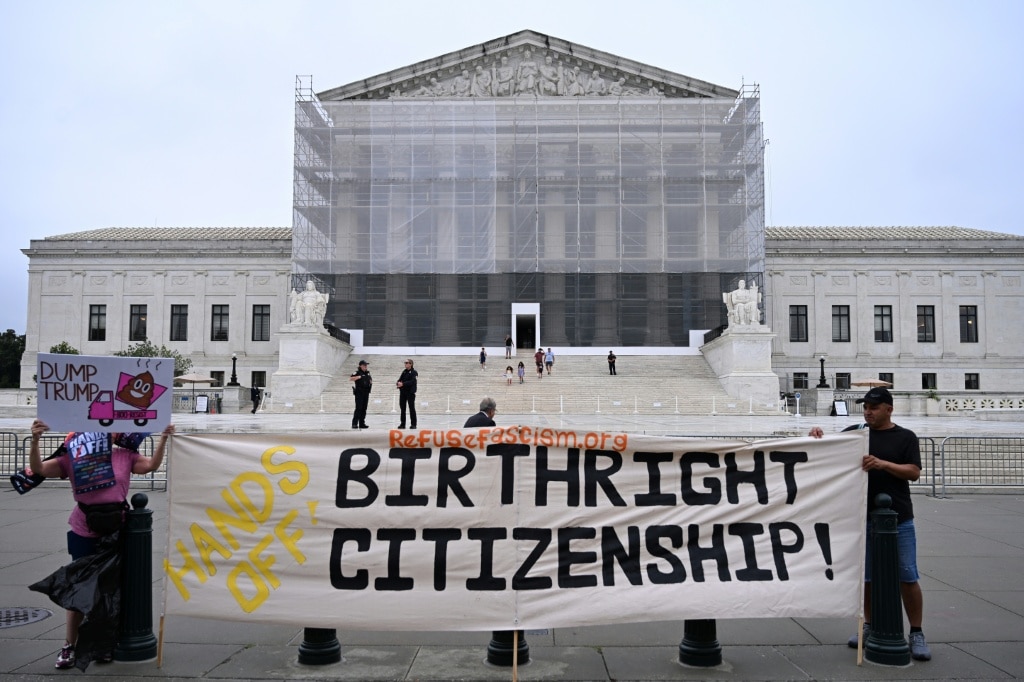
In an extraordinary, potentially unprecedented move for a sitting U.S. president, Donald Trump will personally attend the U.S. Supreme Court’s oral arguments Wednesday for a landmark case examining the constitutionality of his controversial effort to restrict birthright citizenship.
Shortly after returning to the White House following his 2024 election win, Trump signed an executive order that would eliminate automatic U.S. citizenship for children born in the country to undocumented immigrants and parents on temporary visas. Lower courts quickly blocked the order, ruling it directly violated the 14th Amendment’s Citizenship Clause, which enshrines birthright citizenship for nearly all people born on U.S. soil.
The 14th Amendment, ratified after the Civil War, explicitly states, “All persons born or naturalized in the United States, and subject to the jurisdiction thereof, are citizens of the United States.” The only narrow exceptions to this rule apply to individuals not fully under U.S. jurisdiction, such as foreign diplomatic staff and members of sovereign Native American tribes.
When reporters asked Tuesday if he planned to attend the hearing, Trump confirmed simply, “I’m going.” While Trump previously attended the 2017 investiture of his first Supreme Court nominee Neil Gorsuch, his presence at oral arguments for a case his administration is actively defending marks an extraordinary break from modern presidential precedent.
The Trump administration’s legal argument hinges on a narrow interpretation of the 14th Amendment, claiming the provision was crafted exclusively to grant citizenship to formerly enslaved people after the Civil War, not to children of undocumented migrants or temporary visitors. The executive order is built on the claim that people living in the U.S. without legal status or on temporary visas are not “subject to the jurisdiction” of the United States, and therefore do not qualify for automatic citizenship.
This narrow reading has already been rejected by the Supreme Court once before. In the landmark 1898 case United States v. Wong Kim Ark, the high court ruled that a man born in San Francisco to Chinese immigrant parents was a U.S. citizen by birth, even though his parents were not eligible for naturalization under the Chinese Exclusion Act.
Many legal analysts expect the Supreme Court to reject the Trump administration’s challenge again. Steven Schwinn, a law professor at the University of Illinois Chicago, noted that the current conservative majority often relies on history and tradition to interpret the Constitution. “It would be a little surprising if, after 150 years, we suddenly discovered we were applying the Citizenship Clause all wrong,” Schwinn told AFP.
The high court currently holds a 6-3 conservative majority, with three justices appointed by Trump during his first term. The administration’s solicitor general, John Sauer, argued in court filings that citizenship requires meeting both criteria laid out in the 14th Amendment: birth on U.S. soil and being subject to U.S. jurisdiction. “Children of temporarily present aliens or illegal aliens are not ‘subject to’ the United States’ ‘jurisdiction,’” Sauer wrote, adding that a person only meets this requirement if they “owes sufficient allegiance to, and may claim protection from” the U.S. Sauer also claimed automatic birthright citizenship acts as a “powerful incentive for illegal migration” and encourages so-called “birth tourism.”
If the court rejects Trump’s bid, it will mark the second major legal defeat for the president during the current Supreme Court term. In February, the justices struck down most of Trump’s global sweeping tariffs, prompting an angry response from the president. On Tuesday, Trump doubled down on his criticism, calling birthright citizenship one of the “great scams of our time” a day after he posted on Truth Social denouncing “dumb judges and justices.”
The American Civil Liberties Union (ACLU), which is arguing in defense of existing birthright citizenship before the court, warned the Trump administration’s request would upend the nation’s core constitutional order. “The government’s baseless arguments — if accepted — would cast a shadow over the citizenship of millions upon millions of Americans, going back generations,” the organization said.
A final ruling in the case is expected by the end of June or early July 2025.