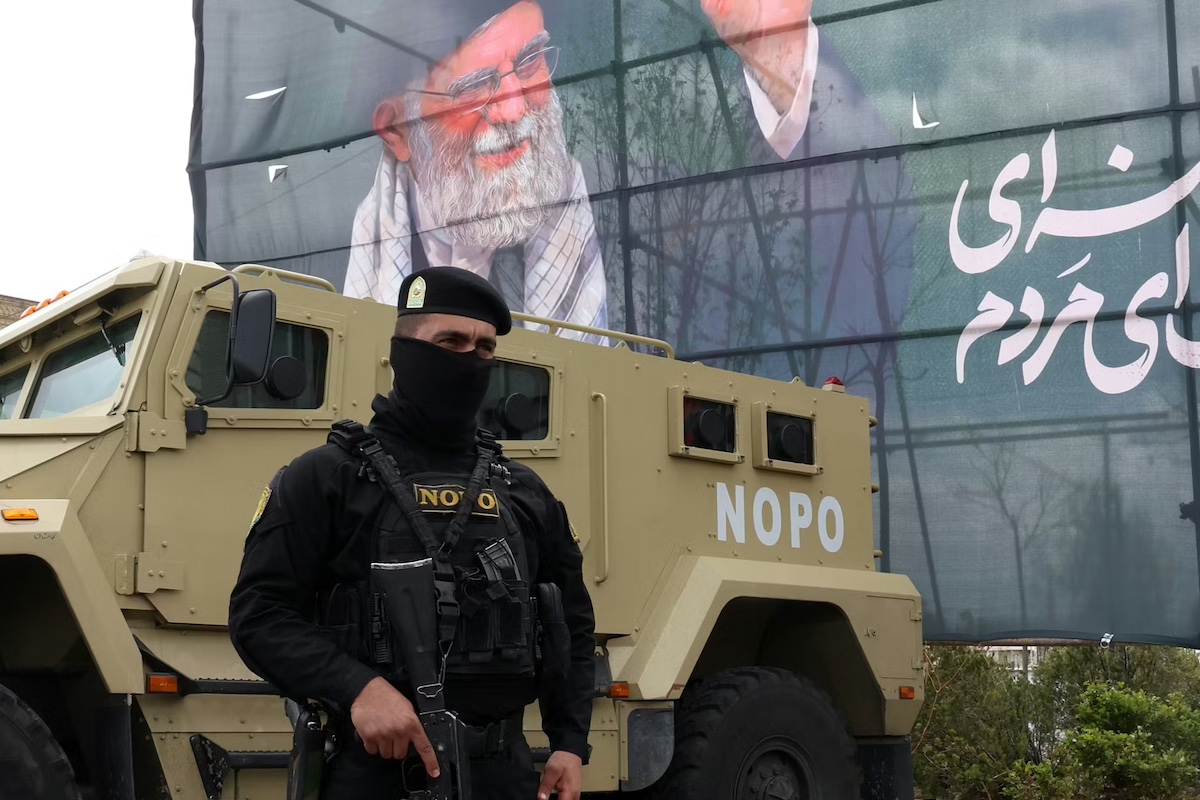
One month into the military conflict launched by the United States and Israel against Iran, the two nations have yet to articulate a clear, coherent justification for their offensive, outline measurable strategic objectives, or lay out a viable exit strategy—even as they continue to claim steady military progress on the battlefield. What was supposed to be a quick, decisive campaign has instead dragged the entire Middle East into an avoidable, open-ended confrontation, after Iran mounted a far stronger coordinated response than Washington and Tel Aviv ever anticipated.
When former U.S. President Donald Trump and Israeli Prime Minister Benjamin Netanyahu greenlit the offensive, they fundamentally misjudged both the ideological cohesion of Iran’s ruling system and its decades-built defensive capacity. They never expected Tehran to respond with a level of preparedness unmatched in the regime’s modern history: launching coordinated strikes against U.S. military installations across the Persian Gulf, dealing heavy blows to Israeli civilian and military infrastructure, and partially or fully closing the Strait of Hormuz—triggering global oil and gas shortages that have already sent shockwaves through the world economy.
Driven by an overreliance on overwhelming military superiority, the U.S. and Israeli leadership bet that air and sea power would force Iran’s Islamic government to surrender quickly, clearing the way for a pro-Western regime change led by the Iranian people. That outcome has not materialized, and now a clear military victory grows more out of reach by the day. For Trump, the only viable path forward is a sharp pivot to diplomacy—and pressure on Netanyahu to follow suit.
### The Roots of Iran’s Unexpected Resilience
Before the outbreak of war, Iran’s ruling regime faced steep headwinds: intense domestic pressure and widespread international condemnation following its violent crackdown on mass public protests that left thousands of Iranians dead. It was also reeling from Israel’s systematic weakening of its key regional proxies, particularly Hamas and Hezbollah, and the collapse of Bashar al-Assad’s long-standing allied regime in Syria.
Even as Tehran remained distrustful of Trump’s administration, it had agreed to re-enter negotiations over its contentious nuclear program, with a widely reported breakthrough on the horizon. Omani mediators announced in late February that a final deal was within reach, before the U.S.-Israeli offensive derailed the process. Far from crippling the regime, the unprovoked invasion gave Iran’s government an opening to showcase the defensive resilience it had spent 40 years building.
Iran’s governing, security, and command structures were explicitly designed to withstand the loss of top leaders and commanders. The regime proved this endurance during the 1980s, when it survived internal dissent, an eight-year full-scale war with Iraq, decades of U.S. containment, and open hostility from most of its regional neighbors. It has outlasted widespread public discontent, theocratic governance frictions, and repeated policy failures, thanks to three core structural strengths: deep ideological commitment to revolutionary Islamism among Iran’s large Shia population, a rare combination of ideological rigidity and pragmatic policy flexibility, and a deeply entrenched, dedicated security, intelligence, and administrative bureaucracy whose own survival is tied directly to the regime’s survival.
While many Iranians have long pushed for political change at home, the vast majority remain deeply proud of their nation’s millennia-old cultural and civilizational heritage, and uniformly reject foreign aggression, occupation, and humiliation of their country. This nationalist sentiment is what has driven widespread popular rallying around the regime, a pattern that repeats throughout Iranian history when the nation faces external attack.
### A War of Attrition No Side Can Win Quickly
Fully aware it cannot match the conventional firepower of the U.S. and Israeli militaries, Iran has deployed a creative, asymmetrical “mosaic defense” strategy tailored to exploit the weaknesses of its adversaries. This approach includes targeting vulnerable U.S. bases across the Persian Gulf with precision drones and missiles, and decentralizing command structures to ensure leadership can be quickly replaced if top officials are killed in strikes.
Tehran has also received critical external support: Russia and China have supplied dual-use technologies and maintained oil import revenues to keep Iran’s economy functioning, and multiple intelligence reports confirm Russia has shared real-time intelligence on the location of U.S. assets in the region. Even with their capabilities degraded, Iran’s regional proxies remain active and capable of opening new fronts: Hezbollah has launched sustained attacks on northern Israel, while Yemeni Houthis have joined the conflict and are preparing to disrupt commercial shipping through the Red Sea.
Taken together, these factors add up to a clear reality: the Iranian government is committed to denying the U.S. and Israel any form of victory, at any cost. What began as a planned quick strike has devolved into a prolonged war of endurance with no clear military end in sight.
### Negotiated Settlement is the Only Path Forward
It remains impossible to predict how long all three parties will sustain the conflict, but current conditions have drastically narrowed the window for a diplomatic resolution. Iran has shown no willingness to surrender core demands, and the U.S. and Israel remain deeply divided over their end goals for the war.
For Trump, domestic political pressure may force a shift toward compromise: with war mounting economic and human costs, and his poll numbers sliding ahead of critical midterm elections, he may well settle for a deal that freezes Iran’s nuclear program and reopens the Strait of Hormuz to global shipping. Netanyahu, by contrast, remains unflinching in his maximalist goals: he is determined to destroy the Islamic government and permanently cripple Iran’s status as a regional power.
What has become increasingly clear after a month of fighting is that a military conclusion to the conflict is effectively impossible. The only sustainable path forward is a negotiated settlement. The responsibility to force Netanyahu into line and lead diplomatic efforts will fall to Trump, and many analysts already agree that no matter how the war ultimately ends, Iran has already emerged as the de facto winner in the conflict.