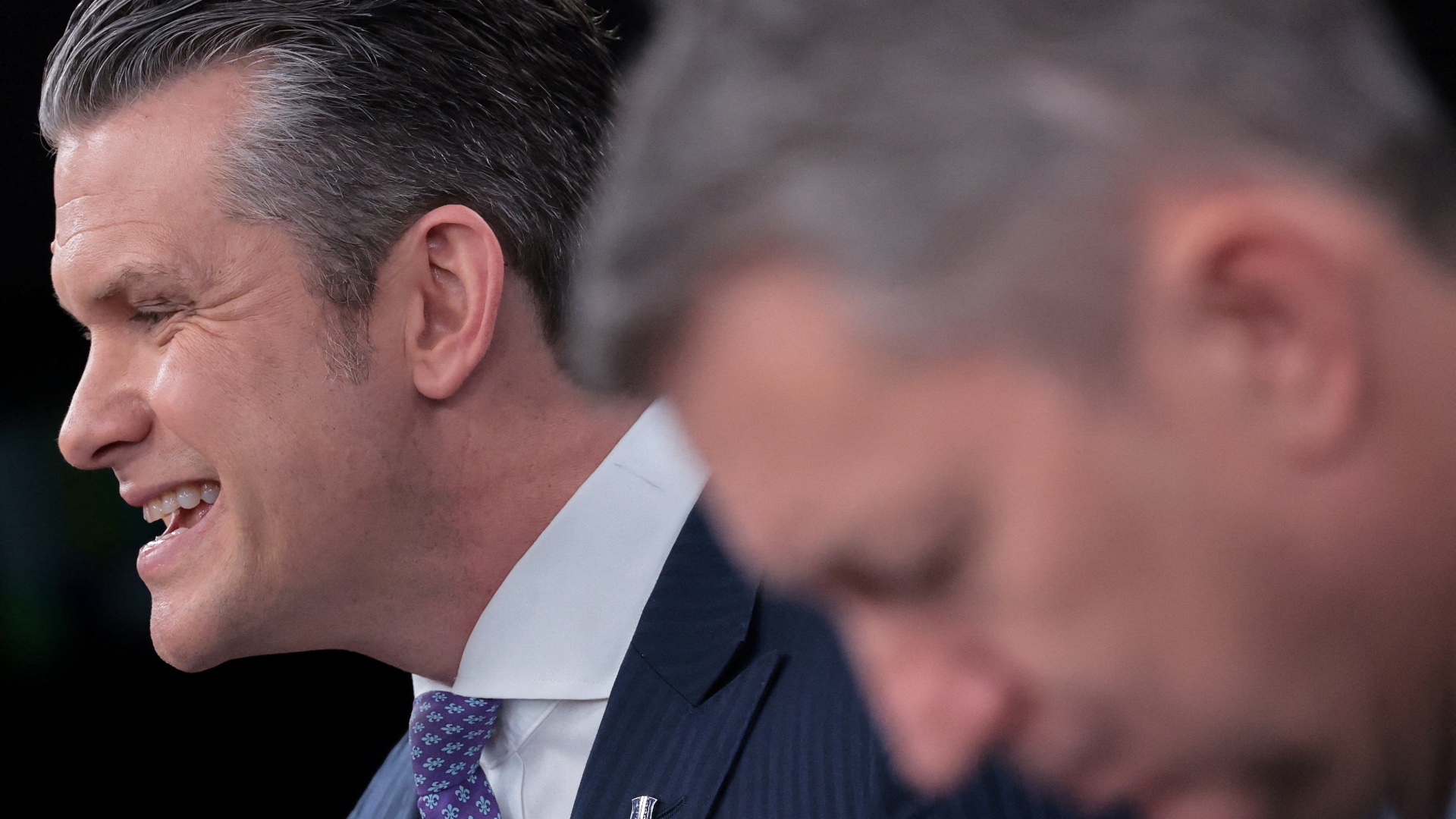
In his first press briefing held on Tuesday, more than a month after the United States and Israel launched their military campaign against Iran, US Secretary of Defense Pete Hegseth made a striking admission that undermines the White House’s repeated claims of an “imminent threat” from Tehran: Iran’s ballistic missiles do not have the range to strike the US mainland.
Hegseth explained that Washington’s military commitment in the region is focused on protecting US regional assets and its Middle Eastern allies from Iran’s capabilities, and it is now time for European allies to pull their weight in the conflict. Speaking to reporters Tuesday, he argued, “These are missiles that don’t even range the United States of America. They range allies and others. And yet, when asked for additional assistance… we get questions or roadblocks or hesitations.” He added that President Donald Trump has emphasized that alliances lose meaning when member states refuse to stand together when their support is needed.
Hegseth’s comments came in direct support of a post Trump published earlier that day on his Truth Social platform, where the president publicly demanded the United Kingdom “build up some courage, go to the Strait [of Hormuz], and just TAKE IT”, adding that US allies “You’ll have to start learning how to fight for yourself.”
Defending the administration’s military strategy, Hegseth asserted that since the US-Israeli offensive began on February 28, Washington has dictated the terms of engagement, leaving Iran unable to mount an effective military response to the campaign. This claim, however, leaves a critical question unanswered: if the US holds the clear upper hand in the conflict, why is Trump pushing NATO allies to contribute more support to the operation?
A key domestic pressure shaping the administration’s push for allied support comes from surging US energy prices. On Tuesday, the national average price of gasoline in the US spiked above $4 per gallon, piling additional financial strain on American households that lack accessible alternative transportation options. Lowering gas prices was a central campaign promise for Trump, who has repeatedly criticized his predecessor Joe Biden for high energy costs during his term.
Currently, Iran is blocking the Strait of Hormuz, a critical global oil chokepoint, to oil tankers linked to the US and Israel, banking on the resulting energy price shock to erode domestic support for the conflict in the US and weaken Washington’s resolve. Hegseth issued a blunt warning to Tehran on Tuesday: “Open it for business, or we have options, and we certainly do.” He declined to elaborate on what those potential options might be, noting that “Don’t tell your enemy what you’re willing to do or not do, and don’t tell your enemy when you’re willing to stop.”
When questioned about the “ongoing negotiations” Trump has referenced that Iranian officials have repeatedly denied, Hegseth claimed that Iran’s original ruling regime has been entirely destroyed, a second iteration is largely defunct, and the current third governing body has been far more open to talks. This shift, he claimed, is purely a result of overwhelming US military pressure. He also told reporters that the past 24 hours had seen the lowest volume of Iranian missile and drone launches, arguing that US airstrikes “are damaging the morale of the Iranian military, leading to widespread desertions, key personnel shortages, and causing frustrations amongst senior leaders”.
That assessment directly contradicts the findings of independent security experts tracking Iranian military activity. These analysts confirm that Iran has maintained a steady rate of drone and missile strikes consistent with the pace recorded over the past 20 days, and that launch volumes have actually increased in recent days compared to early March. Experts also note that Iranian strikes have grown more precise in target selection in recent weeks.
On Tuesday, Iran’s Revolutionary Guard Corps issued a new warning, stating that it will target 18 US-based corporations operating in the Middle East, labeling these entities as “institutions involved in terrorist activities” tied to Washington’s military campaign.
This report was published by Middle East Eye, a media outlet that provides independent, in-depth coverage of the Middle East, North Africa and surrounding regions.