The ongoing conflict in the Middle East has triggered widespread economic disruptions across continents, reshaping energy markets, straining national energy reserves, and driving volatile swings in global financial systems in recent weeks. While diplomatic signals of a potential de-escalation have temporarily calmed market jitters, the tangible damage to critical energy infrastructure and persistent supply chain risks continue to pressure economies worldwide.
On Wednesday, global financial markets posted sharp gains following two consecutive days of upward momentum, driven by remarks from key leaders hinting at a possible end to hostilities between Iran and Western-backed forces. U.S. former President Donald Trump indicated that the conflict could wrap up within approximately two weeks, while Iranian President Masoud Pezeshkian confirmed Tehran holds the political will to reach a ceasefire with Israel and the United States – though he emphasized the need for ironclad guarantees to prevent future outbreaks of violence. The upbeat diplomatic signals sent Asian stocks soaring: Japanese and South Korean benchmark indexes jumped in early morning trading, following a massive rally on Wall Street a day earlier that saw the blue-chip Dow Jones Industrial Average close up 2.5%, and the technology-focused Nasdaq Composite surge 3.8%. Oil prices also pulled back from recent multi-year highs on the ceasefire hopes, though benchmark crude still held firmly above the $100 per barrel threshold, underscoring persistent supply uncertainty.
Beyond market volatility, the conflict has already inflicted permanent damage to critical regional infrastructure. Iranian state media reported this week that a major desalination plant on Qeshm Island, located near the strategically vital Strait of Hormuz – the chokepoint through which roughly 20% of global oil supplies transit daily – has been completely knocked out of service by targeted strikes. Health ministry official Mohsen Farhadi told Iran’s ISNA news agency that the facility cannot be repaired in the short term, cutting off a key source of fresh water for the island’s population. Separate reports confirmed an Iranian attack ignited a fire on the Al Salmi, a 332-meter Kuwaiti-flagged crude tanker docked at Dubai’s port. No casualties were reported, and Dubai fire crews successfully extinguished the blaze within hours, but the incident highlighted the growing risk to commercial shipping in the region.
Geopolitical risks have also disrupted transit for global shipping operators. China’s foreign ministry announced Tuesday that three Chinese-registered vessels have successfully completed transit out of the Strait of Hormuz, with assistance from unspecified relevant parties. Tracking data confirms two container ships operated by Chinese shipping giant Cosco made the passage on Monday, though Beijing has not released any details on the identity or status of the third vessel.
The economic fallout of the conflict is already being felt far beyond the Middle East, with consumer prices and energy policy being upended across Europe, Africa, and Asia. In the Eurozone, March inflation climbed to 2.5% – the highest reading recorded since January 2025 – driven almost entirely by skyrocketing energy costs tied to Middle East supply disruptions. According to Jean Maynier, head of global maritime analytics firm Kpler, Asian economies face the most severe impact, with the region already sliding toward a full-blown energy crisis. Maynier told Agence France-Presse that Asian nations do not hold enough domestic energy reserves to offset the gap left by disrupted Middle Eastern supplies, noting that shortages will be felt across both large emerging economies like China and smaller developing nations including the Philippines and Indonesia.
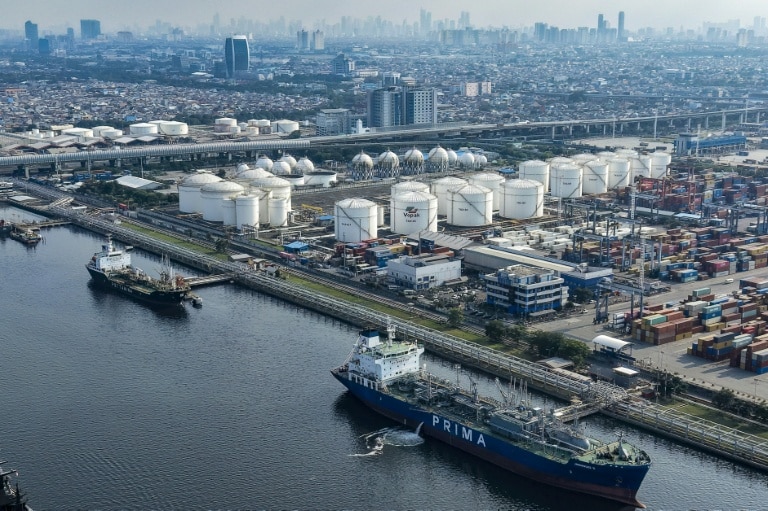
To cope with the looming shortages, governments across the Global South have already implemented emergency energy conservation measures. Indonesia became one of the first major Asian economies to announce fuel rationing this week, alongside a mandatory work-from-home order for all civil servants, as the country moves to preserve existing energy stockpiles amid global price hikes. Jakarta has also ruled out any immediate fuel price increases, despite growing pressure on the national budget from the conflict. In East Africa, Ethiopia announced that it would prioritize fuel allocations for essential goods transport and public transit vehicles, as widespread shortages linked to the conflict grip the country. South Asia has seen even more drastic action: Sri Lanka this week announced a nearly 40% increase in electricity prices, effective Wednesday, to offset energy shortages stemming from the Middle East war. This marks the third fuel price hike the country has implemented this month, bringing total increases to more than 33%, and Sri Lanka has already moved to a four-day working week for public employees to cut overall energy consumption.