WASHINGTON — Five weeks into active hostilities between the United States and Iran, the Biden administration (correction: current Trump administration) has moved to frame skyrocketing national gasoline prices as a temporary side effect of the conflict, while top defense officials have refused to take any military option — including a full ground deployment of U.S. troops — off the table.
In his first public briefing at the Pentagon since mid-March, Defense Secretary Pete Hegseth told reporters Tuesday that the timeline for concluding combat operations and achieving U.S. war aims rests solely with President Donald Trump, warning that the coming days will prove decisive for the conflict. He also confirmed that diplomatic negotiations between the two nations remain active, and suggested the talks have gained momentum in recent days.
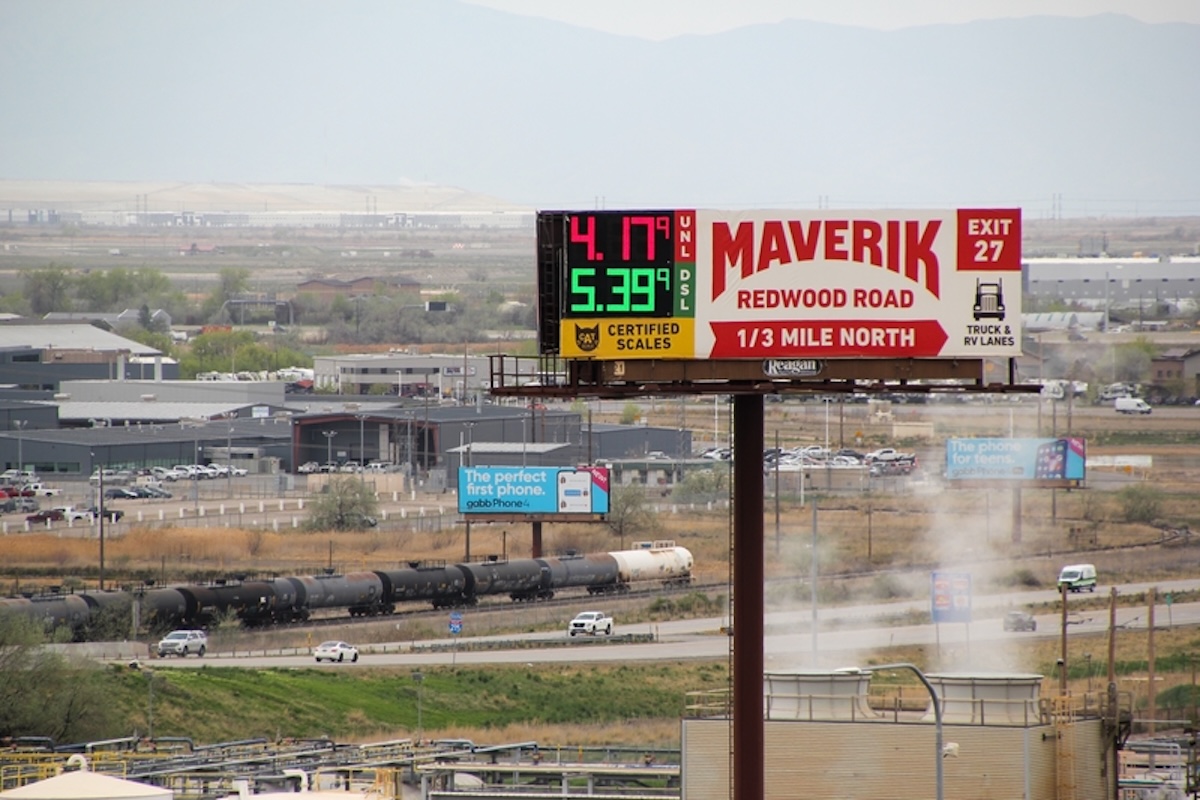
The prolonged conflict has already sent shockwaves through both global and domestic U.S. economies, with new data from automotive group AAA showing the national average price for regular gasoline in the U.S. has crossed the $4 per gallon threshold for the first time in four years. Photographic documentation from a Providence, Rhode Island gas station taken March 31, 2026 shows regular fuel priced at $3.89 per gallon, just shy of the national benchmark.
White House Press Secretary Karoline Leavitt pushed back against growing public frustration over fuel costs in an official statement, arguing that once the administration’s Operation Epic Fury concludes, gas prices will fall sharply back to the multi-year lows U.S. drivers saw before the current market disruption. She added that President Trump remains dedicated to expanding American energy production to achieve long-term energy dominance, cut household costs, and put more disposable income back into the budgets of working American families.
Within hours of the White House’s statement, Iran’s parliamentary speaker Mohammad-Bagher Ghalibaf seized on the price surge to criticize U.S. policy, sharing a link to a U.S. news report on soaring gas prices to the social platform X with the caption: “Sad, but this is what happens when your leaders put others ahead of hard-working and ordinary Americans.”
The primary driver of the global energy price spike is Iran’s ongoing blockade of commercial and military vessels from the U.S. and its allies at the Strait of Hormuz, a critical chokepoint that carries a large share of the world’s petroleum and liquefied natural gas exports. As of 12:45 p.m. Eastern Time Tuesday, Brent crude, the global benchmark for oil pricing, was trading at just over $119 per barrel. Open source data from MarineTraffic and United Nations estimates show between 2,000 and 3,000 cargo vessels and oil tankers, carrying roughly 20,000 crew members, remain stranded in the Persian Gulf due to the blockade.
President Trump has claimed in recent public comments that Iran has agreed to allow a small number of third-party oil tankers to pass through the strait, first saying eight to 10 Pakistani tankers would be permitted during a cabinet meeting Thursday, then raising that number to 20 during comments Sunday. But data from the Joint Maritime Information Center contradicts those claims, showing only four large, location-transmitting tankers crossed the strait on Friday and Saturday combined.
When asked about potential ground operations, Hegseth said the administration would not foreclose any military response to Iranian aggression, but declined to share specific operational details during his public briefing. “You can’t fight and win a war if you tell your adversary what you are willing to do, or what you are not willing to do — to include boots on the ground,” Hegseth said. “Our adversary right now thinks there are 15 different ways we could come at them with boots on the ground. And guess what? There are. So if we needed to, we could execute those options on behalf of the president of the United States and this department, or maybe we don’t have to use them at all. Maybe negotiations work.”
Trump echoed Hegseth’s comments on diplomatic progress during remarks to reporters aboard Air Force One Sunday, saying talks with Iran are ongoing both directly and indirectly, and that the discussions are “very good.” “We’re doing extremely well,” the president said. “But you never know with Iran because we negotiate with them, and then we always have to blow ‘em up.”
The president has repeatedly issued public threats to bomb Iran’s critical energy infrastructure, and has set a self-imposed deadline of April 6 for Iran to meet all U.S. demands before launching new strikes. On Monday night, Trump shared video of a recent U.S. strike on an Iranian ammunition depot in the central province of Isfahan to his Truth Social platform. But Iranian Foreign Ministry spokesperson Esmaeil Baqaei denied any diplomatic talks are taking place with the U.S., according to Iranian state news outlet Tasmin News Agency.
U.S. military buildup in the region continues: U.S. Central Command confirmed that up to 3,500 U.S. Marines and sailors arrived in the Persian Gulf region Saturday, bringing total U.S. troop levels in the area to roughly 50,000 — an increase of 10,000 from the standard peacetime deployment of 40,000. Ghalibaf warned Sunday that any U.S. ground offensive into Iran would be met with “severe punishment,” per Iranian state media. For context, the 2003 U.S. ground invasion of Iraq saw more than 300,000 American troops deployed to the region, according to historical archives from the Council on Foreign Relations.