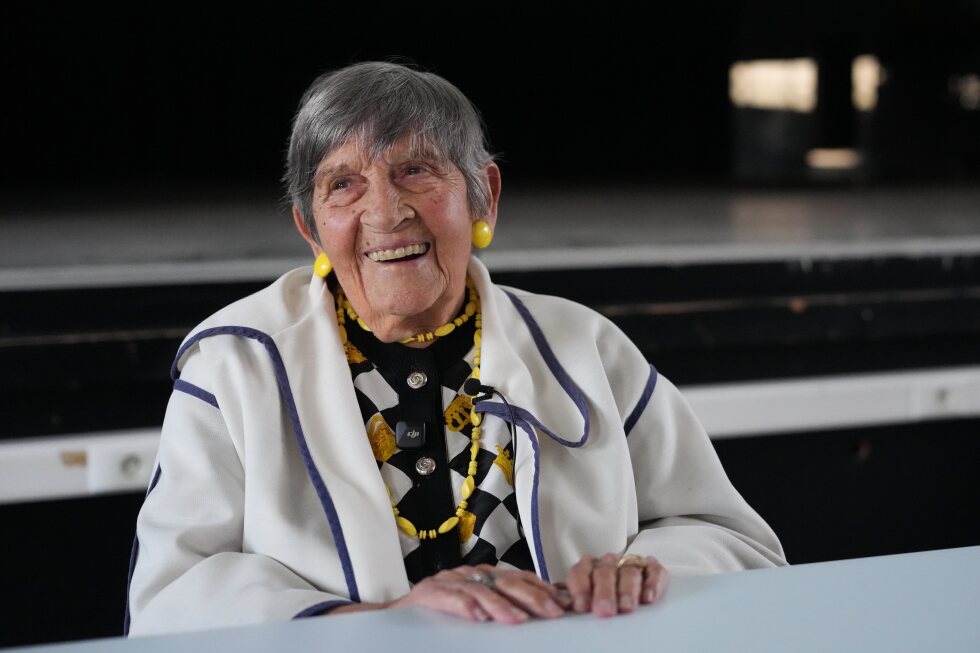
SAINT-MAUR-DES-FOSSÉS, France — For decades after surviving the unimaginable horrors of Auschwitz-Birkenau, Ginette Kolinka maintained a protective silence about her experiences. The 101-year-old French Holocaust survivor would deflect inquiries with a stark response: “If I had a child, well, I would prefer to strangle them with my own hands than make them go through what I went through.”
Now, in the remarkable twilight of her life, Kolinka has transformed from a reluctant witness into one of France’s most powerful voices against antisemitism. With an easy smile that belies her traumatic past, she has dedicated her remaining years to ensuring the lessons of the Holocaust remain vivid for new generations.
The turning point came thirty years ago, sparked by Steven Spielberg’s seminal film “Schindler’s List” and the subsequent establishment of his foundation dedicated to collecting survivor testimonies. Initially reticent, Kolinka eventually agreed to be interviewed in 1997—an emotional three-hour session that unlocked decades of buried memories, including the survivor’s guilt that tormented her and the eternal regret of never getting to properly say goodbye to her father and 12-year-old brother before they were sent to the gas chambers.
France’s historical context adds profound weight to Kolinka’s testimony. During World War II, Nazi-occupied France deported 76,000 Jewish men, women and children, mostly to Auschwitz-Birkenau. Only 2,500 survived. It took fifty years for French leadership to officially acknowledge the state’s involvement in the Holocaust, with then-President Jacques Chirac describing French complicity as “an indelible stain on the nation” in 1995.
Today, as one of perhaps fewer than thirty remaining French survivors of Auschwitz-Birkenau according to the Paris-based Union of Auschwitz Deportees, Kolinka has embraced her role as a living historical archive. Through her memoir “Return to Birkenau,” countless media appearances, and regular school visits, she brings raw, firsthand authenticity to Holocaust education.
During a recent visit to Marcelin Berthelot high school east of Paris, students listened in pin-drop silence as Kolinka recounted her arrest in March 1944, the three-day journey in windowless animal transport wagons, and the brutal reception at Auschwitz where she learned her first German word: “Schnell!” (Move it!). She described the profound humiliation of forced nudity and revealed the tattooed identification number—78599—that remains on her forearm.
Despite the horrors she recounts, Kolinka maintains a remarkable generosity of spirit. She spares young audiences some of the most graphic details, focusing instead on the importance of remembrance. After her talks, students often surround her with rock-star admiration, describing her as “extraordinary” and “an amazing woman” whose mental fortitude inspires them.
As 17-year-old Nour Benguella reflected after one session: “Keeping this history alive is the only thing that will permit us to not make the same mistakes.” Through her testimony, Kolinka ensures that the world cannot claim ignorance about the death camps and the systematic extermination of six million European Jews—transforming personal trauma into a powerful weapon against hatred.