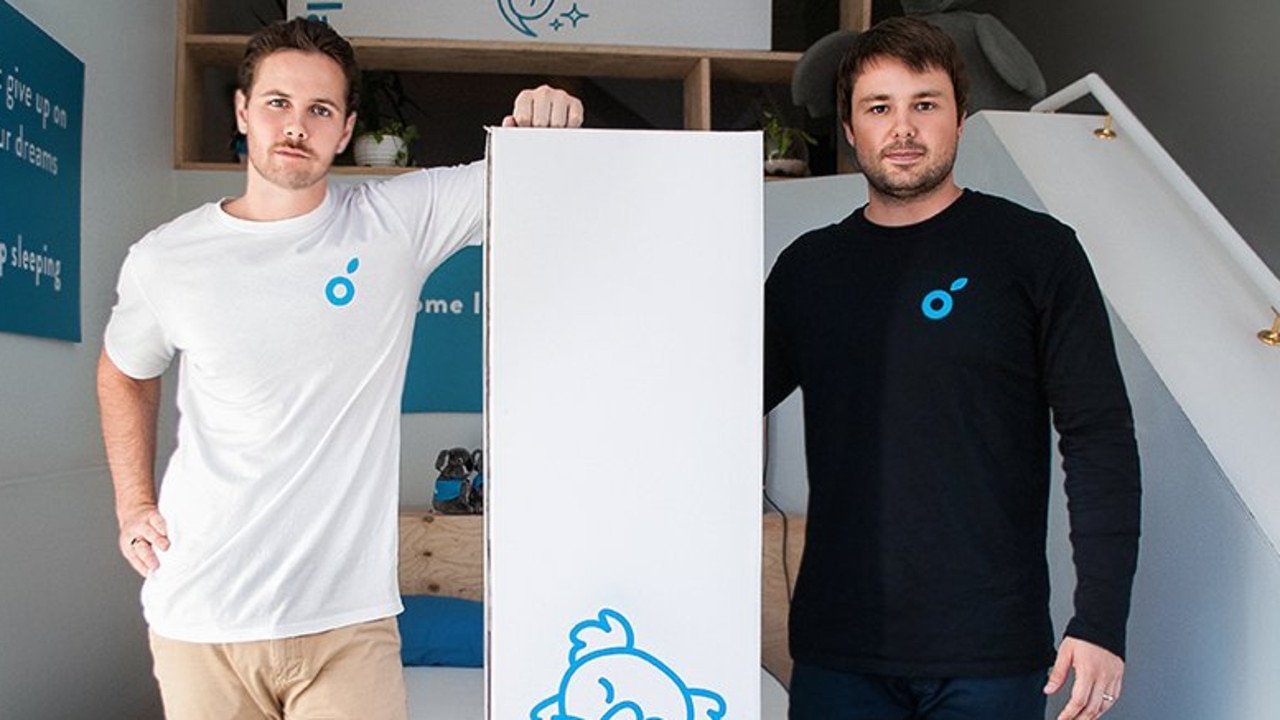
Australian direct-to-consumer furniture giant Koala has achieved a monumental corporate milestone, officially listing on the ASX with a market valuation of $305 million. The viral mattress-in-a-box pioneer commenced trading at 11 AM Tuesday following a successful initial public offering that raised $20 million in fresh capital.
Founded in Byron Bay a decade ago by childhood friends Dany Milham and Mitch Taylor with just $2000 initial investment, the company has evolved from selling vacuum-sealed mattresses to becoming a full-fledged furniture retailer operating across Australia, Japan, the United States, and the United Kingdom. The IPO priced new shares at $3.40 each, granting incoming investors a 20.65% stake in the rapidly expanding business.
The financial structure of the offering demonstrates strategic foresight, with $10.1 million of raised capital allocated to debt reduction while existing investors sold down $48.1 million in stock. This listing transforms the founders into multimillionaires, with Mr. Milham’s stake valued at approximately $63 million and Mr. Taylor holding shares worth nearly $54 million after partially divesting his position.
Institutional investors have shown significant confidence in Koala’s future, with Sydney-based Perennial Partners emerging as the largest shareholder with a 22.7% stake, followed by Alium Capital maintaining 5% ownership. The company’s remarkable growth trajectory has created extraordinary value for early supporters, including Australian cricket star Steve Smith, whose $100,000 investment in 2015 for a 10% stake ballooned to over $10 million within just four years.
Financial projections indicate robust performance ahead, with Koala anticipating $332 million in revenue for FY2025—a 20% increase—with Australian sales accounting for roughly half of total revenue. This growth occurs despite challenging market conditions that have plagued many online retailers experiencing post-pandemic demand softening.
Graeme Hughes from Griffith University noted that ‘Koala is bucking the trend, and it has earned the right to do so,’ highlighting the company’s vertically integrated model as a key differentiator from competitors like Temple & Webster, which experienced a ‘brutal year on the market.’
The path to public listing wasn’t without obstacles—Koala previously postponed a 2022 float due to US-China trade tensions that disrupted North American expansion plans. Approximately 87% of Koala products remain manufactured in China, though the company spent six months strategically rebuilding supply chains through Southeast Asia to mitigate future disruptions.
Marketing expert Arry Tanusondjaja from The University of Adelaide attributes Koala’s success to its focused product strategy and clever marketing, including a viral advertisement viewed over five million times. ‘What Koala has done well is staying focused on a specific category before expanding to whole-house furniture,’ Dr. Tanusondjaja observed, noting how the company built upon IKEA’s legacy by ‘offering a fully online, simple way to buy’ that resonates with contemporary consumers.